Choosing among the best water purifiers for home use depends on your water quality, household size, available counter space, and tolerance for maintenance. A simple pitcher may be enough for improving taste, while reverse osmosis or gravity filtration can provide more comprehensive treatment.
We compared 10 popular options across filtration approach, capacity, convenience, certifications, replacement needs, and everyday usability to help you find a practical fit for your kitchen.
Best 10 Water Purifiers for Home Use Picks for 2026
Best Gravity System

- 0.01-micron UF, silver ion, and carbon filtration
- 2.25-gallon stainless-steel countertop design
- Non-electric operation with replaceable filters
Best For: Households wanting a large, electricity-free countertop purifier
Best Everyday Pitcher
Brita Large 10-Cup Filter Pitcher

- 10-cup BPA-free pitcher for daily use
- Reduces chlorine taste and odor plus select metals
- Refrigerator-friendly with easy-fill lid
Best For: Small households seeking a simple, compact filter pitcher
Best Countertop RO
DREO 7-in-1 Reverse Osmosis System

- RO filtration reduces 99.9% of possible contaminants
- TDS meter, filter indicator, and self-cleaning
- Includes two autofill pitchers and touch controls
Best For: Homes wanting install-free RO filtration with monitoring
Best High-Capacity Dispenser
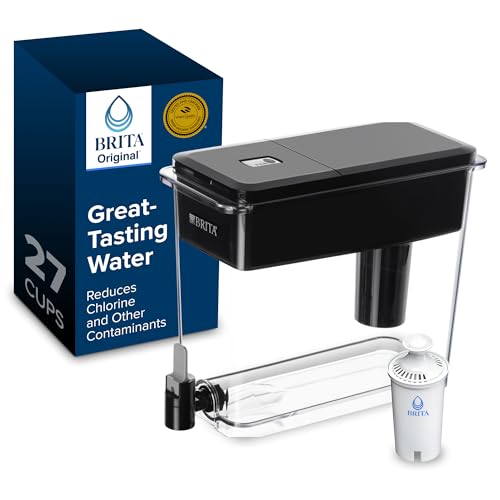
- 27-cup capacity for family-sized use
- Fridge-friendly with locking lid and spigot
- Reduces chlorine taste and odor plus select impurities
Best For: Families needing convenient, high-volume filtered water
Best Countertop RO Purifier
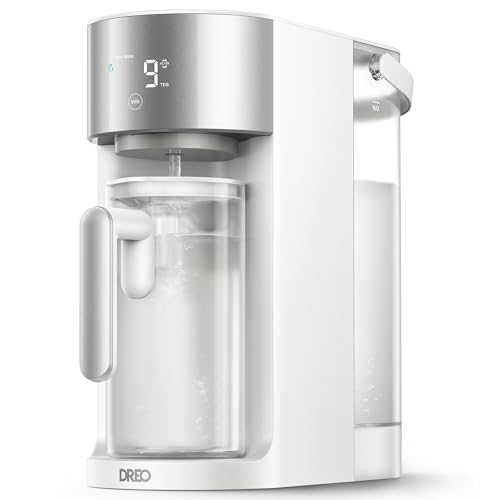
- 7-in-1 reverse osmosis filtration
- Built-in TDS and filter-life monitoring
- Compact, installation-free countertop design
Best For: Small households seeking monitored RO filtration
Best Pitcher for Daily Use
Waterdrop PT-07B Filter Pitcher

- 10-cup, refrigerator-friendly format
- NSF/ANSI 42 and 372 certified
- 200-gallon filter with LED indicator
Best For: Renters, dorms, offices, and everyday pitcher use
Best Gravity-Fed System

- 2.25-gallon stainless steel capacity
- No electricity or plumbing required
- Includes two long-life Black Berkey filters
Best For: Households wanting high-capacity, non-electric filtration
Best Space-Saving Dispenser

- 35-cup capacity in a slim refrigerator-friendly design
- NSF-certified carbon filter with up to 200-gallon life
- No electricity or plumbing required
Best For: Families wanting convenient, high-capacity gravity filtration
Best Countertop RO System
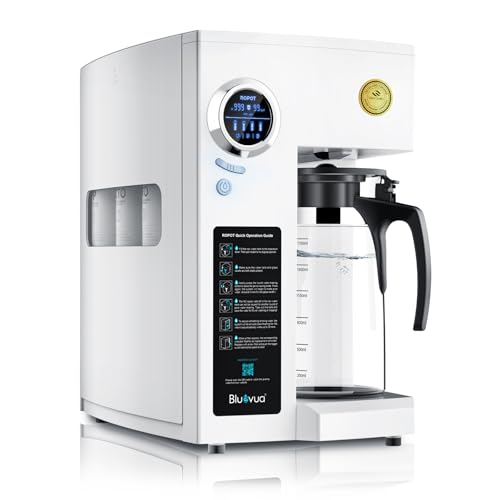
- Six-stage RO filtration with UV and remineralization
- No plumbing installation required
- Glass carafe and built-in filter-life monitoring
Best For: Homes prioritizing advanced countertop filtration and TDS reduction
Best Contaminant-Focused Pitcher
Clearly Filtered 10-Cup Pitcher

- Targets more than 386 stated contaminants
- 80-ounce family-sized refrigerator pitcher
- 100-gallon filter life with BPA-free Tritan construction
Best For: Households seeking broad filtration coverage in a manual pitcher
Best Gravity System – Purewell 3-Stage UF Filter
For households seeking water purifiers for home use without relying on electricity, the Purewell 3-Stage system offers gravity-fed filtration in a durable stainless-steel countertop design. Its 0.01-micron hollow-fiber UF membrane works with silver ion and activated carbon filtration to reduce chlorine, sediment, rust, organic matter, and some heavy metals.
Best For: Homes wanting a non-electric countertop purifier with a larger 2.25-gallon capacity.
Pros:
- Three-stage filtration with a 0.01-micron UF membrane.
- 304 stainless-steel housing, spigot, and included stand.
- Filters up to 6,000 gallons total, with two filters included.
- Works without electricity for indoor or outdoor use.
Cons:
- Requires manual filling of the upper chamber.
- Filters should be replaced about every six months for optimum performance.
- Does not lower TDS levels.
Choose this model when long filter life, sturdy construction, and electricity-free operation matter more than compact size or TDS reduction.
Best Everyday Pitcher – Brita Large 10-Cup Filter Pitcher
The Brita Large 10-Cup Pitcher is a straightforward choice among water purifiers for home use, especially for refrigerator storage and everyday drinking. Its granular activated carbon filter helps reduce chlorine taste and odor along with copper, mercury, zinc, and cadmium.
Best For: Individuals and small households wanting a compact, easy-to-pour filtered-water pitcher.
Pros:
- 10-cup capacity can fill three 24-ounce reusable bottles.
- Fits refrigerator shelves and has an easy-fill locking lid.
- Compatible with Standard and Longlast filters.
- Manual operation requires no electricity.
Cons:
- The included Standard filter should be replaced about every two months.
- It has less capacity than a large countertop dispenser.
- Plastic construction may be less durable than stainless-steel systems.
This is a practical pick for routine drinking water needs when low-effort setup, refrigerator compatibility, and familiar pitcher-style use are priorities.
Best Countertop RO – DREO 7-in-1 Reverse Osmosis System
For shoppers comparing water purifiers for home use with stronger filtration, the DREO countertop reverse osmosis system is designed to reduce 99.9% of possible contaminants, including PFOA, PFOS, chlorine, and fluoride. Its install-free format includes TDS monitoring, filter-life tracking, self-cleaning, and two autofill pitchers.
Best For: Households seeking countertop RO filtration with convenient monitoring and pitcher filling.
Pros:
- Reverse osmosis filtration tested by SGS to meet NSF/ANSI 58 standards.
- Built-in TDS meter and filter-change indicator.
- Includes two autofill pitchers and touch controls.
- Uses a 3:1 pure-to-drain ratio.
Cons:
- Requires countertop space and access for draining.
- The filter life is listed at approximately six months.
- It is heavier and more complex than a basic pitcher.
The DREO is the most feature-rich option here for users who want RO purification and real-time information without installing an under-sink system.
Best High-Capacity Dispenser – Brita UltraMax 27-Cup
The Brita UltraMax is a high-capacity option among water purifiers for home use, holding up to 27 cups for convenient family access. Its included Standard filter helps reduce chlorine taste and odor, copper, mercury, and other impurities, while the fridge-friendly design includes a locking lid and precision-pour spigot.
Best For: Families and shared households that need a large supply of filtered water in the refrigerator.
Pros:
- Large 27-cup capacity for fewer refills.
- Fridge-friendly design with a precision-pour spigot.
- Compatible with Standard and Elite Brita filters.
- Filter indicator helps signal when replacement is needed.
Cons:
- The included Standard filter should be replaced about every two months.
- Its larger footprint may not suit smaller refrigerators.
- It uses plastic construction rather than metal.
Consider the UltraMax when capacity and easy refrigerator dispensing are more important than advanced filtration or a compact pitcher footprint.
Best Countertop RO Purifier – DREO RO Water Filter 112
For shoppers comparing water purifiers for home use, the DREO RO Water Filter 112 is a compact, installation-free option with reverse osmosis filtration, a built-in TDS meter, and a 3-liter tank. Its countertop design suits smaller kitchens and households of one or two people.
Best For: Small households wanting monitored reverse osmosis filtration without plumbing or permanent installation.
Pros:
- Uses a 7-in-1 RO system with a 0.0001 μm membrane and laboratory-tested contaminant reduction claims.
- Monitors raw and filtered-water TDS and provides filter-change reminders.
- Includes an auto-fill pitcher, self-cleaning flush system, and twist-in filter replacement.
- Compact footprint and a 3:1 pure-to-drain ratio help suit countertop use.
Cons:
- The 3-liter tank and 1.1-liter pitcher are sized primarily for one or two people.
- Reverse osmosis produces drain water during filtration.
- Filter replacement is listed at about six months, depending on use.
This DREO model stands out when you want the monitoring and filtration features of an RO system in a countertop format. Its capacity and compact dimensions make it less suited to high-volume households.
Best Pitcher for Daily Use – Waterdrop PT-07B Filter Pitcher
The Waterdrop PT-07B is a straightforward choice among water purifiers for home use, especially for renters, dorm rooms, and offices. This non-electric 10-cup pitcher uses activated carbon filtration and fits most refrigerators.
Best For: Households wanting convenient, better-tasting drinking water without electricity or countertop installation.
Pros:
- NSF/ANSI 42 and 372 certified filtration performance, according to the supplied product information.
- Helps reduce PFOA/PFOS, odor, chlorine, iron, mercury, copper, and other metal ions.
- 200-gallon or three-month filter life with an LED replacement indicator.
- Hands-free lid and compact 10-by-5-by-10.1-inch design support convenient refrigerator storage.
Cons:
- It does not lower TDS values.
- Activated carbon filtration has a lower stated capacity than the larger gravity system in this roundup.
- Replacement filters must be purchased separately after the included filter is used.
The PT-07B is a practical, low-effort pitcher for improving everyday taste and reducing several listed contaminants. Choose another format if TDS reduction is a priority.
Best Gravity-Fed System – Big Berkey 2.25-Gallon Filter
The Big Berkey is a durable gravity-fed option for shoppers seeking water purifiers for home use without electricity, plumbing, or water pressure. Its 2.25-gallon stainless steel system is designed for approximately one to four people and can also serve offices, RVs, and apartments.
Best For: Households wanting high-capacity, non-electric filtration for drinking, cooking, and filling reusable bottles.
Pros:
- Gravity operation requires no electricity, plumbing, tools, or permanent installation.
- Includes two authentic Black Berkey BB9-2 filter elements.
- Stainless steel countertop construction is designed for long-term everyday use.
- Each pair of filters is stated to provide up to 6,000 gallons before recommended replacement.
Cons:
- At approximately 19.25 inches tall, it requires substantial vertical counter space.
- Water filtration is gravity-fed, so the stated flow rate is relatively slow.
- Filters require priming and assembly before first use.
Choose the Big Berkey when capacity, independence from utilities, and long filter life matter more than speed or compact storage. Its stainless steel tower is a better fit for users who have room to leave a gravity system set up.
Best Space-Saving Dispenser – Waterdrop WFD-40L
For households seeking practical water purifiers for home use, the Waterdrop WFD-40L is a slim, gravity-fed dispenser with a 35-cup capacity. Its activated-carbon filter is designed to reduce chlorine, odors, and selected metals without requiring electricity or plumbing.
Best For: Families that want a large-capacity refrigerator dispenser with low-maintenance, no-power filtration.
Pros:
- 35-cup capacity and slim design for refrigerator storage.
- NSF 42 and 372-certified replacement filter, with up to 200 gallons or two months of stated life.
- Filter replacement indicator, sliding cover, and carry handle add convenience.
- Food-grade, lead-free, and BPA-free construction.
Cons:
- Gravity filtration is not intended for users seeking substantial TDS reduction.
- Requires checking refrigerator dimensions before purchase.
- Replacement filters are needed about every two months.
The WFD-40L is a straightforward choice when capacity, portability, and refrigerator-friendly storage matter more than advanced reverse-osmosis filtration. Its filter performance is focused on taste and selected contaminants rather than broad TDS reduction.
Best Countertop RO System – Bluevua RO100ROPOT
The Bluevua RO100ROPOT is a countertop option for shoppers comparing water purifiers for home use and wanting more extensive filtration than a standard pitcher. Its six-stage reverse-osmosis system includes UV treatment, remineralization, and a glass carafe, with no plumbing installation required.
Best For: Households seeking portable, powered reverse-osmosis filtration with TDS monitoring and remineralized water.
Pros:
- Six-stage filtration with a 0.0001 μm RO membrane, UV light, and remineralization filter.
- Designed to reduce TDS, PFOA/PFOS, chlorine, fluoride, arsenic, lead, and more.
- No plumbing installation; simply place it on the countertop and plug it in.
- Glass carafe, filter-life monitor, and stated 2:1 pure-to-drain ratio.
Cons:
- Requires electrical power and countertop space.
- Its 1,700 ml carafe is smaller than large-capacity pitchers or dispensers.
- At 17.8 pounds, it is relatively heavy for a portable countertop appliance.
This system is a strong fit when broad contaminant reduction and lower TDS are priorities. The trade-offs are its powered design, countertop footprint, and smaller batch capacity compared with family-sized dispensers.
Best Contaminant-Focused Pitcher – Clearly Filtered 10-Cup Pitcher
The Clearly Filtered 10-Cup pitcher is a manual option for shoppers looking for water purifiers for home use without electricity or installation. Its Affinity Filtration Technology is designed to target a broad range of contaminants while preserving beneficial minerals, and the pitcher fits standard refrigerator shelves.
Best For: Health-conscious households wanting broad contaminant coverage in a family-sized, refrigerator-friendly pitcher.
Pros:
- Targets more than 386 contaminants, including fluoride, lead, PFAS/PFOA, arsenic, microplastics, and chlorine.
- 80-ounce, approximately 10-cup capacity for family use.
- 100-gallon filter life, described as roughly four months of daily use.
- BPA-free, BPS-free medical-grade Tritan construction with independently tested performance.
Cons:
- Manual filtration requires filling the pitcher and waiting for water to pass through.
- Filter replacement is needed approximately every four months.
- It does not provide the powered flow or batch automation of a countertop RO system.
Clearly Filtered stands out for shoppers focused on a wide stated contaminant-removal range while retaining a familiar pitcher format. It is a practical middle ground between basic carbon pitchers and more involved powered systems.
How We Picked the Best Water Purifiers for Home Use
We evaluated these systems based on the features that matter most in daily household use: filtration method, stated certifications, capacity, dispensing speed, installation requirements, filter replacement, footprint, and overall convenience. We also considered how well each format suits different water concerns, from unpleasant taste and odor to the desire for broader contaminant reduction.
Because no single purifier is ideal for every home, the list includes pitchers, countertop dispensers, gravity-fed systems, and reverse osmosis units. Always check the manufacturer’s performance data and your local water-quality report before choosing a system for a specific contaminant.
Quick Comparison
- Best for simplicity: Water filter pitchers require no installation and are easy to move or store.
- Best for larger households: High-capacity dispensers reduce frequent refilling.
- Best for no plumbing work: Gravity and countertop systems operate without permanent installation.
- Best for more intensive filtration: Countertop reverse osmosis systems typically use multiple stages and may display water-quality information.
- Best for emergency or off-grid flexibility: Gravity systems can work without electricity, depending on the design.
Key Buying Factors for Water Purifiers for Home Use
Filtration Method and Performance
Activated carbon is commonly used to improve chlorine taste and odor. Ultrafiltration can provide finer mechanical filtration, while reverse osmosis is designed for broader dissolved-solids reduction. Look for independently verified claims, such as NSF/ANSI standards, and confirm which contaminants the specific model is certified to reduce.
Capacity and Daily Output
A compact pitcher suits one or two people but may require frequent refills. Larger dispensers and gravity systems are more convenient for families, although they take up more refrigerator, counter, or floor space. Reverse osmosis units may also have a slower production rate than basic pitchers.
Maintenance and Running Costs
Check replacement-filter intervals, filter prices, cleaning requirements, and whether the system produces wastewater. Some units use multiple cartridges, so the initial price may not reflect long-term ownership costs. Replace filters on schedule to maintain performance and hygiene.
Footprint and Convenience
Measure the available space before buying, especially for countertop dispensers and gravity systems. Consider fill access, dispensing height, pitcher weight when full, power requirements, noise, and whether the purifier can be used during an outage.
Who Should Buy Which Water Purifiers for Home Use?
Choose a pitcher if you want the lowest-commitment option for improving drinking-water taste and need something portable. Choose a large dispenser if several people regularly drink filtered water and you want fewer refills.
Choose a gravity system if you prefer a non-electric setup with substantial storage capacity. Choose countertop reverse osmosis if you want a more comprehensive filtration approach without modifying household plumbing and are comfortable managing filter changes, power, and possible wastewater.
For the best match, start with your water report, identify the contaminants you actually need to address, then compare verified reduction claims, capacity, maintenance, and total cost rather than relying on the number of filtration stages alone.