Reliable water treatment can make a major difference on a camping trip, whether you are filtering a few liters for a day hike or supplying a group at base camp. The right system balances purification performance, capacity, weight, speed, and ease of use.
This roundup compares 10 water purifiers for camping, from compact squeeze and straw filters to gravity-fed systems, pump filters, purifier bottles, and chemical tablets. Use the guide below to narrow the options by trip style and water source.
Best 10 Water Purifiers for Camping Picks for 2026
Best All-Around Squeeze Filter

- 2-ounce hollow-fiber filter
- Includes two 32-ounce pouches
- Rated for up to 100,000 gallons
Best For: Flexible bottle, pouch, straw, and gravity filtration
Best Purifier for Pathogen Coverage
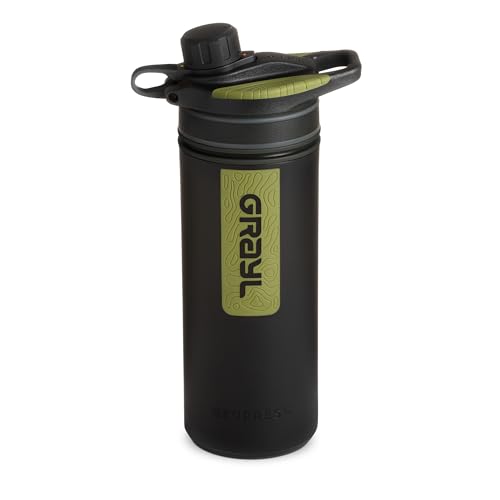
- Protects against viruses, bacteria, and protozoa
- Purifies 24 ounces in about 8 seconds
- Filters chemicals, heavy metals, and particulates
Best For: Bottle-based purification with broad contaminant coverage
Best Ultralight Budget Option

- Weighs approximately 2 ounces
- Works with pouches, bottles, and hydration packs
- Rated for up to 100,000 gallons
Best For: Ultralight hiking, camping, and emergency filtration
Best Gravity-Fed Camp Setup
Waterdrop Gravity Filter Straw
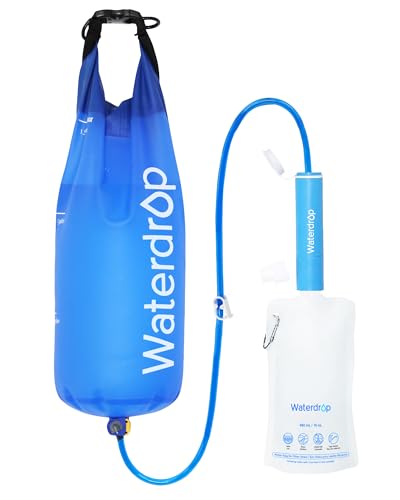
- Includes a 1.5-gallon water bag
- Filters at up to 700 ml per minute
- Backwash function supports reuse
Best For: Base camps and groups needing gravity-fed water storage
Best Ultralight Bottle Filter

- 2.24-ounce collapsible design
- 0.1-micron hollow fiber membrane
- Filters up to 2 L/min
Best For: Ultralight backpacking and hiking
Best Tablet Purifier

- Treats up to 4 gallons per tablet
- 30-minute treatment time
- 100-tablet emergency-ready pack
Best For: Compact camping and emergency kits
Best Pump Filter

- Pumps 1 L/min
- 0.2-micron glass-fiber cartridge
- Transparent, cleanable filter system
Best For: Reusable bottle and hydration-pack filtration
Best Lightweight Pick
Membrane Solutions 1-Gallon Gravity Filter

- 11.2-ounce, 1-gallon setup
- Four-stage, 0.1-micron filtration
- Bottle-compatible and backflushable
Best For: Solo campers, backpackers, and emergency kits
Best Ultralight Option
SimPure 3L Gravity Water Filter
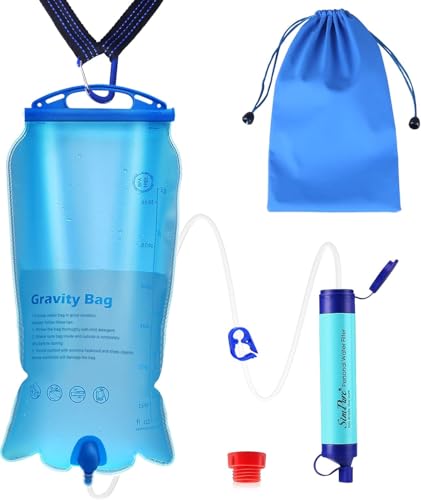
- 2.8-ounce rollable filter
- 27 liters-per-hour flow rate
- Bottle and extension-tube compatible
Best For: Ultralight backpackers and personal water treatment
Best for Groups
Membrane Solutions 6L Gravity Filter Pro
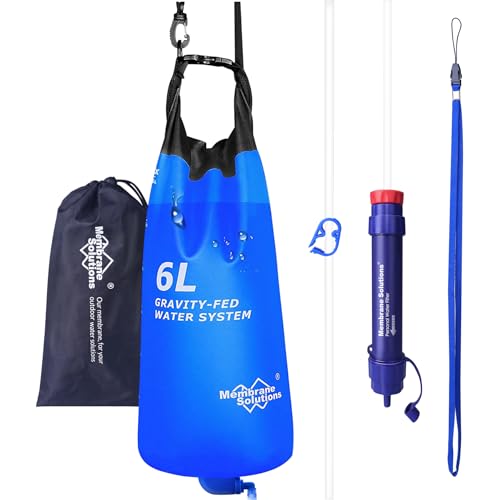
- 6-liter capacity for 3–6 people
- 500 ml-per-minute gravity flow
- Collapsible BPA-free TPU construction
Best For: Family camping, basecamp, and group trips
Best All-Around Squeeze Filter – Sawyer SP129 Squeeze
The Sawyer SP129 is a versatile choice for campers who want a lightweight water purifier for camping that can work with pouches, compatible bottles, or a hydration pack. Its manual squeeze design is easy to pack and use on the trail.
Best For: Campers and backpackers who want flexible bottle, pouch, straw, and gravity-filter options.
Pros:
- Weighs just 2 ounces and fits in the palm of your hand.
- Removes bacteria, protozoa, cysts, sediment, and 100% of microplastics according to the supplied specifications.
- Includes two reusable 32-ounce pouches, a drinking straw, and hydration-pack adapters.
- Rated for up to 100,000 gallons and backed by a manufacturer lifetime warranty against filter defects.
Cons:
- Requires manual squeezing or a gravity setup rather than powered operation.
- The included pouches may be less convenient than a rigid bottle for everyday use.
Choose the SP129 if adaptability and low pack weight matter most. The included accessories make it suitable for solo trips, shared camp systems, and emergency preparedness.
Best Purifier for Pathogen Coverage – GRAYL GeoPress 24 oz
The GRAYL GeoPress is designed for campers who want a bottle-style water purifier for camping with broader protection than a basic bacteria-and-protozoa filter. Fill, press, and drink without batteries, pumps, hoses, or chemical treatment.
Best For: Campers, travelers, and emergency-preparedness users who prioritize virus protection and simple bottle-based purification.
Pros:
- Protects against viruses, bacteria, and protozoa, including Giardia and Cryptosporidium.
- Also filters particulates and adsorbs VOCs, PFAS, chemicals, pesticides, herbicides, heavy metals, tastes, and odors.
- Purifies 24 ounces in about 8 seconds according to the product highlight.
- Requires no batteries, pump, setup time, or prolonged waiting.
Cons:
- Its 24-ounce capacity is smaller than the large gravity-bag options in this roundup.
- The replaceable purifier cartridge is rated for 65 gallons, substantially less than some hollow-fiber filters.
- At 15.9 ounces, it is heavier than the compact Sawyer filters.
The GeoPress is the strongest fit when virus coverage and fast, straightforward operation outweigh maximum capacity or minimum weight. Its 10-year warranty also suits long-term emergency kits.
Best Ultralight Budget Option – Sawyer MINI Water Filter
The Sawyer MINI is a compact water purifier for camping, hiking, and emergency use. At about 2 ounces, it attaches to the included pouch, compatible 28 mm bottles, or a hydration pack, and it can also be used with the included straw.
Best For: Ultralight hikers, scouts, and travelers who need a small manual filter with multiple connection options.
Pros:
- Weighs approximately 2 ounces and fits easily in a small pack.
- Removes bacteria, protozoa, and 100% of microplastics according to the supplied specifications.
- Includes a 16-ounce reusable pouch, drinking straw, and cleaning plunger.
- Rated for up to 100,000 gallons by the manufacturer.
Cons:
- Does not list virus removal in the supplied product information.
- The included 16-ounce pouch is smaller than the SP129’s pouches and the gravity system’s water bag.
- Manual squeezing or direct drinking is required.
The MINI makes sense when pack weight and connection versatility are more important than built-in virus purification or high-volume storage. Its included cleaning plunger supports field maintenance.
Best Gravity-Fed Camp Setup – Waterdrop Gravity Filter Straw
The Waterdrop Gravity Filter Straw is a practical water purifier for camping when you want hands-free gravity filtration and more stored water at camp. Its included 1.5-gallon bag can supply water for group use without pumping or electricity.
Best For: Base camps, family camping, and emergency preparedness where larger water storage and gravity-fed dispensing are useful.
Pros:
- Includes a 1.5-gallon gravity-fed water bag plus a 16-ounce water pouch.
- Uses a 0.1-micron ultrafiltration membrane and multiple filtration stages to reduce particulates, sediment, chlorine, odors, and bad taste.
- Provides a flow rate of up to 700 ml per minute.
- Backwash functionality helps maintain the filter when flow decreases.
Cons:
- The supplied specifications do not claim virus removal.
- Its 1,400-gallon lifespan is shorter than the Sawyer filters’ stated 100,000-gallon ratings.
- The included 30-day limited filter warranty is relatively short.
This Waterdrop system is a good camp-oriented choice for users who value reservoir capacity and gravity operation over the smallest possible packed size. It can also connect with compatible water bottles for added flexibility.
Best Ultralight Bottle Filter – Katadyn BeFree 1L
For hikers who want water purifiers for camping with minimal weight and setup, the Katadyn BeFree combines a collapsible 1-liter bottle with a 0.1-micron hollow fiber membrane. It filters up to 2 liters per minute and can be squeezed directly while drinking.
Best For: Backpackers, hikers, and travelers prioritizing packability and fast access to water.
Pros:
- Weighs just 2.24 ounces and collapses for compact storage.
- Filters sediment and fine particles at up to 2 liters per minute.
- Requires no pump, tablets, or extra setup.
- Can be cleaned by shaking or swishing to help restore flow.
Cons:
- Its 1-liter bottle capacity may require frequent refills for groups.
- It is a squeeze bottle design rather than a pump or gravity system.
The BeFree is a strong choice when every ounce matters and you want to fill, squeeze, and drink immediately. Its 1,000-liter stated capacity suits repeated trips, provided a lightweight bottle format matches your routine.
Best Tablet Purifier – Aquatabs 397mg 100 Pack
For water purifiers for camping that pack nearly anywhere, Aquatabs offer a lightweight chemical-treatment option for camping, emergencies, and travel. Each 397mg tablet treats up to 4 gallons in 30 minutes, making the 100-pack practical for extended preparedness.
Best For: Campers and emergency-preparedness kits that need compact treatment without carrying a pump.
Pros:
- Compact, lightweight format is easy to store in a survival or camping kit.
- One tablet purifies up to 4 gallons in 30 minutes.
- The supplied notes report removal of 99.9999% of bacteria, 99.99% of viruses, and 99.9% of cysts including Giardia.
- Designed without iodine taste, color, or odor according to the supplied notes.
Cons:
- Requires a 30-minute treatment time before drinking.
- Tablets do not address sediment, so pairing with a water filter bag or straw may be useful for visibly cloudy water.
Aquatabs are best viewed as a compact purification and disinfection layer rather than a complete sediment-filtering system. They are particularly convenient when low weight, long storage, and broad treatment capacity matter more than instant drinking.
Best Pump Filter – Katadyn Hiker Pro
The Katadyn Hiker Pro is a practical choice among water purifiers for camping when you want to process water into a bottle or hydration pack. Its 0.2-micron glass-fiber cartridge pumps 1 liter per minute, while activated carbon granules help improve taste.
Best For: Campers, backpackers, and small groups who prefer a reusable hand-pump system with visible filter condition.
Pros:
- Pumps 1 liter per minute and connects to bottles and hydration packs.
- Transparent housing lets you see the cartridge during use.
- Filters up to 1,150 liters, with a pre-filter and cleanable protector for maintenance.
- Activated carbon granules help improve taste.
Cons:
- At 11.2 ounces, it is heavier than the BeFree bottle filter.
- Manual pumping requires more effort than a squeeze bottle or tablet treatment.
- Its 1-liter-per-minute rate is slower than the BeFree’s stated flow rate.
The Hiker Pro suits users who want a dedicated, reusable filtration setup and the control of pumping water directly into their container. Its included hoses, adapters, and visible cartridge make it versatile, though the manual operation adds weight and effort.
Best Lightweight Pick – Membrane Solutions 1-Gallon Gravity Filter
For solo hikers and small groups comparing water purifiers for camping, this compact 1-gallon gravity system keeps setup simple without adding much pack weight. It uses gravity rather than pumping or squeezing and filters at up to 500 ml per minute.
Best For: Solo campers, backpackers, and emergency kits that need a lightweight, bottle-compatible filtration system.
Pros:
- Lightweight 11.2-ounce design with a 1-gallon capacity.
- Four-stage filtration with a 0.1-micron hollow fiber membrane, activated carbon, and dual PP filters.
- Backflushable design connects to standard water bottles without a syringe.
- Filter life is rated up to 1,320 gallons, with an adjustable tree strap included.
Cons:
- The 1-gallon capacity is less suited to larger groups.
- Gravity filtration requires a suitable place to hang the bag.
This is a practical choice when packability matters most. Its certified filtration claims, flexible connection options, and long filter life make it useful for backpacking and emergency water storage, while the smaller reservoir keeps it geared toward personal or limited-volume use.
Best Ultralight Option – SimPure 3L Gravity Water Filter
The SimPure 3L system is a strong option for shoppers seeking water purifiers for camping that pack down small. Its filter weighs just 2.8 ounces, works hands-free by gravity, and delivers a stated flow rate of 27 liters per hour.
Best For: Ultralight backpackers and campers who want a versatile filter for personal drinking and small-volume water treatment.
Pros:
- Very lightweight filter that can roll up to save backpack space.
- Includes a 3-liter TPU gravity-fed bag and tree strap.
- Can function as a personal filter, connect to a bottle, or use the 29.5-inch extension tube.
- Rated for up to 5,000 liters and designed for hands-free operation.
Cons:
- The 3-liter reservoir provides less capacity than group-oriented systems.
- The supplied details list a plastic construction without the more specific durability information provided for some alternatives.
Choose this model when minimum weight and flexible drinking options are higher priorities than large-batch capacity. The rollable filter and multiple connection methods suit fast-moving trips, while the 3-liter bag remains better matched to individual or small-group use.
Best for Groups – Membrane Solutions 6L Gravity Filter Pro
For group trips, the Membrane Solutions 6L Pro offers the larger capacity many campers need from water purifiers for camping. It is designed for three to six people, uses pump-free gravity filtration, and provides up to 500 ml per minute.
Best For: Basecamp, family camping, group backpacking, and emergency water backup.
Pros:
- 6-liter capacity is designed for groups of three to six people.
- Four-stage filtration includes a 0.1-micron hollow fiber membrane, activated carbon, and dual PP pre-filters.
- No pumping, squeezing, electricity, or installation is required.
- Collapsible, puncture-resistant BPA-free TPU construction with a reinforced hanging strap.
Cons:
- At 12.8 ounces, it is heavier than the smaller personal systems.
- The larger bag takes more space when filled and may be excessive for solo trips.
This is the most practical pick when several people need a shared water supply. Its 6-liter reservoir and 1,320-gallon filter life support longer stays and backup use, while the collapsible design keeps it manageable for transport between campsites.
How We Picked These Water Purifiers for Camping
We selected systems that cover the main ways campers treat water in the field: squeezing water through a filter, pumping from a source, using gravity, pressing a purifier bottle, drinking through a filter straw, or adding purification tablets. We considered portability, treatment capacity, ease of setup, packability, and suitability for solo, family, and group trips.
These products are not interchangeable. Some are designed primarily to filter sediment and common waterborne organisms, while others are intended to provide broader purification. Always check the manufacturer’s specifications for virus reduction, protozoa and bacteria removal, chemical treatment, and compatibility with the water sources you expect to encounter.
Quick Comparison
| System type | Best suited to | Main advantage | Trade-off |
|---|---|---|---|
| Squeeze or straw filter | Solo hikers and lightweight kits | Low weight and simple operation | Usually requires manual effort and clear maintenance |
| Purifier bottle | Fast personal treatment | Integrated bottle-and-treatment design | Limited capacity per cycle |
| Gravity filter | Camp kitchens and small groups | Hands-off batch filtration | Needs hanging space and setup time |
| Hand pump | Frequent filling from shallow sources | Controlled flow and dependable access | More moving parts and arm effort |
| Purification tablets | Emergency backup or ultralight kits | Very compact and no mechanical parts | Requires wait time and may affect taste |
Key Buying Factors for Water Purifiers for Camping
Water Source and Treatment Scope
Identify whether you will use clear lakes, silty streams, questionable backcountry sources, or emergency water. A filter’s pore size and stated reduction claims matter more than its label. If viruses or chemical contamination are concerns, choose a product specifically rated for those risks rather than assuming every filter offers the same protection.
Capacity and Flow Rate
Solo travelers can often manage a small squeeze bag or bottle. Families and groups will save time with a larger gravity reservoir or a pump with steady output. Consider both the clean-water capacity and how quickly the system treats water, especially when everyone needs to refill before dark.
Weight, Durability, and Packability
Collapsible bags, squeeze systems, and tablets are easy to pack, while rigid bottles and pumps may be more durable or convenient at established camps. Protect hollow-fiber filters from freezing when required, and inspect bags, hoses, seals, and connectors before a trip.
Maintenance and Usability
Backflushing can restore flow in some filters, but it requires clean water and careful handling. Gravity systems need a suitable hanging point, pumps need regular cleaning, and tablets need accurate dosing and adequate contact time. A system that is easy to use correctly is often safer than a technically capable product that stays in the pack.
Who Should Buy Which Water Purifiers for Camping?
- Solo backpackers: Choose a compact squeeze, straw, or collapsible bottle filter when low weight and quick access are priorities.
- Campers wanting an all-in-one personal system: A purifier bottle can simplify collection, treatment, and drinking without separate bags and hoses.
- Families and small groups: Gravity-fed systems reduce repeated pumping and let several people draw treated water from one batch.
- Campers using shallow or awkward water sources: A hand pump can offer more control than a gravity setup when hanging a reservoir is impractical.
- Emergency-minded or ultralight users: Purification tablets make a useful backup because they are compact and do not depend on a filter cartridge or pump.
Before buying, match the product’s certified treatment claims and capacity to your route, group size, and likely water sources. Carry a backup treatment method on remote trips, and follow all instructions for prefiltering, dosing, cleaning, and storage.