Choosing among today’s water purifiers depends on more than filter claims. Your water source, available space, daily volume, maintenance habits, and need for emergency backup all affect which system makes sense.
This roundup compares countertop reverse-osmosis units, gravity systems, pitchers, dispensers, and purification tablets so you can match the filtration approach to your household and budget.
Best 10 Water Purifiers Picks for 2026
Best Countertop RO Purifier
DREO 7-in-1 Reverse Osmosis Water Filter

- Install-free countertop RO filtration
- Built-in TDS and filter-life monitoring
- Includes two autofill pitchers
Best For: Households wanting convenient countertop reverse osmosis
Best Emergency Water Treatment
Aquatabs 397mg Purification Tablets

- Treats up to 4 gallons per tablet
- 30-minute purification time
- Compact 100-tablet pack
Best For: Camping, hiking, RVs, and emergency kits
Best Non-Electric Gravity System
Purewell 3-Stage Ultra-Filtration System

- Three-stage 0.01-micron UF filtration
- No electricity required
- 2.25-gallon stainless-steel design
Best For: Countertop, cabin, and backup water filtration
Best Everyday Pitcher
Brita Large 10-Cup Water Filter Pitcher

- 10-cup refrigerator-friendly capacity
- Reduces chlorine taste and odor
- Compatible with two Brita filter types
Best For: Simple daily tap-water filtration
Best Tankless RO System
High-Capacity Waterdrop G3P600

- NSF/ANSI-certified RO filtration
- 600 GPD capacity with 2:1 drain ratio
- Smart faucet with TDS and filter-life display
Best For: High-capacity under-sink filtration
Best Large-Capacity Dispenser
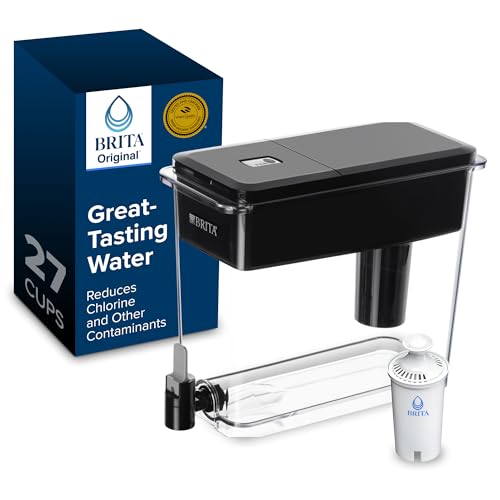
- 27-cup fridge-friendly capacity
- Reduces chlorine taste, copper, and mercury
- Includes filter-change indicator
Best For: Simple everyday refrigerator filtration
Best Gravity-Fed System

- No electricity or plumbing required
- Includes two Black Berkey elements
- Stainless steel countertop construction
Best For: Portable non-electric household filtration
Best Zero-TDS Option
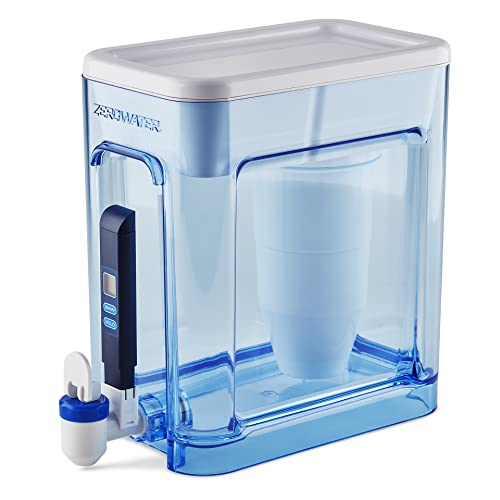
- Five-stage ion-exchange filtration
- Built-in TDS meter
- IAPMO-certified contaminant reduction
Best For: Large households prioritizing very low-TDS water
Best Compact Pitcher
Waterdrop PT-07B 10-Cup Pitcher

- NSF/ANSI 42 and 372 certified
- 200-gallon or three-month filter life
- Compact, hands-free refrigerator design
Best For: Apartments, dorms, offices, and everyday refrigerator storage
Best Simple Pick

- 35-cup family-sized capacity
- NSF 42 and 372 certified filter
- Slim design with replacement indicator
Best For: Families needing high-volume refrigerator filtration
Best Countertop RO Purifier – DREO 7-in-1 Reverse Osmosis Water Filter
For shoppers who want a high-filtration option without plumbing work, this countertop water purifier uses reverse osmosis and includes features that make daily monitoring easier. Its built-in TDS meter, filter-life indicator, self-cleaning design, and two autofill pitchers add convenience, while the 5-liter capacity suits regular household use.
Best For: Households seeking an install-free countertop RO system with TDS monitoring and pitcher-filling convenience.
Pros:
- RO filtration is tested by SGS to meet NSF/ANSI 58 standards.
- Designed to filter out 99.9% of possible contaminants, including PFOA, PFOS, chlorine, and fluoride.
- Offers a 3:1 pure-to-drain ratio, built-in TDS meter, and filter-life indicator.
- Includes two autofill pitchers and a self-cleaning function.
Cons:
- At 15.7 inches tall and 10.8 pounds, it requires dedicated counter space.
- The filter cycle is listed as six months, so replacement planning is still necessary.
This is a feature-rich choice among water purifiers for users who want reverse osmosis performance without an under-sink installation. Its countertop footprint and ongoing filter replacements are the main practical considerations.
Best Emergency Water Treatment – Aquatabs 397mg Purification Tablets
These compact water purification tablets are designed for camping, hiking, RV use, and emergency preparedness. Each 397mg tablet treats water in about 30 minutes, making this 100-count pack a lightweight addition to a bugout bag or portable water-treatment kit.
Best For: Campers, hikers, and emergency planners who need lightweight, portable water purification.
Pros:
- Each tablet purifies up to 4 gallons in 30 minutes.
- Claimed to remove 99.9999% of bacteria, 99.99% of viruses, and 99.9% of cysts such as Giardia.
- Lightweight 100-tablet pack is easy to store in survival kits, backpacks, or RV supplies.
- Designed without the bad taste, color, or odor associated with iodine tablets.
Cons:
- These tablets treat water but do not replace a sediment filter for visibly dirty water.
- Water requires a 30-minute treatment period before drinking.
Among portable water purifiers, Aquatabs stand out for their small size and clearly defined treatment capacity. Pairing them with a water filter bag or straw can help address sediment while the tablets handle disinfection.
Best Non-Electric Gravity System – Purewell 3-Stage Ultra-Filtration System
This countertop gravity water purifier uses a three-stage design combining activated carbon, a silver ion membrane, and a 0.01-micron hollow-fiber UF membrane. Its 2.25-gallon stainless-steel system needs no electricity, making it practical for kitchens, cabins, and some outdoor settings.
Best For: Users who want a large-capacity, non-electric countertop purifier with replaceable filters.
Pros:
- Three-stage filtration reduces chlorine and intercepts rust, sediment, organic matter, and heavy metals.
- 0.01-micron filter pore size and a stated flow rate of up to 4 gallons per hour.
- 304 food-grade stainless-steel housing includes a spigot and non-slip stand.
- Two filters are included, with each listed for up to 3,000 gallons under stated conditions.
Cons:
- It does not lower TDS values.
- The upper chamber should not be refilled when the lower chamber is full, or leaking may occur.
- The system is 20 inches tall, so cabinet or counter clearance should be checked.
This is one of the more practical water purifiers for homes that prefer gravity filtration and no electrical connection. Its stainless-steel construction and large capacity are useful, but buyers should understand that reducing contaminants is not the same as reducing TDS.
Best Everyday Pitcher – Brita Large 10-Cup Water Filter Pitcher
For straightforward daily use, this 10-cup Brita pitcher offers a compact way to improve tap-water taste and reduce several listed contaminants. The easy-fill locking lid and refrigerator-friendly shape make it a convenient entry-level option among household water purifiers.
Best For: Households wanting an affordable, manually filled pitcher for chilled filtered water.
Pros:
- 10-cup capacity can fill three 24-ounce reusable water bottles.
- Reduces chlorine taste and odor, mercury, copper, zinc, and cadmium according to the supplied product details.
- Fits refrigerator shelves and has an easy-fill locking lid.
- Compatible with Brita Longlast and Standard filters.
Cons:
- The included Standard filter is typically replaced after 40 gallons or about two months.
- It is a manual pitcher, so water must be poured into the reservoir and allowed to filter.
- The plastic design may be less durable than stainless-steel countertop systems.
This Brita is a sensible choice for basic everyday filtration rather than comprehensive purification. It works best when the goal is better-tasting tap water, convenient refrigerator storage, and reduced reliance on single-use bottles.
Best Tankless RO System – High-Capacity Waterdrop G3P600
The Waterdrop G3P600 is one of the more advanced water purifiers for an under-sink setup. Its tankless reverse osmosis design combines 600-gallon-per-day capacity, an 8-stage filtration system, and a smart faucet that displays water quality and filter life.
Best For: Households seeking high-capacity reverse osmosis filtration in a compact under-sink system.
Pros:
- NSF/ANSI 58 certified for TDS reduction and NSF/ANSI 42 certified for reducing chlorine, taste, and odor.
- 8-stage filtration is tested to reduce a broad range of listed contaminants, including PFAS, fluoride, arsenic, and particles.
- Produces up to 600 gallons per day with a 2:1 pure-water-to-wastewater ratio.
- Tankless design saves under-sink space, while the smart faucet tracks TDS and filter life.
Cons:
- Requires under-sink electricity.
- At 18.12 by 5.67 by 17.72 inches, it may not fit every cabinet.
- Reverse osmosis systems require filter replacement and installation planning.
The G3P600 is a strong choice when filtration performance, flow rate, and space efficiency matter more than a simple countertop setup. Confirm cabinet dimensions and access to an electrical outlet before buying.
Best Large-Capacity Dispenser – Brita UltraMax 27-Cup
The Brita UltraMax is a practical water purifier for everyday tap-water improvement without plumbing or electricity. This freestanding 27-cup dispenser uses a carbon-block filter to reduce chlorine taste and odor, along with copper, mercury, and other listed impurities.
Best For: Families and households wanting a fridge-friendly dispenser with simple gravity-fed filtration.
Pros:
- Large 27-cup capacity supports regular household use.
- Reduces chlorine taste and odor, plus copper, mercury, and other listed impurities.
- Fridge-friendly design includes an easy-locking lid and precision-pour spigot.
- Compatible with Standard and Elite filters, with a filter-change indicator.
Cons:
- The included Standard filter should be replaced about every two months or 40 gallons.
- It is freestanding and does not provide reverse osmosis or broad contaminant reduction.
- Its large capacity may require substantial refrigerator shelf space.
Choose the UltraMax if you want a low-effort way to keep filtered water chilled and readily available. It is especially convenient for routine taste and odor improvement, though buyers should budget for recurring filter replacements.
Best Gravity-Fed System – Big Berkey 2.25-Gallon
The Big Berkey is a countertop water purifier designed for homes, apartments, offices, and RVs. Its gravity-fed stainless steel system needs no electricity, plumbing, tools, or water pressure, making it a flexible option for everyday drinking, cooking, and filling reusable bottles.
Best For: Approximately one to four people who want a portable, non-electric countertop filtration system.
Pros:
- Gravity-fed operation works without electricity, plumbing, or water pressure.
- Includes two Black Berkey filter elements designed to reduce a broad range of commonly found contaminants.
- Durable AISI 304 stainless steel countertop construction.
- Each pair of filters is rated for up to 6,000 gallons before replacement is recommended.
Cons:
- Countertop design requires approximately 8.5 inches of diameter and 19.25 inches of height.
- Gravity filtration has a slow listed maximum flow rate of 0.03 gallons per minute.
- Replacement filters are sold separately, and actual filter life varies with water quality and maintenance.
The Big Berkey suits buyers who prioritize independence from power and plumbing over speed. Its substantial capacity and long stated filter life support regular use, but its tall footprint and slow gravity-fed flow should be considered.
Best Zero-TDS Option – ZeroWater 22-Cup Dispenser
For shoppers comparing water purifiers that target dissolved solids, the ZeroWater 22-Cup Ready-Read Dispenser uses five-stage ion-exchange filtration and includes a built-in TDS meter. It is designed for countertop use and can help reduce PFOA/PFOS, lead, chromium, and mercury.
Best For: Households wanting a large dispenser with very low-TDS water and an on-demand filter-change reading.
Pros:
- Five-stage filtration removes virtually all total dissolved solids, according to the supplied product details.
- IAPMO certified to reduce PFOA/PFOS, lead, chromium, and mercury.
- Built-in TDS meter helps indicate when the filter should be changed; the listed change point is 006.
- 22-cup capacity can reduce reliance on single-use plastic bottles.
Cons:
- The dispenser is larger than a standard pitcher and requires countertop space.
- Replacement filters should be changed when the meter reads 006, which may increase ongoing maintenance.
This is the strongest fit among these water purifiers for buyers focused on TDS reduction rather than simple taste improvement. Its large capacity and integrated meter add convenience, while the countertop footprint and filter upkeep are worth considering.
Best Compact Pitcher – Waterdrop PT-07B 10-Cup Pitcher
The Waterdrop PT-07B is a practical choice for shoppers seeking compact water purifiers for everyday drinking water. Its activated-carbon filter is NSF/ANSI 42 and 372 certified, and the pitcher is sized to fit most refrigerators.
Best For: Apartments, dorms, offices, and kitchens where refrigerator-friendly storage and straightforward filtration matter.
Pros:
- NSF/ANSI 42 and 372 certified filtration performance.
- Reduces PFOA/PFOS, odor, iron, mercury, copper, and other metal ions, based on the supplied notes.
- Filter can last up to 200 gallons or three months, with an LED replacement indicator.
- Hands-free lid helps dispense water without opening the lid.
Cons:
- This model does not lower TDS value.
- Its 2.4-liter capacity is smaller than a large countertop dispenser.
- Replacement filters must match the PT-07 model, such as PF-01A or WD-PF-01A.
Choose this pitcher if your priority is convenient, refrigerator-ready filtration for better-tasting daily water. Buyers specifically seeking TDS reduction should consider a different model.
Best Simple Pick – Waterdrop WFD-40L 35-Cup
The Waterdrop WFD-40L is one of the more spacious water purifiers for family use, offering a listed 35-cup capacity in a slim dispenser design. Its activated-carbon filter is NSF 42 and 372 certified and is intended to improve taste by reducing chlorine and other listed substances.
Best For: Families needing a high-capacity refrigerator dispenser with gravity filtration and a filter replacement indicator.
Pros:
- 35-cup total capacity, with 19 cups in the main body, supports heavier daily use.
- NSF 42 and 372 certified replacement filter reduces chlorine; the supplied notes cite a 97.4% residual-chlorine reduction rate.
- Designed with a slim profile, handle, sliding cover, and bottom arc for easier movement.
- Filter is listed for up to 200 gallons or two months, with an intelligent replacement indicator.
Cons:
- This model does not lower TDS value.
- Its 14.4-inch length may not fit every refrigerator, so dimensions should be checked first.
- The listed two-month filter life may require more frequent replacement than some competing pitchers.
This dispenser makes sense when capacity and refrigerator organization are more important than TDS reduction. Its slim shape and large reservoir suit family kitchens, provided the refrigerator has enough room.
How We Picked These Water Purifiers
We organized this selection around different real-world use cases rather than treating every filter as interchangeable. The lineup includes reverse-osmosis systems for stronger contaminant reduction, gravity and ultrafiltration systems for electricity-free operation, pitchers and dispensers for convenient daily use, and tablets for camping or emergency preparedness.
We also considered capacity, installation requirements, portability, replacement-filter availability, stated certifications, filtration method, and practical maintenance. A certification or performance claim should always be checked against the manufacturer’s current documentation, especially when you need reduction of a specific contaminant.
Quick Comparison
| Type | Best For | Main Advantage | Trade-Off |
|---|---|---|---|
| Countertop or tankless RO | High filtration needs | Broad reduction capability | Higher cost and maintenance |
| Gravity filter | Off-grid or no-plumbing use | Works without electricity | Slower flow and larger footprint |
| Pitcher | Small households | Simple, affordable setup | Limited capacity and frequent refilling |
| Dispenser | Families and shared spaces | Large chilled or ready-to-pour supply | Needs more refrigerator or counter space |
| Purification tablets | Camping and emergencies | Lightweight and portable | May affect taste and requires careful dosing |
Key Buying Factors for Water Purifiers
Know What You Need to Remove
Start with a recent water-quality report or a properly selected home test. Reverse osmosis may be appropriate when you are targeting dissolved solids or multiple contaminants, while carbon filters are commonly chosen for taste, odor, and some specified chemicals. Ultrafiltration and gravity systems can address particulates and certain microorganisms, but performance varies by model.
Check Capacity and Water Waste
Compare daily output, reservoir size, refill frequency, and filtration speed. RO systems may produce reject water, so review the stated pure-to-drain ratio. Pitchers and compact dispensers are convenient but can become frustrating for larger households. For camping, weight and treatment volume matter more than storage capacity.
Factor in Maintenance
Replacement intervals, filter cost, cleaning, and indicator accuracy affect total ownership cost. Confirm that replacement cartridges are readily available and that the system can be sanitized as directed. A larger filter is not automatically better if it is difficult to clean or expensive to maintain.
Measure Before You Buy
Record the available height, width, depth, faucet clearance, and refrigerator shelf space. Tankless units may need plumbing and power, while countertop models need room for reservoirs and pitchers. Gravity systems require enough vertical clearance for filling and dispensing.
Who Should Buy Which Water Purifiers?
Choose a countertop or tankless RO system if you want the most comprehensive filtration approach and are comfortable with installation, filter changes, and possible water waste.
Choose a gravity or ultrafiltration system if you want a larger supply without relying on electricity or a permanent water connection, particularly for cabins, backup use, or households with suitable source water.
Choose a pitcher or dispenser if your priority is better-tasting everyday water with minimal setup. Pick a pitcher for smaller volumes and a large dispenser for families, offices, or frequent refills.
Choose purification tablets for lightweight emergency kits, hiking, and travel—not as a blanket replacement for a tested household filtration system. Follow the label directions precisely and use only with the water sources the product is designed to treat.