A dependable portable solar panel can keep phones, lights, radios, and backup batteries running when the grid is down. The best choice depends on your power needs, storage space, weather conditions, and whether you already own a compatible power station.
We compared 10 compact panels and solar generator kits across output, portability, durability, charging flexibility, and emergency-readiness to help you build a practical backup power setup.
Best 10 Portable Solar Panel for Emergency Kit Picks for 2026
Best All-Around Panel
ZOUPW 100W Foldable Solar Panel

- 23.5% monocrystalline efficiency
- Five-in-one connector cable
- IP67 waterproof design with direct USB charging
Best For: Preparedness kits needing broad power-station compatibility
Best Complete Kit
MARBERO 155Wh Solar Generator Kit

- Includes power station and 30W panel
- Multiple AC, USB, DC, and car outputs
- Built-in flashlight with SOS mode
Best For: First-time buyers wanting an all-in-one emergency setup
Best Lightweight Panel
FlexSolar 100W Foldable Charger

- Only 4.1 pounds
- 100W DC plus USB-C and USB-A outputs
- IP67 waterproof and dustproof construction
Best For: Compact emergency kits and portable outdoor use
Best Power Station Bundle
Jackery Explorer 300 with 40W Panel

- 292Wh station with 300W rated output
- Includes 40W SolarSaga panel
- LiFePO4 battery rated for 4,000+ cycles
Best For: Emergency kits needing a complete battery-and-panel bundle
Best Overall
DOKIO 150W Foldable Solar Panel Kit

- Compact 150W foldable panel for backup power
- Long cable supports flexible, shaded setups
- Includes controller, adapters, USB ports, and bag
Best For: Emergency kits needing flexible 12V and power-station charging
Best Complete Power Station
ZeroKor 300W Solar Generator Kit

- Combines a 300W power station with a 60W panel
- Provides AC, USB, DC, car, and solar charging
- Includes protections and an SOS flashlight
Best For: Emergency kits needing stored power and varied device outputs
Best Lightweight Option
DOKIO 100W Foldable Solar Panel

- Lightweight foldable design for compact storage
- Includes long cable and separate safety controller
- Supports 12V batteries, USB devices, and power stations
Best For: Portable emergency kits prioritizing low weight and simple 12V charging
High-Capacity Pick

- 400W output and 23.4% claimed efficiency
- MC4-compatible with many power stations
- Foldable, kickstand-equipped, and IP65-rated
Best For: Power-station-based emergency kits, RVs, and off-grid backup
Ultra-Compact Pick
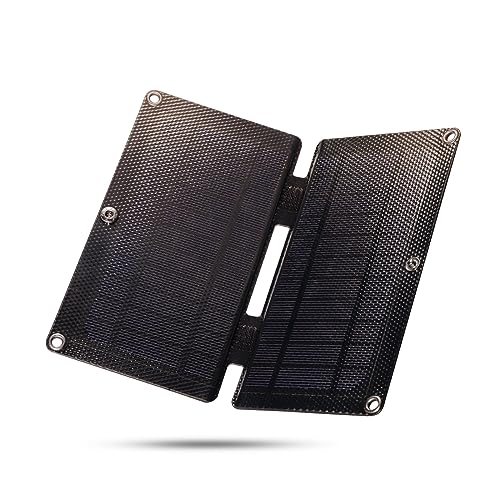
- 4W panel with 5V/0.8A output
- Folds to a small, 4.2-ounce package
- Includes three-in-one charging cable
Best For: Emergency bags and small-device or weather-radio charging
All-in-One Pick

- Includes a 100W battery station and 40W panel
- Multiple AC, DC, USB, and USB-C outputs
- Solar, wall, and car charging options
Best For: Compact outage kits, camping, and small electronics under 100W
Best All-Around Panel – ZOUPW 100W Foldable Solar Panel
The ZOUPW 100W is a practical portable solar panel for emergency kit storage, camping, RV use, and blackout preparedness. Its 23.5% monocrystalline cells, adjustable kickstands, waterproof ETFE coating, and broad connector selection make it a flexible choice for charging compatible power stations or small devices directly.
Best For: Preparedness kits that need one foldable panel with broad power-station compatibility.
Pros:
- 23.5% efficiency and adjustable kickstands help improve solar collection.
- Includes five connector types for many Jackery, EcoFlow, Anker, Bluetti, and generic battery setups.
- IP67-rated panel, ETFE coating, built-in USB-C and USB-A ports, and a 100W output.
Cons:
- At about 9.5 pounds, it is heavier than some compact alternatives.
- Charging speed depends on the connected power station’s input limit and sunlight conditions.
Choose this model when connector flexibility and outdoor durability matter more than minimizing pack weight. Check your power station’s input requirements before buying.
Best Complete Kit – MARBERO 155Wh Solar Generator Kit
The MARBERO 155Wh kit combines a portable power station, 30W solar panel, and charging accessories in one package. For shoppers building a portable solar panel for emergency kit setup, it offers a simple starting point with built-in lighting, multiple outputs, and direct solar charging for phones and tablets.
Best For: Buyers who want an all-in-one emergency power and lighting kit.
Pros:
- Includes the 155Wh power station, 30W panel, power converter, wall charger, and car charger.
- Offers AC, USB, DC, and car-port outputs for a range of small devices.
- Built-in flashlight includes steady, SOS, and strobe modes for outage or roadside use.
- The panel is rated IP65 and is described as charging the station in roughly 6–7 hours.
Cons:
- The included 30W panel charges more slowly than the 100W panels in this roundup.
- The 155Wh capacity is intended for smaller electronics rather than high-demand appliances.
This is the most convenient option if you do not already own a power station or compatible accessories. Its integrated flashlight and variety of ports add useful emergency functionality.
Best Lightweight Panel – FlexSolar 100W Foldable Charger
At just 4.1 pounds, the FlexSolar 100W is a strong portable solar panel for emergency kit use when storage space and carrying weight are priorities. It folds into a compact package, provides 23% or higher efficiency, and includes USB-C, USB-A, and DC outputs for devices and compatible power stations.
Best For: Lightweight emergency kits, hiking packs, road trips, and portable power stations.
Pros:
- Weighs 4.1 pounds and folds to approximately 12.99 by 10.43 by 2.17 inches.
- Provides 100W DC output plus 45W USB-C PD and 18W USB-A charging.
- Includes a four-in-one cable with DC5521, DC7909, Anderson, and XT60 connectors.
- IP67 waterproof and dustproof construction supports outdoor use.
Cons:
- Its included cable has four connector types rather than five.
- Actual output will vary with sunlight, panel positioning, and connected-device limits.
This panel is especially appealing when a preparedness kit may need to be carried or stored in a small vehicle. It balances a full 100W rating with a notably low listed weight.
Best Power Station Bundle – Jackery Explorer 300 with 40W Panel
The Jackery Explorer 300 bundle pairs a 292Wh power station with a 40W SolarSaga panel, making it a ready-to-use portable solar panel for emergency kit applications. It provides 300W of rated output, a 600W peak, multiple device ports, and a LiFePO4 battery designed for long service life.
Best For: Emergency kits that need a bundled battery station for laptops, cameras, phones, and other moderate loads.
Pros:
- Includes the Explorer 300 power station, 40W panel, AC adapter, and car charger.
- Offers two AC outlets, 100W USB-C, two USB-A ports, and a 120W car port.
- LiFePO4 chemistry is rated for more than 4,000 charge cycles before reaching 70% capacity.
- Can reach 80% in about 2.8 hours with a 100W panel or about 7.5 hours with the included 40W panel.
Cons:
- The included 40W panel charges more slowly than a separately purchased 100W panel.
- The complete bundle weighs about 12.9 pounds, making it less suited to lightweight carry kits.
This bundle is a good fit when the battery, outlets, and long-term cycle rating are more important than having the fastest included solar charging. Its 300W output is suitable for many electronics but not necessarily larger appliances.
Best Overall – DOKIO 150W Foldable Solar Panel Kit
The DOKIO 150W is a versatile portable solar panel for emergency kit use when you need flexible placement and support for 12V batteries or compatible power stations. Its foldable design, long cable, separate controller, and included adapters make it practical for backup charging, camping, RVs, and van setups.
Best For: Emergency kits needing a higher-wattage foldable panel with broad connection options.
Pros:
- Folds down compactly and is light enough for solo carrying.
- Includes a 9.8-foot cable for positioning the panel in sunlight while keeping connected equipment shaded.
- Separate PWM controller includes reverse-polarity, overcharge, overload, and short-circuit protection.
- Includes USB ports, multiple DC adapters, connectors, storage bag, and manual.
Cons:
- Actual input may be limited by a power station’s 60–100W solar-input cap.
- The fabric case should not be left in heavy rain or prolonged strong sun.
This is a strong all-around choice if your emergency setup uses a 12V battery or accepts its connectors. Confirm your device’s solar-input limit before buying so the panel’s 150W rating matches your system’s capabilities.
Best Complete Power Station – ZeroKor 300W Solar Generator Kit
The ZeroKor kit combines a 300W portable power station with a 60W solar panel, making it a convenient portable solar panel for emergency kit setups that need stored energy and several output types. It can charge small electronics through AC, USB, DC, car, or solar inputs and includes an SOS-capable flashlight.
Best For: Emergency kits that need an integrated battery, multiple charging outlets, and backup lighting.
Pros:
- Includes both a 300W power station and a 60W monocrystalline solar panel.
- Offers AC outlets, USB ports, a DC port, car charging, and home AC recharging.
- Built-in protections include short-circuit, over-current, over-voltage, overload, and overheating protection.
- Flashlight includes reading and SOS modes.
Cons:
- Devices using more than 300W may damage or disable the power station.
- The solar panel junction box is not waterproof and must be kept dry.
- Its 60W panel is better suited to smaller devices and recharging the included station than high-demand backup loads.
Choose this package when convenience matters more than maximum solar-panel output. It provides a ready-to-use battery-and-panel system, but you should stay within the 300W limit and protect the panel’s junction box from moisture.
Best Lightweight Option – DOKIO 100W Foldable Solar Panel
The DOKIO 100W is a lightweight portable solar panel for emergency kit use with 12V batteries, compatible power stations, phones, lights, and small gadgets. It folds flat, includes a separate safety controller, and uses a long cable to make positioning in direct sunlight easier.
Best For: Lightweight emergency kits focused on 12V battery charging and essential electronics.
Pros:
- Weighs about 6 pounds and folds to approximately 19 by 26 inches.
- Includes a 9.84-foot cable for flexible panel placement.
- Separate PWM controller provides reverse-polarity, overcharge, overload, and short-circuit protection.
- USB ports can support phones, lights, and small gadgets when connected to a 12V battery.
Cons:
- Some power stations may cap solar input at 60W or another lower level.
- The 100W-class output is less capable than a larger panel for faster battery charging.
- USB output can vary when used without a battery in changing sunlight.
This panel is a sensible space-saving choice for emergency supplies where carrying weight matters. Check your power station’s maximum solar input and use the included controller with a suitable 12V battery system.
High-Capacity Pick – 400W Foldable Solar Charger
For shoppers seeking a portable solar panel for emergency kit use with substantial output, this 400W foldable model is designed to charge compatible power stations through MC4 connections. Its monocrystalline cells, adjustable kickstands, and weather-resistant ETFE surface suit backup power, camping, and RV use.
Best For: Emergency kits built around a portable power station, RVs, camping, and off-grid backup charging.
Pros:
- 400W maximum power with claimed 23.4% conversion efficiency.
- MC4 connectors and compatibility with many power stations.
- Foldable design with adjustable kickstands for portable setup.
- ETFE-laminated, IP65-rated construction for outdoor use.
Cons:
- It is intended to charge power stations rather than directly serve as a compact phone charger.
- The 40V output may require checking your power station’s input specifications.
This is the strongest fit of the three when your emergency plan includes a larger power station and you value faster, higher-capacity solar input over minimal packed size.
Ultra-Compact Pick – Raddy SP4 Emergency Panel
The Raddy SP4 is a practical portable solar panel for emergency kit storage when weight and packed size matter most. It provides 5V/0.8A output, folds to a compact footprint, and includes a three-in-one cable for charging phones, radios, and other small devices.
Best For: Lightweight emergency bags, weather-radio users, overlanding kits, and basic small-device charging.
Pros:
- Very light at 4.2 ounces and compact when folded.
- 5V/0.8A output for compatible small electronics.
- Includes micro-USB, USB-C, and Lightning connectors.
- Four hanging holes make it easy to attach to a bag.
Cons:
- Its 4W maximum output is limited compared with panels designed for power stations.
- Charging performance depends on sunlight and the needs of the connected device.
Choose the SP4 when portability is the priority and your emergency load consists mainly of phones, radios, or similar low-power devices rather than a battery generator.
All-in-One Pick – 100W Power Station Kit
This kit combines a 100W portable power station with a 40W foldable solar panel, making it a convenient portable solar panel for emergency kit setups that need stored energy and multiple output options. It can power small electronics, recharge by solar, wall outlet, or car, and includes an emergency flashlight with SOS mode.
Best For: Home outage kits, camping, and emergency users who want a compact battery generator with solar charging included.
Pros:
- Includes both a 100W power station and 40W monocrystalline panel.
- Offers AC, DC, USB-A, QC USB, and USB-C outputs.
- Supports solar, wall, and 12V car charging.
- Built-in BMS protections and an SOS flashlight add emergency utility.
Cons:
- Devices must stay within the station’s 100W limit.
- The panel’s junction box should be kept dry because it is not waterproof.
- The battery requires periodic recharging during storage.
This is a convenient middle ground: more capable than a small standalone panel and simpler than pairing a high-output panel with a separate power station, provided your devices remain under 100W.
How We Picked the Best Portable Solar Panel for Emergency Kit
We focused on products suited to realistic emergency scenarios, including short-term outages, evacuation bags, camping, and backup communications. Key considerations included rated solar output, foldability, included accessories, battery compatibility, weather resistance, charging ports, and the usefulness of the complete kit.
Because solar output varies with season, shade, panel angle, and weather, wattage ratings are best treated as maximum performance rather than guaranteed charging speed. We also separated compact emergency chargers from larger panels designed to refill power stations or 12V batteries.
Quick Comparison
| Type | Best For | Typical Strength | Watch For |
|---|---|---|---|
| 4W–40W kits | Phones, lights, and small electronics | Low weight and simple storage | Slow charging for larger batteries |
| 60W–100W panels | Portable power stations | Good balance of size and output | Needs compatible input connectors |
| 150W–400W panels | Extended outages and larger batteries | More energy in usable sunlight | Bulkier and more demanding to position |
Key Buying Factors for a Portable Solar Panel for Emergency Kit
Output and Your Devices
Estimate your daily needs before choosing a panel. A small panel may be enough for a phone, flashlight, or radio, while a 100W model is more suitable for replenishing a portable power station. Larger panels make more sense when you need repeated charging during multi-day outages.
Battery and Connector Compatibility
Check the panel’s voltage range, connector type, and charging protocol against your power station or battery. Some kits include a charge controller for 12V batteries, while others are intended for specific power stations. A higher wattage rating does not help if the input limits or connector are incompatible.
Portability and Storage
Foldable designs are easier to store in an emergency bin or vehicle. Consider folded dimensions, weight, carrying handles, cable storage, and whether you can set the panel at a useful angle. Larger panels can deliver more power but may require more setup space.
Weather Resistance and Durability
Water-resistant construction is valuable for unpredictable outdoor conditions, but confirm the product’s rating and protect connectors from standing water. Look for reinforced hinges, sturdy kickstands, and panels that can be safely packed without bending or scratching.
Who Should Buy Which Portable Solar Panel for Emergency Kit?
Choose a compact 4W–40W kit if your priority is emergency communication and lightweight storage. Select a 60W–100W foldable panel for a balanced setup that can recharge common power stations. Consider 150W–400W models for extended outages, larger battery banks, or users who can dedicate more space to setup and transport.
Complete solar generator bundles are convenient for first-time buyers because they pair a battery with a panel, but they may offer less flexibility than buying a panel for an existing power station. Before an emergency, test the full system in sunlight, label cables, and store it with adapters, instructions, and a backup charging option.