Reliable power can make the difference between a useful field transmission and a silent radio. The best portable solar panel for ham radio should provide dependable energy while remaining easy to carry, set up, and connect to your equipment.
Our 2026 roundup includes foldable panels, compact emergency chargers, and solar-equipped radios. Use the guide below to compare output, portability, compatibility, and backup features before choosing a setup for camping, emergency communications, or portable operating.
Best 10 Portable Solar Panel for Ham Radio Picks for 2026
Best Lightweight Pick

- 4.1-pound foldable design with carry bag
- 100W DC, USB-C, and USB-A outputs
- IP67-rated and 23%+ stated efficiency
Best For: Portable field stations needing flexible charging
Best Emergency Radio Combo
Mesqool 12000mAh Weather Radio

- Integrated 8500mm² monocrystalline solar panel
- 12000mAh battery and hand-crank backup
- NOAA/FM/AM radio, lights, and SOS alarm
Best For: Compact emergency preparedness and weather updates
Best Low-Light Performance

- N-Type 16BB cells with stated 25% efficiency
- 35°–60° adjustable kickstands
- 5-in-1 cable and IP67 ETFE construction
Best For: Field operators using compatible portable power stations
Best Rugged Radio Backup

- 8500mm² solar panel and 12000mAh battery
- Five charging methods including hand crank
- IPX6 waterproof housing with NOAA alerts
Best For: Emergency communications kits needing alerts and lighting
Best Compact Option
MARBERO 30W Foldable Solar Panel

- 2.4-pound foldable design
- USB-C, QC3.0, and DC outputs
- Includes multiple DC adapters
Best For: Compact field kits and small USB/DC devices
Best High-Power Setup
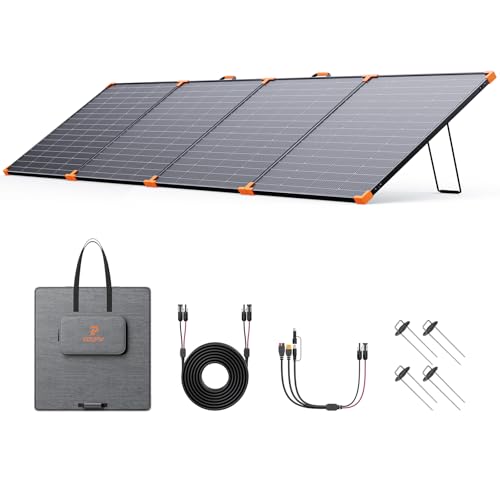
- 450W rated output
- Designed for 40–60V power stations
- Includes four-in-one adapter cable
Best For: Large off-grid radio stations with compatible battery systems
Best for Comfort

- Solar, USB, and rechargeable power
- AM/FM reception with telescopic antenna
- Lightweight 1.2-pound design
Best For: Backup news and weather listening in emergency kits
Best Compact Panel
Raddy SP4 4W Foldable Solar Kit
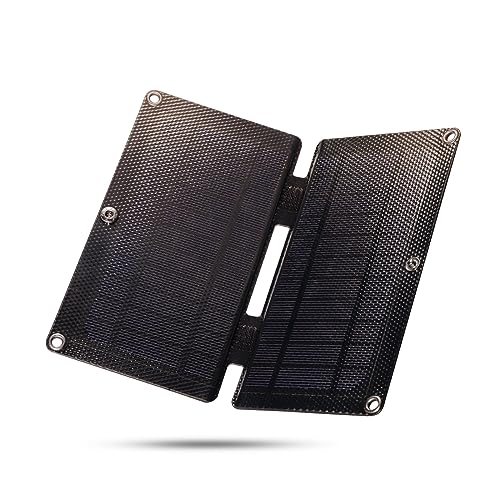
- 4W output up to 5V and 0.8A
- Folds down to a lightweight 4.2-ounce size
- Includes three common charging connectors
Best For: Lightweight ham radio and emergency charging kits
Best All-in-One Radio
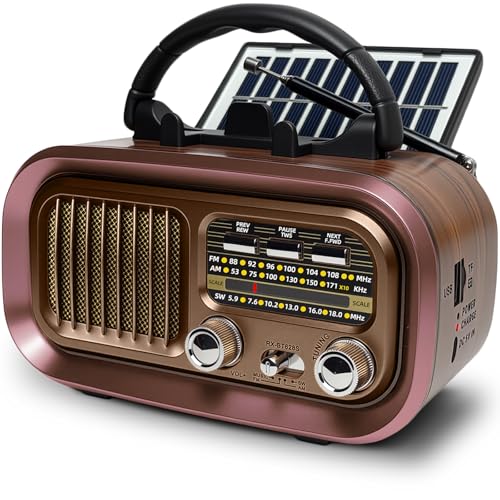
- Receives AM, FM, and shortwave broadcasts
- Solar, USB, and rechargeable power options
- Adds Bluetooth, USB, and TF playback
Best For: Emergency listening and camping use
Best Emergency Feature Set

- 180-degree foldable solar panel
- FM, AM, VHF, and shortwave reception
- Includes speakers, flashlight, and media playback
Best For: Multi-function camping and outage preparedness
Best Lightweight Pick – FlexSolar 100W Foldable Panel
If you want a portable solar panel for ham radio setups that is easy to carry between operating locations, the FlexSolar 100W model is a practical option. It weighs 4.1 pounds, folds into a compact package, and provides USB-C, USB-A, and DC outputs for charging compatible power banks or portable power stations.
Best For: Ham radio operators who prioritize low carry weight, multiple charging outputs, and weather-resistant emergency gear.
Pros:
- Lightweight 4.1-pound design with included carry bag.
- 100W DC output plus PD 3.0 USB-C and USB-A ports.
- 23%+ stated conversion efficiency and IP67 water and dust resistance.
Cons:
- The supplied notes do not identify a built-in kickstand or angle-adjustment system.
- Its DC and USB outputs may require compatibility checks with a particular radio power setup.
Its combination of portability and flexible outputs makes it well suited to field stations using a battery or power station. Confirm the connector and voltage requirements of your ham radio equipment before buying.
Best Emergency Radio Combo – Mesqool 12000mAh Weather Radio
The Mesqool is not a standalone solar panel, but its integrated solar charger can support a compact emergency communications kit. For ham radio operators preparing for outages, it combines a large stated 12000mAh battery with NOAA, FM, and AM reception, a hand crank, lighting, and phone-charging capability.
Best For: Emergency preparedness kits that need weather information, lighting, and small-device backup power alongside radio equipment.
Pros:
- Integrated 8500mm² monocrystalline solar panel.
- Real stated 12000mAh battery with solar, hand-crank, USB-C, and AAA power options.
- NOAA, FM, and AM reception plus flashlight, reading lamp, and SOS alarm.
Cons:
- It is an emergency weather radio rather than a 100W panel for powering a ham radio transceiver.
- The supplied notes do not provide a solar output wattage.
This unit works best as a self-contained backup accessory, not as the primary energy source for a field ham station. Pair it with a dedicated solar panel and battery when sustained radio operation is required.
Best Low-Light Performance – ZOUPW 100W N-Type Panel
For a portable solar panel for ham radio use where changing weather is a concern, the ZOUPW 100W panel emphasizes low-light performance and setup flexibility. Its N-Type 16BB cells have a stated 25% efficiency, while adjustable kickstands help aim the panel toward the sun during off-grid operation.
Best For: RV, camping, and field-radio setups using compatible Jackery, EcoFlow, Bluetti, Anker, or generic battery systems.
Pros:
- N-Type 16BB monocrystalline cells with stated 25% conversion efficiency.
- Adjustable 35° to 60° kickstands for improved sun alignment.
- 5-in-1 cable and multiple connectors for several power-station brands.
- IP67-rated construction with ETFE lamination.
Cons:
- At about 8 pounds, it is heavier than the FlexSolar option.
- It folds to a relatively broad 23.39-by-23.23-inch package.
- Compatibility still depends on the input specifications of the radio battery or power station.
The ZOUPW is a strong choice when charging efficiency, connector coverage, and positioning matter more than minimum packed weight. Its included cable system can simplify field setups, but verify your equipment’s input limits first.
Best Rugged Radio Backup – Emergency NOAA Weather Radio
This emergency weather radio is another accessory rather than a full-size solar panel, but it can complement a portable ham radio kit during blackouts or outdoor deployments. Its large stated 8500mm² solar panel, 12000mAh battery, hand crank, and five charging methods provide several ways to keep essential small electronics and lighting available.
Best For: Operators who want a rugged emergency information and lighting device to accompany a dedicated solar charging system.
Pros:
- Large 8500mm² monocrystalline solar panel.
- 12000mAh battery with solar, hand-crank, USB-C, and AAA power options.
- AM/FM and seven NOAA bands with alerts and SOS alarm.
- IPX6 waterproof design with flashlight and reading lamp.
Cons:
- It does not provide the high-wattage solar output expected from a dedicated ham-radio panel.
- The supplied notes do not specify how much power its solar panel delivers.
Its value is in resilience and self-contained emergency functions rather than sustained transceiver power. Use it for alerts, lighting, and small-device charging while relying on a dedicated panel and battery for actual radio operations.
Best Compact Option – MARBERO 30W Foldable Solar Panel
If you need a portable solar panel for ham radio outings, the MARBERO 30W is a lightweight option for topping up compatible USB or DC-powered equipment. Its foldable design, multiple outputs, and included adapters make it practical for camping, field work, and emergency kits, though it cannot store electricity on its own.
Best For: Ham radio operators who prioritize portability and need to charge small USB or DC devices from a compact panel.
Pros:
- Folds to a laptop-bag-sized 8.9 x 12 x 1.8 inches and weighs 2.4 pounds.
- Offers USB-C, QC3.0 USB, and 16.5V DC output options.
- Includes three DC adapter plugs, a cable, carabiners, and a carry bag.
- Rated at 21.5–23.5% conversion efficiency, with stated output in cloudy conditions.
Cons:
- It does not store power, so charging depends on available sunlight or a connected battery.
- The 30W output is intended for smaller devices rather than high-capacity power stations.
- Actual output varies with clouds, panel angle, temperature, and sunlight intensity.
For a portable solar panel for ham radio kits, this MARBERO model is most appealing when low weight and flexible connectors matter more than maximum wattage. Verify your radio or power station’s voltage and connector requirements before buying.
Best High-Power Setup – ZOUPW 450W N-Type Solar Panel
The ZOUPW 450W is a high-output portable solar panel for ham radio operators running larger power stations at remote sites. Its N-type cells, 25% stated efficiency, and included adapter cable suit substantial battery systems, but its high-voltage design is not intended for low-voltage generators.
Best For: Base-camp, RV, and emergency ham radio setups built around compatible 40–60V-input power stations.
Pros:
- Provides up to 450W of rated output with N-type 16BB cell technology.
- Includes XT-60, Anderson, DC7909, and DC8020 connection options.
- IP68-rated construction, ETFE coating, and bypass diodes support outdoor use.
- Four adjustable kickstands and a 29.5-pound fiberglass structure support field deployment.
Cons:
- Not compatible with power stations requiring less than 30V input, according to the supplied warning.
- At 29.5 pounds, it is considerably less convenient for backpack-style transport.
- The manufacturer advises against long-term fixed, series, or parallel connections.
This panel makes sense when a ham radio station depends on a large power bank and fast solar replenishment. Check the power station’s input voltage, connectors, and operating limits carefully before choosing it.
Best for Comfort – PRUNUS J08 Solar AM/FM Radio
The PRUNUS J08 is not a dedicated panel for powering ham radio equipment, but its built-in solar charging feature can complement an emergency communications kit. This compact AM/FM radio uses a rechargeable battery, USB charging, and a small solar panel for basic backup listening during outages or outdoor trips.
Best For: Ham radio households and emergency kits that also want a simple solar-assisted broadcast radio for news, weather, and general updates.
Pros:
- Combines rechargeable battery, USB charging, and solar power options.
- Compact 7.5 x 4.2 x 2.8-inch body weighs 1.2 pounds.
- Receives FM 88–108 MHz and AM 530–1710 kHz broadcasts.
- Includes a telescopic antenna, 5W speaker, and 3.5mm headphone support.
Cons:
- It is a broadcast AM/FM receiver, not a ham-band transceiver or external solar panel.
- The supplied notes do not specify solar-panel output or charging performance.
- Its solar feature is intended to power the radio rather than charge larger field equipment.
Choose the PRUNUS J08 as a supplemental emergency communication item, not as the main portable solar panel for ham radio operations. Its value is in compact backup access to broadcast news and weather when normal power is unavailable.
Best Compact Panel – Raddy SP4 4W Foldable Solar Kit
If you need a portable solar panel for ham radio accessories, the Raddy SP4 is a compact option for topping up compatible 5V devices during trips or emergencies. Its 4W output, foldable design, and included 3-in-1 cable make it especially practical for lightweight field kits.
Best For: Ham radio operators and outdoor users who need a small solar charger for compatible radios and USB devices.
Pros:
- Provides up to 5V and 0.8A from a 4W panel.
- Folds to a compact 3.9 x 6.7 x 0.7 inches and weighs 4.2 ounces.
- Includes micro USB, USB-C, and Lightning connectors.
- Four hanging holes make it easy to attach to a bag.
Cons:
- Its 4W output is intended for smaller compatible devices rather than high-power equipment.
- Charging performance depends on available sunlight.
The SP4 stands out when portability matters most. Verify that your radio or accessory accepts its 5V output before relying on it as part of a communications kit.
Best All-in-One Radio – Portable AM/FM/SW Solar Radio
For shoppers considering a portable solar panel for ham radio preparedness, this radio combines solar-assisted charging with AM, FM, and shortwave reception. It is designed more as a self-contained listening and emergency unit than as a standalone panel for powering separate ham radio equipment.
Best For: Campers and preparedness users who want shortwave listening, rechargeable power, and basic solar charging in one portable radio.
Pros:
- Supports AM, FM, and shortwave tuning from 5.9–18.0 MHz.
- Offers solar, USB, and rechargeable-battery power options, with D-cell backup support noted.
- Includes Bluetooth, USB, and TF-card playback.
- Built-in handle and compact design make it easy to carry.
Cons:
- The integrated solar panel is primarily part of the radio’s charging system, not a general-purpose external panel.
- It weighs about 1.2 pounds, making it less lightweight than a small foldable panel.
This model is a sensible choice if your priority is receiving broadcasts and maintaining a versatile emergency radio. It is less suitable if you specifically need a dedicated power source for a separate ham transceiver.
Best Emergency Feature Set – 5-in-1 Solar Emergency Radio
This 5-in-1 unit is an alternative to a standalone portable solar panel for ham radio setups, combining a 180-degree foldable solar panel with radio, audio playback, speakers, and a flashlight. Its broad feature set suits emergency and camping kits where one compact device needs to perform several roles.
Best For: Campers and emergency-preparedness users who want solar charging, multiple radio bands, lighting, and media playback in one device.
Pros:
- Includes a 180-degree foldable solar panel for solar-powered operation.
- Supports FM, AM, VHF, and shortwave reception.
- Adds dual speakers, MP3/USB/TF playback, Bluetooth, and a flashlight.
- Portable dimensions make it practical for camping and outages.
Cons:
- The integrated panel is not presented as a standalone charger for separate ham radio equipment.
- The listed warranty is 90 days.
- Its many functions may be unnecessary for buyers seeking only solar power.
The RX-125BT offers strong emergency versatility in a single enclosure. Choose it when communications, audio, lighting, and solar operation matter more than obtaining a dedicated external panel.
How We Picked the Best Portable Solar Panel for Ham Radio
We looked at the practical requirements of off-grid radio use rather than treating peak wattage as the only measure of performance. The selected products cover several use cases, from compact emergency radios and low-power USB charging to larger panels intended to recharge portable power stations.
Key considerations included stated wattage, panel efficiency, folding design, weight, weather resistance, connector options, charging compatibility, and whether a product works best as a primary source or as part of a battery-backed system. Because solar output changes with weather, angle, and time of day, we also favored options that can support a broader field setup instead of relying on ideal conditions.
Some products in this roundup are solar-equipped radios rather than standalone panels. They may suit emergency listening and basic communication needs, but they generally cannot replace a properly sized panel for powering a ham transceiver.
Quick Comparison
| Use case | Best fit | What to prioritize |
|---|---|---|
| QRP or low-power field operation | 30W–100W folding panel | Regulated outputs, compatible connectors, and manageable weight |
| Power-station recharging | 100W–450W panel | Voltage compatibility, input limits, size, and setup stability |
| Emergency listening | Solar weather or AM/FM radio | Battery capacity, NOAA reception, hand-crank backup, and USB charging |
| Minimal emergency kit | Compact 4W–30W charger | Portability, direct USB charging, and realistic charging expectations |
Key Buying Factors for a Portable Solar Panel for Ham Radio
Power and Operating Style
Estimate the radio’s average draw, not just its maximum transmit rating. QRP rigs and receive-focused setups can work with smaller panels, while higher-power transmitters usually need a battery buffer and substantially more generation capacity. A solar panel normally charges the battery; the battery supplies stable power during transmissions and cloud cover.
Voltage, Connectors, and Regulation
Check the panel’s voltage range and connector type against your power station, charge controller, or radio battery system. Avoid connecting an unregulated panel directly to sensitive equipment unless the manufacturer explicitly supports it. USB ports are convenient for accessories, but they may not provide the voltage or current required by a transceiver.
Portability and Durability
Foldable panels are easier to transport and position, but larger arrays can be bulky and vulnerable to wind. Look for useful carrying features, reinforced cable connections, splash or weather resistance, and a design that can be angled toward the sun. Weight matters when hiking to a summit or operating from a temporary campsite.
Real-World Solar Conditions
Rated output is measured under favorable laboratory conditions. Shade, haze, heat, poor orientation, and short winter days can reduce production significantly. Choose extra capacity if dependable charging is important, and use a charge controller or power station with appropriate battery protections.
Who Should Buy Which Portable Solar Panel for Ham Radio?
Choose a compact emergency radio if your priority is news, weather alerts, and basic backup power. A small folding panel is better for phones, GPS devices, and low-demand accessories. For QRP ham operation, a 30W–100W panel paired with a suitable battery is a practical starting point. Larger 100W–450W models make more sense when recharging a high-capacity power station or supporting extended multi-day operation.
Before buying, confirm your radio’s consumption, battery chemistry, charging method, and connector requirements. The right Portable Solar Panel for Ham Radio is not necessarily the largest model—it is the one that delivers compatible, usable power without making your field setup unnecessarily difficult to carry or operate.