The best food mills for home use make it easier to turn cooked vegetables, fruit, and other ingredients into smooth purees without peeling or seeding everything first. The right model can simplify tomato sauce, mashed potatoes, baby food, jams, and canning prep.
This roundup compares manual food mills, stand-mixer attachments, and electric grinders so you can choose based on texture, batch size, cleanup, and the ingredients you process most often.
Best 10 Food Mills for Home Use Picks for 2026
Best Stainless Steel Pick

- Stainless steel bowl for hot foods
- Three texture discs included
- Folding non-slip legs
Best For: Purees and sauces in batches up to about 2.3 quarts
Best KitchenAid Grain Attachment

- Fits KitchenAid stand mixers
- Nine adjustable grind settings
- All-metal construction
Best For: Fresh flour and dry-grain grinding with a KitchenAid mixer
Best Multifunction Food Mill

- Three interchangeable milling trays
- Dual hooks improve bowl stability
- Includes spoon and funnel
Best For: Sauces, potatoes, jams, and canning
Best Simple Grain Milling

- Nine adjustable grinding settings
- All-metal construction
- Removable brush-clean design
Best For: Fresh flour and spice powders from dry grains
Heavy-Duty Meat Grinder
Electric Sausage & Meat Grinder

- 300W motor with 3200W maximum locked power
- Three plates and three sausage-stuffer tubes
- Overload protection and reverse function
Best For: Home meat grinding and sausage-making
Best All-Around Food Mill
4-Disc Stainless Steel Food Mill
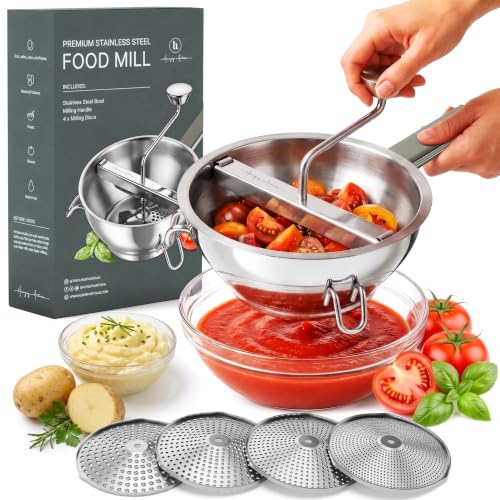
- Four discs for fine, coarse, and ultra-fine textures
- Comfortable spring-loaded rotary crank
- Dishwasher-safe stainless steel construction
Best For: Purees, sauces, mashed potatoes, jams, and canning
High-Speed Dry Mill
Electric Grain, Spice & Flour Grinder
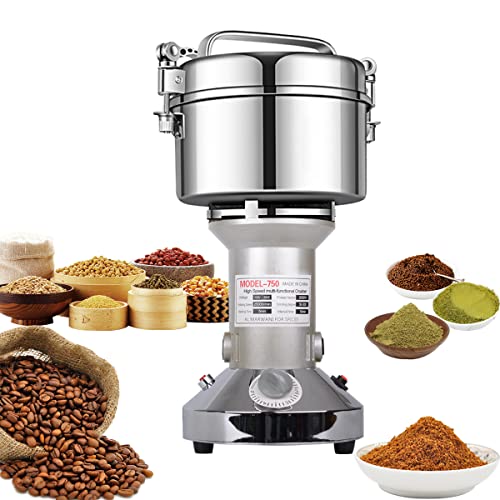
- 2000W motor with 25,000 RPM speed
- 750g capacity for dry grains and spices
- Designed for dry ingredients only
Best For: Grinding grains, flour, spices, herbs, and coffee
Large-Batch Classic

- Generous 3.5-quart capacity
- Handles mashing, straining, grating, and ricing
- Suitable for sauces, purées, and mashed foods
Best For: Large-batch home cooking
High-Speed Dry Grinder
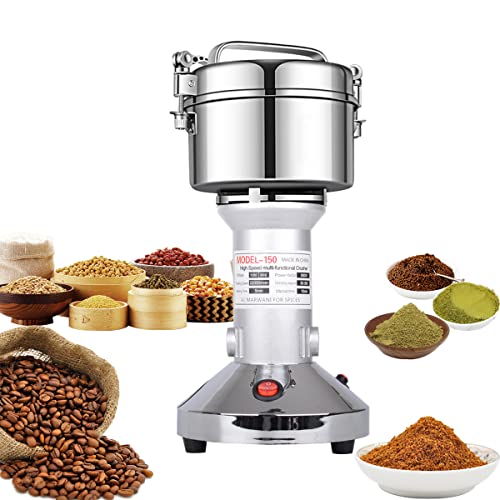
- 900-watt motor with 150g capacity
- Grinds dry grains, spices, herbs, and nuts
- Requires brief operating cycles and dry cleaning
Best For: Fast small-batch dry ingredient grinding
Best Stainless Steel Pick – OXO Good Grips Food Mill
For cooks comparing food mills for home use, the OXO Good Grips model is a practical choice for hot foods, purees, and sauces. Its stainless steel bowl resists staining, while three grinding discs provide fine, medium, and coarse textures.
Best For: Home cooks making purees, sauces, and other hot preparations in batches up to approximately 2.3 quarts.
Pros:
- Stainless steel bowl is suited to hot foods and helps prevent staining.
- Includes three discs for fine, medium, and coarse results.
- Non-slip folding legs fit bowls and pots up to 11 inches wide.
- Spring-loaded lever supports quick disc changes and disassembly.
Cons:
- Its approximately 2.3-quart capacity may be limiting for very large batches.
- The stainless steel construction weighs about 1 kg.
Choose this OXO mill if stable placement, easy disc changes, and dependable stainless steel construction matter more than maximum capacity.
Best KitchenAid Grain Attachment – FOCOLLK 9-Level Grain Mill
Among food mills for home use, this FOCOLLK attachment is designed for KitchenAid owners who want to grind dry grains without buying a separate countertop mill. It offers nine settings for textures ranging from coarse cracked grain to fine powder.
Best For: KitchenAid users grinding wheat, corn, oats, buckwheat, millet, or coffee beans for flour, baking, or baby food.
Pros:
- Fits all KitchenAid stand mixer models and installs without tools.
- Nine adjustable grind levels support coarse through ultra-fine results.
- All-metal die-cast aluminum alloy construction is rust-resistant.
- Detachable grinding chamber simplifies residue removal with the included brush.
Cons:
- Not suitable for peanuts, soybeans, or sunflower seeds.
- Must be cleaned with a brush rather than water or a dishwasher.
- Requires cooling between batches, with a recommended 45-minute rest.
This attachment makes sense for KitchenAid households that want customizable dry-grain milling, provided they can accommodate its batch limits and brush-only cleaning.
Best Multifunction Food Mill – Stainless Steel Rotary Mill
This stainless steel rotary model is a versatile option for shoppers seeking food mills for home use. It includes three milling trays, a hand crank with a soft silicone grip, and accessories intended for sauces, potatoes, fruit, vegetables, and canning.
Best For: Home cooks preparing tomato sauce, mashed potatoes, jams, and canned foods who want multiple accessories and dishwasher-safe cleanup.
Pros:
- Food-grade stainless steel construction has a polished, durable surface.
- Three tray sizes offer different textures for sauces, fruits, and vegetables.
- Dual hooks help secure the mill to a mixing bowl.
- Includes a multifunctional spoon, wide-mouth funnel, and measuring spoon.
Cons:
- Its 1.29 kg weight may feel substantial during hand cranking.
- The included accessories add components to clean and store.
Consider this model if accessory value and flexible food preparation are priorities. Its dishwasher-safe design and hanging hole also help simplify cleanup and storage.
Best Simple Grain Milling – HOZODO KitchenAid Attachment
For KitchenAid owners considering food mills for home use, the HOZODO attachment provides nine settings for turning low-moisture grains into flour or spice powders. Its removable design and included cleaning tool keep maintenance straightforward, though it is intended for dry, low-oil ingredients.
Best For: KitchenAid users milling wheat, oats, corn, millet, and other dry grains for fresh flour or spice powders.
Pros:
- Offers nine settings from coarse to ultra-fine.
- All-metal die-cast aluminum alloy construction supports regular use.
- Removable design makes it easier to brush out residual flour.
- Designed for hard grains and fibrous ingredients.
Cons:
- Not intended for high-oil ingredients such as nuts or sesame seeds.
- Requires brush cleaning and should not be washed with water.
- Needs 30- to 45-minute cooling breaks between batches.
This is a focused choice for fresh dry-grain milling rather than general food processing. Start coarse and adjust finer to help prevent clogging and support even grinding.
Heavy-Duty Meat Grinder – Electric Sausage & Meat Grinder
If you are comparing food mills for home use, note that this electric grinder is designed primarily for meat rather than cooked fruits and vegetables. Its 300W motor with 3200W maximum locked power, multiple plates, and sausage tubes make it useful for processing larger batches and preparing homemade ground meat.
Best For: Home cooks who want an electric machine for grinding meat, making sausages, kibbeh, meatballs, burgers, and similar recipes.
Pros:
- Includes three grinding plates for fine, medium, and coarse results.
- Comes with three sausage-stuffer tubes and two stainless steel cutting blades.
- Features overload protection and a reverse button for unclogging.
- Removable cutting attachments simplify cleaning.
Cons:
- It is not a traditional food mill for pureeing soft fruits, vegetables, or potatoes.
- Attachments should not be placed in the dishwasher and must be dried after washing.
This is a practical choice when your priority is fast, versatile meat processing rather than silky purees or sauces. The included accessories give it useful range for home sausage-making and everyday ground-meat recipes.
Best All-Around Food Mill – 4-Disc Stainless Steel Food Mill
For shoppers specifically looking at food mills for home use, this manual stainless steel model is the closest match in the lineup. Four interchangeable discs provide texture control for purees, sauces, applesauce, mashed potatoes, baby food, jams, and other soft cooked ingredients.
Best For: Home cooks making smooth sauces, fruit purees, mashed potatoes, baby food, jams, or preserved foods in small to larger batches.
Pros:
- Four stainless steel discs offer fine, coarse, and ultra-fine texture options.
- Spring-loaded rotary crank and silicone grip support more comfortable extended use.
- Double-welded support hooks help stabilize the mill over bowls and pots.
- Stainless steel construction is rust- and corrosion-resistant and dishwasher-safe.
Cons:
- Manual operation requires more effort than an electric appliance.
- Capacity and dimensions should be checked to ensure a suitable fit for your bowls and pots.
This is the strongest direct fit for a home food-mill roundup because it combines multiple texture settings with stable supports and easy cleanup. It is especially useful for tomato harvests, canning projects, and recipes where a smooth, seed-free consistency matters.
High-Speed Dry Mill – Electric Grain, Spice & Flour Grinder
This high-speed electric mill is a specialized option among food mills for home use. Rather than separating seeds or skins from cooked produce, it pulverizes dry grains, spices, herbs, coffee, and nuts into powder, with a 750-gram capacity and three-blade design.
Best For: Home kitchens needing an electric grinder for dry grains, flour, coffee beans, spices, herbs, and other moisture-free ingredients.
Pros:
- Powerful 2000W motor and 25,000 RPM speed support fast dry grinding.
- Handles grains, rice, corn, coffee, spices, herbs, sesame, and nuts.
- Stainless steel body and overload shutoff add durability and protection.
- Can produce powders ranging from approximately 50 to 300 mesh.
Cons:
- It is for dry ingredients only; wet, oily, or moist foods cannot be ground.
- Operation should be limited to three minutes at a time, followed by a five- to ten-minute rest.
- The motor compartment should not be rinsed directly with water.
Choose this model when you need fine dry powders rather than purees or sauces. Its speed and broad ingredient range are useful for pantry staples, but its operating limits and dry-only design make it a different tool from a traditional hand-crank food mill.
Large-Batch Classic – 3.5-Quart Stainless Food Mill
Mirro 50025 Foley Stainless Steel Healthy Food Mill Cookware, 3.5-Quart, Silver -
Check Price On AmazonFor shoppers comparing food mills for home use, the Mirro Foley stands out for its generous 3.5-quart capacity and stainless-steel-focused construction. It is suited to processing larger batches of tomatoes, apples, potatoes, and other soft foods into sauces and purées.
Best For: Home cooks preparing large batches of sauces, purées, and mashed foods.
Pros:
- 3.5-quart capacity handles relatively large batches.
- Designed for mashing, straining, grating, and ricing.
- Useful for tomatoes, apples, potatoes, sauces, and purées.
- Stainless-steel finish is intended for practical, everyday kitchen use.
Cons:
- Its larger size may be more than needed for small portions.
- The supplied details list the material type as plastic while also describing stainless-steel construction, so shoppers may want to verify the exact build.
The Mirro is a practical pick when capacity matters more than compactness. Its broad food-processing uses make it a versatile option for batch cooking, though smaller households may prefer a two-quart model.
High-Speed Dry Grinder – 150g Electric Grain Mill
Unlike traditional food mills for home use, this compact electric grinder is built for dry ingredients rather than soft-food puréeing. Its 900-watt motor and 150-gram chamber are suited to grains, spices, herbs, nuts, and other dry materials.
Best For: Home kitchens needing a fast grinder for dry grains, spices, herbs, and similar ingredients.
Pros:
- 900-watt motor and high-speed operation can produce fine powders quickly.
- Handles a broad range of dry grains, spices, herbs, coffee beans, and nuts.
- Overload shutoff and a lid-locking design add safety features.
- Compact 150-gram capacity suits small grinding tasks.
Cons:
- It is for dry ingredients only; wet, oily, or moist foods should not be used.
- Requires rest periods after up to three minutes of operation.
- The grinding chamber should not be rinsed directly with water.
This machine is best viewed as a dry ingredient grinder, not a conventional rotary food mill for straining cooked produce. Follow the short operating intervals and dry-cleaning instructions to use it as intended.
Adjustable Manual Mill – 2-Quart Stainless Potato Ricer
For food mills for home use that offer texture control without a motor, this two-quart rotary model includes three interchangeable stainless-steel discs. The manual crank is designed to purée soft foods while separating seeds and skins from fruits and vegetables.
Best For: Cooks who want adjustable textures for mashed potatoes, applesauce, soups, sauces, jams, and baby food.
Pros:
- Three discs provide fine, medium, and coarse textures.
- Stainless-steel construction is described as dishwasher safe and easy to clean.
- Two anti-slip handles help position the mill over a pot or bowl.
- Useful for puréeing while removing seeds, stems, and skins.
Cons:
- Manual cranking requires more hands-on effort than an electric appliance.
- At two quarts, it offers less capacity than the 3.5-quart Mirro.
- The product requires manual assembly before use.
The Pantula is a flexible choice for cooks who value control over consistency. Its interchangeable discs make it especially useful when one mill needs to handle both smooth baby food and chunkier mashed potatoes or sauces.
How We Picked the Best Food Mills for Home Use
We focused on the jobs home cooks commonly expect from a food mill: making smooth vegetable and fruit purees, removing skins and seeds, preparing sauces, and processing ingredients for canning. We also considered construction, included discs or plates, capacity, ease of operation, cleaning, and whether each design is intended for wet foods, dry grains, or both.
Because the products in this roundup are not identical, the list includes traditional rotary food mills alongside KitchenAid-compatible grain-mill attachments, electric dry grinders, and a meat grinder. Check each product’s intended use before buying; a grain grinder is not a direct substitute for a puree mill.
Quick Comparison
- Best for purees and sauces: Manual stainless steel food mills with interchangeable discs.
- Best for frequent stand-mixer users: KitchenAid-compatible grain-mill attachments.
- Best for dry ingredients: Electric grain and spice grinders.
- Best for meat preparation: The electric meat grinder with sausage-making accessories.
- Best for larger batches: Models with generous bowls and sturdy supports.
Key Buying Factors for Food Mills for Home Use
Intended Ingredients
Traditional food mills are designed for cooked, moist foods such as tomatoes, potatoes, apples, squash, and berries. They are useful when you want to separate skins, seeds, or fibrous pieces while creating a consistent texture. Grain mills and dry grinders are built for cereals, flour, spices, nuts, and other dry ingredients instead.
Disc, Plate, or Grind Settings
Multiple discs let you adjust texture from coarse to fine. Fine screens are helpful for silky sauces and baby-food-style purees, while wider openings work better for rustic mashed vegetables. For grain attachments and electric grinders, look for adjustable settings or clearly stated particle-size capabilities.
Capacity and Batch Size
A compact two-quart mill is convenient for everyday meals and storage. Larger bowls reduce the need to work in batches when processing garden tomatoes, applesauce, or canning ingredients. Electric dry grinders often list capacity by grams, so compare that figure with the amount you typically process.
Materials and Cleanup
Stainless steel is durable, resists staining, and is a practical choice for acidic foods. Removable parts make manual mills easier to rinse and scrub. For electric models, check whether the grinding chamber, discs, and accessories are removable, and keep moisture away from the motor housing.
Stability and Effort
A crank mill should sit securely over a bowl or pan and turn smoothly without excessive force. Stand-mixer attachments reduce hand effort but require a compatible mixer. Electric machines are faster for dry ingredients, though they may be louder and require more careful portion control.
Who Should Buy Which Food Mills for Home Use?
Choose a manual stainless steel food mill if your priority is tomato sauce, mashed potatoes, jams, purees, or canning. These are the most direct choices for classic food-mill tasks.
Choose a KitchenAid grain-mill attachment if you already own a compatible stand mixer and want to mill grains or flour without storing a separate motorized appliance.
Choose an electric dry grinder if you mainly process small or medium amounts of grains, seeds, herbs, spices, or flour. Confirm capacity and allowed ingredients before use.
Choose the meat grinder if sausage making and ground meat are more important than fruit and vegetable purees. Its included plates and tubes make it a specialized option rather than a traditional food mill.
For most households seeking one tool for smooth sauces and vegetable purees, start with a sturdy manual mill that includes at least two or three interchangeable discs. Match the bowl size to your usual batch volume, and prioritize removable, easy-to-clean parts.