Choosing among water quality meters can be difficult when products measure different contaminants, use different sensors, and offer varying levels of accuracy. The right tester depends on whether you need a quick TDS check, broader household screening, or app-based monitoring.
We compared 10 popular digital testers by measurement range, functions, readability, portability, and practical value to help you choose a model that fits your water-testing routine.
Best 10 Water Quality Meters Picks for 2026
Best Everyday TDS Meter
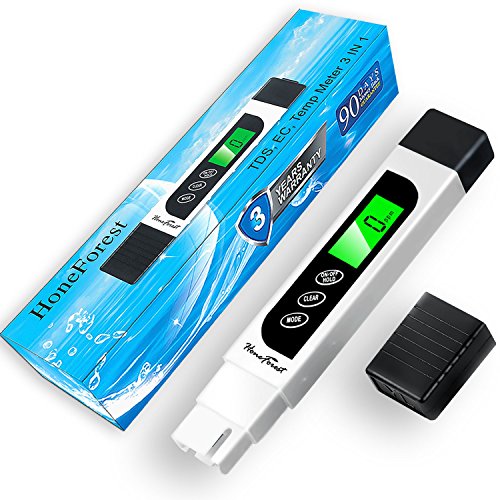
- Measures TDS, EC, and temperature
- Backlit LCD with auto-lock readings
- Useful for RO/DI systems and aquariums
Best For: Routine household and hobby water checks
Best App-Connected Water Analyzer

- Measures six water-quality parameters
- Records results through a mobile app
- Uses color levels for quick interpretation
Best For: Tracking filtration and multiple water sources
Best Simple TDS Meter

- 1 ppm resolution across a 0–9,990 ppm range
- Includes hold function and thermometer
- Carrying case has a belt clip
Best For: Basic TDS checks without app features
Best Comprehensive Water Tester
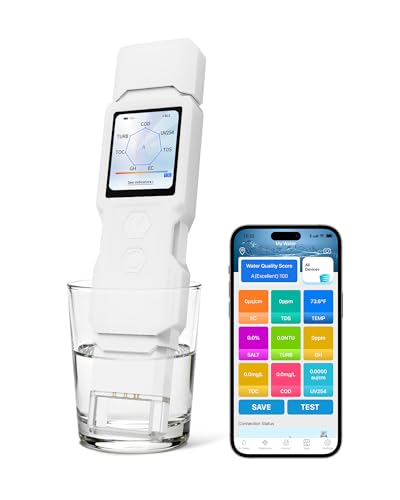
- Tests nine parameters, including turbidity and hardness
- Bluetooth app stores charts and historical data
- IP67-rated portable pen design
Best For: Broad water screening across home and field scenarios
Reliable Everyday Pick

- Measures TDS, EC, and temperature
- Backlit display with auto-lock reading
- 3-year warranty and 90-day guarantee
Best For: Routine home, RO, aquarium, and hydroponic testing
Feature-Rich Choice

- Measures TDS, EC, and °C/°F temperature
- Larger backlit screen and TDS chart
- Supports RO/DI, aquarium, pool, and spa testing
Best For: Frequent users needing versatile water testing
Compact Starter Option

- Fast TDS, EC, and temperature readings
- One-button use with backlit LCD
- Includes batteries and digital TDS guide
Best For: Beginners and everyday household testing
Lab-Style Insight
DANOPLUS 6-in-1 Water Quality Tester

- Measures TOC, COD, EC, UV275, TDS, and temperature
- Color-coded four-level water quality display
- Portable design with simple distilled-water calibration
Best For: Multi-parameter testing at home or outdoors
Everyday TDS Pick
4-in-1 Digital Water Quality Tester

- Measures TDS, EC, and °C/°F temperature
- Large LCD with dual-color backlighting
- Includes titanium probe, auto-shutoff, and two-year warranty
Best For: Routine drinking-water and hydroponic checks
Multiparameter Choice
Rowyet 5-in-1 pH and TDS Meter

- Measures pH, salinity, TDS, EC, and temperature
- Automatic temperature compensation supports pH readings
- Displays salinity in PPM, PPT, and percentage
Best For: Pools, aquariums, spas, hydroponics, and pH testing
Best Everyday TDS Meter – Reliable 3-in-1 Water Tester
For routine checks, this compact option is one of the more straightforward water quality meters. It measures TDS, EC, and temperature, with a backlit display and auto-lock feature that make readings easier to view and record.
Best For: Drinking-water checks, RO/DI filter monitoring, aquariums, hydroponics, pools, and spas.
Pros:
- Measures TDS, EC, and temperature in one device.
- 0–9,990 ppm range with a titanium alloy probe and intelligent chip.
- Auto-locks readings and shuts off after two minutes without operation.
- Includes a portable leather bag for storage.
Cons:
- It is designed for dissolved-solids and temperature readings rather than broad multi-parameter testing.
- Battery power requires ongoing battery replacement.
This is a practical pick if you mainly want quick TDS readings and basic supporting measurements. Its simple pen-style format and included case suit regular household or hobby use.
Best App-Connected Water Analyzer – 6-in-1 Smart Tester
If you want more context than a basic TDS reading provides, this 6-in-1 option expands the testing range. It measures TDS, EC, TOC, COD, UV275, and temperature, then connects to an app for recording and comparing results.
Best For: Users tracking filtration results or monitoring tap, well, RV, camping, lake, and pond water.
Pros:
- Tests six parameters, including organic-pollution indicators such as TOC and COD.
- App connectivity supports saved readings, comparisons, and long-term trend tracking.
- Color-coded results provide a quick visual interpretation.
- One-button calibration is designed for purified or distilled water.
Cons:
- App connectivity adds setup and dependence on a compatible phone.
- Calibration requires purified or distilled water.
This is a stronger choice for buyers who want to organize repeated measurements instead of checking a single value occasionally. The broader parameter set can offer a more complete screening picture, while still keeping operation portable.
Best Simple TDS Meter – HM Digital TDS-3
The HM Digital TDS-3 keeps water quality meters focused on the essentials: TDS measurement, easy reading, and convenient storage. Its 0–9,990 ppm range, 1 ppm resolution, and included carrying case make it suitable for repeat checks without a complicated feature set.
Best For: Straightforward TDS testing in household, commercial, and water-filtration applications.
Pros:
- Offers 1 ppm resolution and stated ±2% readout accuracy.
- Hold function saves measurements for easier recording.
- Built-in digital thermometer adds a useful secondary reading.
- Includes a carrying case with belt clip and two LR44 batteries.
Cons:
- It measures TDS and temperature rather than a wide range of water parameters.
- Listed battery life is approximately three hours.
Choose this model when simplicity and a familiar handheld design matter more than app features or expanded analysis. The hold function and carrying case are particularly helpful for routine checks and on-the-go use.
Best Comprehensive Water Tester – 9-in-1 Smart Meter
For buyers seeking broad coverage, this 9-in-1 model combines electronic and optical measurements in a single water quality meter. It checks turbidity, hardness, pH, TDS, EC, salinity, TOC, COD, and UV absorbance, with app monitoring for saved results and trend charts.
Best For: Detailed household, aquarium, hydroponic, pool, industrial, field, and basic laboratory screening.
Pros:
- Combines nine measurements, including turbidity, hardness, pH, and salinity.
- Bluetooth app connectivity supports historical records, charts, and data tags.
- Automatic startup calibration and stable readings in about three seconds simplify testing.
- IP67-rated design, backlit LCD, and 90 g weight support portable use.
Cons:
- Its larger feature set may be more than needed for basic TDS checks.
- The app is required for the connected data-recording features.
This is the most versatile option in the group for users comparing several water characteristics or managing measurements over time. Its combination of broad testing, portability, and app organization makes it suited to both home projects and more demanding field checks.
Reliable Everyday Pick – Digital TDS Water Tester
For shoppers comparing water quality meters, this model offers a straightforward way to check TDS, EC, and temperature. Its titanium alloy probe, backlit display, and auto-lock reading make it practical for drinking water, filtration systems, aquariums, and hydroponics.
Best For: Home users who want a simple 3-in-1 tester with warranty coverage for routine water checks.
Pros:
- Measures TDS, EC, and water temperature in one reading.
- Titanium alloy probe is designed for stable, accurate performance.
- Backlit LCD and auto-lock function make readings easier to view.
- Includes a 3-year warranty and 90-day money-back guarantee.
Cons:
- Provides three measurement types rather than temperature in both Celsius and Fahrenheit.
- Its compact display may offer less information at once than larger-screen alternatives.
This is a well-rounded choice when dependable basic measurements and strong purchase protection matter more than extra features.
Feature-Rich Choice – MEXYBE 4-in-1 Water Tester
Among water quality meters, this MEXYBE model stands out for combining TDS, EC, and temperature readings in Celsius and Fahrenheit. The larger backlit LCD, built-in TDS chart, factory calibration, and broad application range make it especially convenient for frequent testing.
Best For: Families and hobbyists who want a versatile tester for drinking water, RO/DI systems, aquariums, hydroponics, pools, and spas.
Pros:
- 4-in-1 design measures TDS, EC, and temperature in °C and °F.
- 25% larger backlit LCD is intended to improve readability.
- Includes a convenient TDS reference chart and factory calibration.
- Auto-lock, hold, and two-minute auto-off functions support easier use and battery conservation.
Cons:
- The wider feature set may be more than occasional users need.
- The supplied notes do not specify warranty duration or included accessories.
Choose this model if clear display features, multiple temperature units, and support for many water-testing applications are priorities.
Compact Starter Option – Instant 4-in-1 TDS Meter
This compact tester is one of the more convenient water quality meters for quick household checks. It measures TDS, EC, and temperature in both Celsius and Fahrenheit, with one-button operation, a backlit LCD, and a titanium alloy sensor.
Best For: Beginners who want an easy-to-start testing kit for drinking water, aquariums, hydroponics, and RO systems.
Pros:
- 4-in-1 testing covers TDS, EC, and temperature in °C/°F.
- Provides digital readings within seconds with one-button operation.
- Compact design includes a titanium alloy probe and auto-off function.
- Package includes batteries, a quick-start guide, and a downloadable TDS guide.
Cons:
- The supplied notes do not state a warranty period.
- Interpretation guidance is provided digitally rather than as a described built-in chart.
With its included batteries and simple controls, this is a practical entry-level option for users who want to begin testing without a complicated setup.
Lab-Style Insight – DANOPLUS 6-in-1 Water Quality Tester
Among water quality meters, this portable 6-in-1 tester stands out for measuring TDS, TOC, COD, EC, UV275, and temperature. Its color-coded rating system makes quick household or travel checks easier, while calibration uses distilled or pure water rather than calibration powder.
Best For: Home, RV, well, tap, camping, hiking, travel, and emergency-preparedness testing.
Pros:
- Measures six water-quality values, including TOC, COD, EC, UV275, TDS, and temperature.
- Uses blue, green, yellow, and red backlights for quick quality-level readings.
- Compact 5.9-inch design includes two AAA batteries and supports simple distilled-water calibration.
Cons:
- Weekly calibration is recommended for experimental use.
- Calibration should use distilled or pure water, not mineral or natural drinking water.
This is a versatile choice when you want more than a basic TDS reading. Its broad measurement set and portable design are useful for varied water sources, although users should follow the calibration guidance for consistent results.
Everyday TDS Pick – 4-in-1 Digital Water Quality Tester
This 4-in-1 option keeps water quality meters straightforward by combining TDS, EC, and temperature readings in Celsius or Fahrenheit. Its large backlit LCD, titanium probe, auto-shutoff, and compact body make it convenient for frequent checks of drinking water, aquariums, hydroponics, and RO systems.
Best For: Everyday TDS and conductivity checks for drinking water, aquariums, hydroponics, tap water, and RO systems.
Pros:
- Displays TDS, EC, and temperature with one-tap function switching.
- Large LCD and dual-color backlighting support day-or-night readability.
- Includes a titanium probe, auto-shutoff, replaceable CR2032 battery, and two-year warranty.
Cons:
- It does not include pH, salinity, or the broader TOC/COD measurements found on some alternatives.
- The supplied notes describe color thresholds for direct-drinking guidance, so readings should be interpreted within the intended use.
Choose this model if you want a compact, easy-to-read meter focused on core TDS, EC, and temperature measurements. Its durable housing and long-lasting coin-cell battery suit regular, routine testing.
Multiparameter Choice – Rowyet 5-in-1 pH and TDS Meter
For shoppers comparing water quality meters that cover both acidity and dissolved solids, this 5-in-1 tester combines salinity, TDS, EC, pH, and temperature. Automatic temperature compensation helps account for changing liquid temperatures, while multiple salinity units simplify readings for pools, seawater, and food applications.
Best For: Drinking water, RO/DI systems, aquariums, pools, spas, hot tubs, hydroponics, wine, and food-related salinity checks.
Pros:
- Combines pH, salinity, TDS, EC, and temperature in one meter.
- Offers automatic temperature compensation and a 0–14 pH range with 0.01 pH resolution.
- Displays salinity in PPM, PPT, or percentage and includes a hold function for viewing stable readings.
Cons:
- Its 9 x 3 x 2-inch size and 5.6-ounce weight make it less compact than the smaller pen-style options.
- It has more functions to manage than a basic TDS-only meter.
This is the most flexible selection of the three for users who need pH and salinity alongside TDS and EC. It makes a strong fit for varied water-testing tasks, especially where temperature changes could affect pH readings.
How We Picked the Best Water Quality Meters
We focused on the features that matter most for everyday water testing: measurement range, stated accuracy, resolution, display readability, portability, and ease of use. We also considered whether each device measures only TDS or adds useful readings such as pH, electrical conductivity (EC), temperature, salinity, turbidity, or other indicators.
Multi-function testers can provide more context, but extra readings do not automatically make a meter laboratory-grade. We treated app connectivity, included accessories, calibration support, and storage convenience as practical advantages rather than substitutes for proper testing.
Quick Comparison
| Tester type | Best for | Common measurements |
|---|---|---|
| Basic TDS meter | Fast, inexpensive screening | TDS and temperature |
| 4-in-1 meter | Routine household checks | TDS, EC, temperature, and sometimes salinity |
| 5- or 6-in-1 tester | Broader water monitoring | TDS, pH, EC, temperature, and salinity |
| Smart or app-connected tester | Tracking readings over time | Multiple readings with mobile monitoring |
| Advanced digital tester | More specialized screening | Turbidity, TOC, COD, UV-related indicators, or other metrics |
Key Buying Factors for Water Quality Meters
Choose the Measurements You Actually Need
TDS meters estimate the concentration of dissolved substances and are useful for comparing tap, filtered, bottled, or reverse-osmosis water. They do not identify specific contaminants or prove that water is safe. If acidity matters, choose a model with pH measurement. For aquariums, hydroponics, or saltwater use, EC and salinity can be more useful than TDS alone.
Check Accuracy, Range, and Calibration
Compare the stated accuracy and resolution, not just the number of functions. A broad range such as 0–9,990 or 0–9,999 ppm is convenient, but readings are meaningful only when the meter is calibrated and used correctly. Look for calibration instructions, compatible calibration solution, and a replaceable or protected probe when possible.
Prioritize Readability and Handling
A backlit LCD helps in dim kitchens and utility areas, while automatic temperature compensation can improve consistency across different water temperatures. Waterproof construction, a protective case, hold function, and automatic shutoff are useful for regular testing and travel.
Understand the Limits of Digital Readings
Use these devices for screening and trend tracking, not definitive safety certification. For suspected lead, bacteria, pesticides, PFAS, or other specific contaminants, use an appropriate laboratory or certified test kit.
Who Should Buy Which Water Quality Meters?
- For occasional drinking-water checks: Choose a straightforward TDS meter with temperature measurement and a clear display.
- For households using filtration: A 4-in-1 tester makes it easier to compare source and filtered water using TDS, EC, and temperature readings.
- For aquariums or hydroponics: Select a model that includes pH, EC, or salinity, depending on the system you maintain.
- For detailed tracking: An app-connected tester is useful when you want to save readings and monitor changes over time.
- For specialized screening: Advanced multi-sensor models may be worthwhile, but confirm what each claimed measurement represents before relying on it.