Finding a reliable infrared thermometer under $50 is easier when you focus on measurement range, accuracy, targeting, and the tasks you actually plan to handle. The models in this roundup cover everything from pizza ovens and grills to HVAC troubleshooting and general household checks.
Below, you’ll find options with laser targeting, adjustable emissivity, probe measurements, wide temperature ranges, and useful display features. Use the buying guide to narrow the list by application, not just the highest advertised temperature.
Best 10 Infrared Thermometers Under 50 Picks for 2026
Best All-Around Value

- -58°F to 842°F measurement range
- 12:1 distance-to-spot ratio
- Backlit display with included batteries
Best For: General home, cooking, automotive, HVAC, and workshop use
Best High-Heat Range
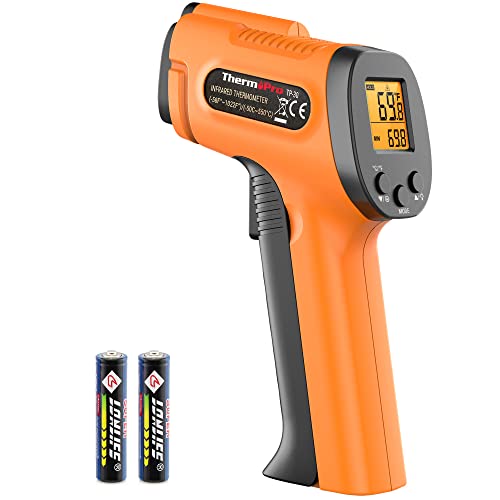
- Measures up to 1,022°F
- Adjustable 0.1–1.0 emissivity
- Records max, min, and average readings
Best For: Pizza ovens, griddles, HVAC, automotive, and repair tasks
Best Simple Jobsite Pick
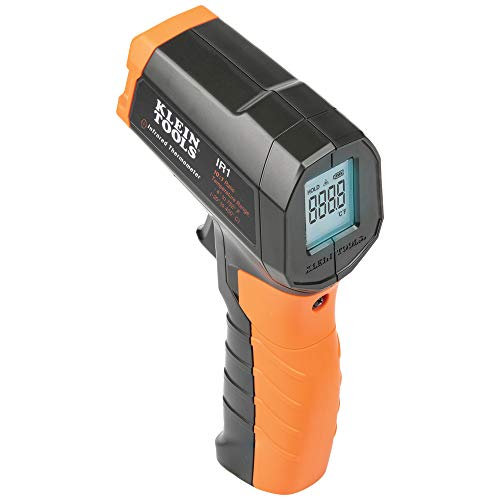
- 10:1 optical resolution
- -4°F to 752°F range
- Laser, backlight, pouch, and 9V battery included
Best For: Indoor maintenance and basic surface-temperature checks
Best 2-in-1 Cooking Option

- IR sensor plus meat probe
- Measures IR temperatures up to 1,022°F
- Motion-sensing wake/sleep design
Best For: Home cooking, grilling, candy making, and frying
Best Budget Cooking Pick
GM50 Digital Infrared Thermometer

- -58°F to 932°F range
- Backlit LCD with 0.1° resolution
- AAA batteries included
Best For: Everyday cooking, BBQ, and pizza-oven checks
Best High-Temperature Range

- Measures up to 1796°F
- 50:1 distance-to-spot ratio
- MIN/MAX/AVG/DIF modes
Best For: High-heat cooking, HVAC, vehicle, and inspection work
Best Adjustable Emissivity
FKM 13-Point Laser Thermometer

- Adjustable 0.1–1.0 emissivity
- 13-point laser and color LCD
- -58°F to 1112°F range
Best For: Mixed-surface cooking, HVAC, and automotive checks
Most Adjustable
Infrared Thermometer Laser Temperature Gun

- Adjustable 0.1-0.99 emissivity
- Measures -58°F to 1022°F
- 12:1 laser targeting and data hold
Best For: Users measuring varied materials in kitchens, garages, and workshops
Best Simple Value
GM400 Laser Infrared Thermometer

- -58°F to 752°F range
- 12:1 laser targeting
- Backlit LCD with auto-off
Best For: Routine cooking, home repair, appliance, and automotive checks
Best Calibration Features

- One-button calibration function
- Measures up to 1112°F
- 0.5-second response time
Best For: Users needing fast, repeatable surface checks across home and DIY tasks
Best All-Around Value – Etekcity Lasergrip 774
For shoppers comparing infrared thermometers under 50, the Etekcity Lasergrip 774 is a versatile non-contact option for household, automotive, cooking, HVAC, and outdoor temperature checks. Its 12:1 distance-to-spot ratio, fast readings, and broad measurement range make it practical for everyday surface scanning.
Best For: General home, cooking, automotive, HVAC, and workshop use.
Pros:
- Measures from -58°F to 842°F (-50°C to 450°C).
- 12:1 distance-to-spot ratio supports readings from a comfortable distance.
- Backlit LCD, auto-off, temperature display, and included AAA batteries.
- Two-year warranty and maximum-temperature display add convenience.
Cons:
- It measures surface temperature rather than internal or body temperature.
- Its 12:1 targeting ratio is less precise at distance than some higher-ratio models.
The Lasergrip 774 is a strong budget-friendly pick when you want one thermometer for varied non-contact tasks. Follow the recommended approximately 14.17-inch measuring distance for best results.
Best High-Heat Range – TempPro TempScan CORE
Among infrared thermometers under 50, the TempPro TempScan CORE stands out for its 1,022°F upper limit and adjustable emissivity. That combination suits high-heat cooking and maintenance tasks where surface material and temperature range both matter.
Best For: Pizza ovens, griddles, HVAC checks, automotive work, and home repairs.
Pros:
- Measures from -58°F to 1,022°F.
- Adjustable emissivity from 0.1 to 1.0 helps accommodate different surfaces.
- 12:1 distance-to-spot ratio and response time under 500 milliseconds.
- Displays maximum, minimum, and average readings from the last scan.
Cons:
- It is a surface thermometer and does not measure internal temperatures.
- The backlight automatically shuts off after 90 seconds of inactivity.
This model is a compelling choice if your priority is high-temperature surface measurement. Adjustable emissivity gives it more flexibility than a fixed-emissivity thermometer, while the backlit screen keeps operation straightforward.
Best Simple Jobsite Pick – Klein Tools IR1
For buyers seeking infrared thermometers under 50 from a familiar tool-focused brand, the Klein Tools IR1 offers a straightforward feature set. Its 10:1 optical resolution, targeting laser, backlit display, and -4°F to 752°F range cover many general maintenance applications.
Best For: Indoor maintenance, troubleshooting, and basic surface-temperature checks.
Pros:
- 10:1 distance-to-spot ratio supports remote measurements.
- Measures from -4°F to 752°F (-20°C to 400°C).
- Includes a targeting laser, backlit display, auto power-off, pouch, and 9V battery.
- Fixed 0.95 emissivity provides consistent operation.
Cons:
- Its fixed emissivity offers less surface-matching flexibility than adjustable models.
- The stated indoor-use designation may be limiting for outdoor applications.
- It is not intended for people or animals.
The IR1 is best when you prefer simple controls and predictable readings over advanced adjustments. It is a practical maintenance thermometer, provided your tasks fit its indoor-use and fixed-emissivity design.
Best 2-in-1 Cooking Option – TempPro TempScan PLUS
If you need more than surface readings, the TempPro TempScan PLUS is a standout among infrared thermometers under 50 because it combines a non-contact IR sensor with a meat probe. You can scan hot cookware from a distance, then check internal food, candy, frying oil, or liquid temperatures directly.
Best For: Home cooks, grilling enthusiasts, candy making, and kitchen temperature control.
Pros:
- Combines 12:1 infrared surface scanning with an internal probe.
- IR measurement range reaches up to 1,022°F.
- Probe readings are designed for quick internal temperature checks in 2–3 seconds.
- Motion-sensing wake/sleep, auto-off, magnet, hanging hole, and °F/°C switching improve usability.
Cons:
- The probe requires contact and is not a non-contact measurement method.
- It is more specialized for cooking than a basic single-purpose IR thermometer.
This is the most versatile pick for kitchen users who need both surface and internal measurements. Its probe expands the thermometer’s usefulness substantially, while the IR mode handles hot grills, pans, ovens, and pizza stones safely from a distance.
Best Budget Cooking Pick – GM50 Digital Infrared Thermometer
If you need infrared thermometers under 50 for everyday cooking tasks, the GM50 covers common uses such as BBQ, pizza ovens, and kitchen surface checks. Its -58°F to 932°F range, backlit LCD, and simple trigger-based operation make it practical for quick non-contact measurements.
Best For: Home cooks, BBQ users, and pizza-oven owners who want a straightforward surface thermometer.
Pros:
- Wide -58°F to 932°F measurement range.
- Backlit LCD supports use in darker conditions.
- Includes two AAA batteries and offers 0.1° resolution.
Cons:
- Preset 0.95 emissivity may be inaccurate on shiny or polished metals.
- Not intended for measuring human temperature.
The GM50 is a simple, affordable option for routine cooking and household checks. For reflective surfaces, use masking tape or flat black paint to improve the measurement conditions.
Best High-Temperature Range – IR-1796 Infrared Thermometer
Among infrared thermometers under 50, this model stands out for its unusually broad -58°F to 1796°F range and 50:1 distance-to-spot ratio. It is designed for safer readings from grills, pizza ovens, HVAC equipment, vehicles, and other hot or difficult-to-reach surfaces.
Best For: Users who need high-temperature measurements and a narrow measurement area from a greater distance.
Pros:
- Measures temperatures up to 1796°F.
- 50:1 distance-to-spot ratio supports remote readings.
- Includes MIN, MAX, AVG, and DIF modes, batteries, and a storage bag.
Cons:
- Low battery levels can affect accuracy.
- Its high-temperature capability may be more than needed for basic kitchen use.
Choose the IR-1796 when temperature range and measurement distance matter most. The 0.5-second response time and multiple reading modes add flexibility for cooking, maintenance, and inspection tasks.
Best Adjustable Emissivity – FKM 13-Point Laser Thermometer
For shoppers comparing infrared thermometers under 50, the FKM model offers useful control for varied surfaces. Its adjustable 0.1–1.0 emissivity, 13-point laser, color LCD-VA screen, and -58°F to 1112°F range make it a versatile choice for cooking, HVAC troubleshooting, and automotive checks.
Best For: Users measuring different surface materials who want adjustable emissivity and a clear display.
Pros:
- Adjustable emissivity from 0.1 to 1.0.
- 13-point laser helps identify the measurement area.
- Color display, high/low temperature alarms, and 0.5-second response time.
Cons:
- Uses a 9V battery rather than AAA batteries.
- 12:1 distance-to-spot ratio is less suited to very distant targets than the 50:1 model.
- Not suitable for human or internal temperature readings.
The FKM is a strong fit when surface type varies and emissivity adjustment is valuable. Its alarms and bright display also make it convenient for monitoring ovens, griddles, engines, and other equipment.
Most Adjustable – Infrared Thermometer Laser Temperature Gun
For shoppers comparing infrared thermometers under 50, this model stands out for its adjustable emissivity and broad temperature coverage. It measures from -58°F to 1022°F, uses a 12:1 distance-to-spot ratio, and delivers readings in up to 0.8 seconds.
Best For: Home cooks, workshop users, and DIYers who measure different materials and want more control over surface-readings.
Pros:
- Adjustable emissivity from 0.1 to 0.99, with a material reference chart.
- Wide -58°F to 1022°F measurement range.
- 12:1 laser targeting, backlit display, dual units, and data hold.
Cons:
- Measures surface temperature rather than internal temperature.
- Its extensive range and settings may be more than casual users need.
The adjustable emissivity is the key advantage here, particularly when switching among metal, wood, plastic, food, and other surfaces. It is a versatile choice if you want one thermometer for kitchen, garage, and workshop tasks.
Best Simple Value – GM400 Laser Infrared Thermometer
This GM400 is a straightforward option among infrared thermometers under 50 for checking surfaces without contact. Its -58°F to 752°F range, built-in laser, backlit LCD, and 12:1 distance-to-spot ratio suit cooking, home repairs, automotive work, and appliance checks.
Best For: Buyers who want an uncomplicated non-contact thermometer for everyday household, kitchen, and garage measurements.
Pros:
- Useful -58°F to 752°F measurement range.
- 12:1 distance-to-spot ratio with built-in laser aiming.
- Backlit LCD, Celsius/Fahrenheit switching, auto-off, and low-battery indicator.
Cons:
- Not intended for measuring human or animal temperature.
- Its stated response time is 2 seconds, slower than some alternatives.
- No adjustable emissivity or calibration function is listed.
The GM400 focuses on core functionality rather than advanced controls. It makes sense for routine surface checks, provided you remember that its readings are for inanimate objects and not people or animals.
Best Calibration Features – UW510 Infrared Thermometer
For shoppers seeking infrared thermometers under 50 with a higher heat ceiling, the UW510 measures from -58°F to 1112°F. It adds one-button calibration, minimum and maximum measurement modes, non-contact operation, and a response time of up to 0.5 seconds.
Best For: Cooks, HVAC users, automotive DIYers, and hobbyists who want fast readings plus calibration support for recurring measurements.
Pros:
- One-button calibration is designed to help maintain consistent readings.
- Very broad -58°F to 1112°F measurement range.
- Fast 0.5-second response with backlit display, auto-shutoff, and low-battery indicator.
Cons:
- Calibration and min/max functions may be unnecessary for basic kitchen use.
- As a non-contact infrared tool, it measures surface temperature rather than internal food temperature.
The UW510 is the strongest fit when range and repeatability matter. Its calibration feature and high upper limit make it especially appealing for users moving between food, appliances, HVAC equipment, and DIY projects.
How We Picked the Best Infrared Thermometers Under 50
We focused on the features that matter most at this price: stated temperature range, measurement consistency, targeting assistance, display readability, response speed, and ease of use. We also considered whether each thermometer is suited to a specific job, such as cooking, grilling, pizza ovens, HVAC diagnostics, automotive work, or general home maintenance.
Because infrared thermometers measure surface temperature rather than internal temperature, we gave extra attention to models with adjustable emissivity or an included probe. These features can improve results when measuring reflective metals, food, liquids, or mixed materials.
Quick Comparison
- Best for general home use: Choose a straightforward model with a broad range, clear display, and simple one-button operation.
- Best for cooking: Look for a backlit screen, food-friendly range, and a probe if you need internal temperatures.
- Best for HVAC and mechanical work: Prioritize targeting distance, adjustable emissivity, and high-temperature capability.
- Best for high-heat applications: Select a model rated well above the temperatures you expect to measure, while checking its distance-to-spot ratio.
Key Buying Factors for Infrared Thermometers Under 50
Temperature Range and Accuracy
A wide range is useful, but it does not automatically mean better real-world performance. Check the stated accuracy and make sure the thermometer covers your intended temperatures with room to spare. Extremely hot surfaces may require a high-range model, while cooking and household tasks usually need less.
Distance-To-Spot Ratio
The distance-to-spot ratio determines how large the measured area becomes as you move farther away. A higher ratio helps you measure small targets from a safer or more convenient distance. For large grills or walls, a modest ratio may be sufficient.
Emissivity and Surface Type
Infrared readings can be affected by shiny, polished, or reflective surfaces. Adjustable emissivity provides more control, while matte, non-reflective surfaces generally produce more dependable readings. For reflective metal, use the manufacturer’s recommended technique rather than relying on the laser alone.
Display and Controls
A backlit display is valuable in garages, workshops, and dim kitchens. Auto-hold, minimum and maximum readings, adjustable alarms, and an easy-to-reach trigger can make repeated measurements faster.
Probe Versus Non-Contact Measurement
Non-contact measurement is ideal for surfaces, but it cannot confirm the internal temperature of meat or other food. A model with a probe is the better choice when surface and internal readings are both important.
Who Should Buy Which Infrared Thermometers Under 50?
Home cooks and grill users should choose a simple, readable model or a two-in-one thermometer with a probe. Pizza oven owners benefit from a wide range, fast readings, and a bright display. HVAC technicians and DIY troubleshooters should prioritize adjustable emissivity, useful targeting, and a suitable distance-to-spot ratio. Workshop and automotive users may prefer a high-temperature model with minimum and maximum readings. If you only need occasional checks around the house, avoid paying for extreme range you will rarely use and choose the model with the clearest controls and best ergonomics.