When it comes to HVAC work, having the right tools can make all the difference. Finding a reliable refrigerant leak detector is essential for accurate diagnostics and ensuring system efficiency. In 2025, several models stand out for their advanced technologies and user-friendly designs. These detectors not only promise precision but also ease of use. So, which ones should you consider for your toolkit? Let’s take a closer look at the top contenders.
Elitech HVAC Refrigerant Leak Detector (ILD-200)
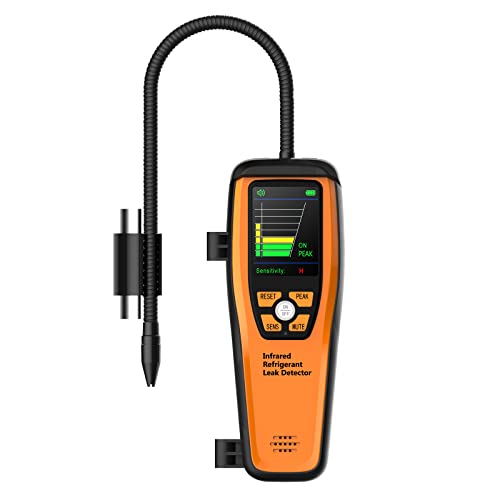
The Elitech HVAC Refrigerant Leak Detector (ILD-200) is the ideal choice for HVAC professionals and automotive technicians who demand precision and reliability in their leak detection tools. With a 10-year infrared sensor life, it excels in air conditioning and automotive gas detection. Its advanced infrared technology offers superior anti-interference and faster response times, ensuring you find leaks quickly. You can adjust sensitivity levels to High, Medium, or Low, detecting leaks as small as 0.14oz/yr. Compatible with all halogenated gases, the ILD-200 features a clear 2.8-inch screen and comes with 24/7 customer support for your peace of mind.
Best For: HVAC professionals and automotive technicians seeking reliable and precise leak detection tools.
Pros:
- Advanced infrared technology provides superior anti-interference and faster response times.
- Adjustable sensitivity levels allow for detecting leaks as small as 0.14oz/yr, catering to various detection needs.
- 24/7 customer support ensures assistance is readily available whenever needed.
Cons:
- Higher initial cost compared to basic leak detectors on the market.
- Requires regular maintenance to ensure the infrared sensor remains functional over its 10-year lifespan.
- Learning curve for beginners who may find advanced features overwhelming initially.
Rechargeable HVAC Refrigerant Leak Detector (SFD201)

For HVAC professionals and automotive technicians seeking a reliable and portable solution, the SENSYX Rechargeable HVAC Refrigerant Leak Detector (SFD201) stands out with its high-sensitivity Japan-made semiconductor sensor. This compact device, weighing just 8 ounces, is perfect for detecting a range of refrigerants, including CFCs, HFCs, HCFCs, and HFOs. With adjustable sensitivity levels and a large color LCD screen, you can easily identify leak locations. Its cordless design and USB-C charging enhance mobility, while US-based customer support guarantees you’re never left in the dark. Plus, it conforms to UL1484 safety standards, offering peace of mind during operation.
Best For: HVAC professionals and automotive technicians seeking a reliable and portable refrigerant leak detection solution.
Pros:
- High-sensitivity Japan-made semiconductor sensor for accurate leak detection.
- Cordless design with USB-C charging for enhanced mobility and convenience.
- Large color LCD screen provides clear visibility of leak locations and levels.
Cons:
- Limited to detecting specific refrigerants, which may not cover all needs.
- Requires recharging, which could be inconvenient during prolonged use.
- Operating temperature and humidity limits may restrict usage in certain environments.
Elitech HVAC Refrigerant Leak Detector (ILD-100H)

Looking for a reliable solution to detect refrigerant leaks? The Elitech HVAC Refrigerant Leak Detector (ILD-100H) utilizes a heated diode sensor, effectively identifying halogen refrigerants like R22 and R410a. With adjustable sensitivity levels—high, medium, and low—you’ll enjoy rapid detection, responding within just one second. The TFT screen displays clear readings for sensitivity, leakage alerts, and battery levels, ensuring you stay informed. Quick adjustments are easy with two buttons for sensitivity settings or muting the buzzer. Plus, with 24/7 customer service and a one-year warranty, you can trust the Elitech detector for all your HVAC needs.
Best For: HVAC technicians and individuals looking for an efficient and reliable refrigerant leak detection solution.
Pros:
- Adjustable sensitivity levels (high, medium, low) for tailored detection.
- Rapid response time of just one second for quick leak identification.
- Clear TFT screen display for easy readability of alerts and battery status.
Cons:
- May require regular calibration for optimal performance.
- Limited to detecting specific types of refrigerants (halogen refrigerants).
- The price may be higher compared to basic leak detectors on the market.
Fieldpiece DR58 Heated Diode Refrigerant Leak Detector

Engineers and technicians seeking precision in leak detection will find the Fieldpiece DR58 Heated Diode Refrigerant Leak Detector an indispensable tool. This ultra-sensitive device detects micro leaks as small as <0.03 oz/yr, making it 20 times more effective than traditional bubble tests. It’s compatible with all refrigerants, including HFC and CFC, ensuring versatility. The IP54-rated sensor resists moisture and oil, boasting a 300-hour lifespan. Its backlit LCD screen, LED tip, and audible alerts make leak pinpointing easy, while the 17-inch flexible probe reaches tight spaces. Plus, the 18-hour rechargeable battery enhances usability for every HVACR technician.
Best For: HVAC engineers and technicians seeking a highly sensitive and versatile leak detection tool.
Pros:
- Ultra-sensitive detection: Identifies micro leaks as small as <0.03 oz/yr, significantly outperforming traditional methods.
- Versatile compatibility: Works with all types of refrigerants, including HFC, CFC, HCFC, and various blends.
- User-friendly features: Equipped with a backlit LCD, LED tip, and audible alerts for easy leak pinpointing in tight spaces.
Cons:
- Initial cost: May be more expensive compared to traditional leak detection methods.
- Battery life: While rechargeable, some users may find the 18-hour battery life insufficient for longer jobs without recharging.
- Sensitivity calibration: May require calibration for optimal performance in certain environments, potentially complicating initial use.
TOPTES RT-389 Refrigerant Leak Detector

The TOPTES RT-389 Refrigerant Leak Detector stands out as an ideal choice for HVAC technicians who need reliable and precise leak detection in various environments. It effectively identifies refrigerants like CFCs and HFCs, with a sensitivity that detects leaks down to 3g/yr. Its flexible gooseneck allows easy access to tight spaces. You’ll appreciate the triple alarm system—sound, visual, and vibration—along with a vibrant TFT display that shows real-time concentration levels. With an 8-hour rechargeable battery and durable construction, this device guarantees dependable performance, making it a top pick for any technician’s toolkit.
Best For: HVAC technicians seeking a reliable and precise refrigerant leak detection tool for various environments.
Pros:
- Advanced detection with sensitivity down to 3g/yr for accurate leak identification.
- Flexible gooseneck design allows easy access to tight and confined spaces.
- Durable and waterproof construction ensures reliability in harsh working conditions.
Cons:
- May be more expensive compared to basic leak detectors on the market.
- The learning curve for using advanced features might be steep for some users.
- Battery life may vary depending on usage and settings, possibly requiring frequent charging.
THIKPO HVAC Refrigerant Leak Detector

For HVAC professionals and automotive technicians seeking reliable leak detection, the THIKPO HVAC Refrigerant Leak Detector stands out with its impressive compatibility across more than 30 refrigerant types. It accurately detects concentrations from 0–1000 ppm, identifying tiny leaks as small as 0.5 oz/year. The flexible 215mm gooseneck probe allows you to access tight spaces easily, while the built-in LED light guarantees visibility in low-light conditions. With customizable alarms and a dual-temperature display, this detector operates effectively in extreme temperatures. You’ll appreciate its lab-grade accuracy and quick self-calibration, making it a top choice for any technician.
Best For: HVAC professionals and automotive technicians seeking a reliable and versatile leak detection solution.
Pros:
- Accurate detection of refrigerant concentrations from 0–1000 ppm, identifying leaks as small as 0.5 oz/year.
- Flexible gooseneck probe and built-in LED light enhance accessibility and visibility in confined or low-light spaces.
- Customizable alarms and dual-temperature display ensure effective operation in various environmental conditions.
Cons:
- May require additional training for optimal use due to advanced features.
- Battery life could be limited during extensive use in the field.
- Higher initial cost compared to basic leak detectors.
Elitech HVAC Refrigerant Leak Detector (ILD-300)

Designed with a 10-year infrared sensor life, the Elitech HVAC Refrigerant Leak Detector (ILD-300) stands out as an ideal choice for technicians who need reliable and long-lasting performance. This advanced detector effectively identifies halogen refrigerants, including CFCs, HFCs, and more, with a maximum sensitivity of 0.1 oz/yr. The intuitive TFT screen displays critical information like sensitivity levels and leakage alerts, enhancing your operational efficiency. With two buttons for quick sensitivity adjustments and a response time of just one second, you’ll be ready to tackle any leak. Plus, Elitech offers 24/7 customer support and a one-year warranty for peace of mind.
Best For: The Elitech HVAC Refrigerant Leak Detector (ILD-300) is best for HVAC technicians who require a reliable and accurate tool for detecting refrigerant leaks.
Pros:
- Long sensor life: The infrared sensor lasts for up to 10 years, reducing the need for frequent replacements.
- High sensitivity: Detects leaks as small as 0.1 oz/yr, ensuring even minor leaks are identified.
- User-friendly interface: The TFT screen provides clear readings and easy adjustments for enhanced operational efficiency.
Cons:
- Initial cost: The advanced technology may come at a higher price point compared to basic detectors.
- Limited to halogen refrigerants: It may not detect non-halogen refrigerants, limiting its use in certain applications.
- Battery dependency: Requires batteries for operation, which may need to be replaced periodically.
Inficon Inficon Refrigerant Leak Detector, Model:705-202-G1
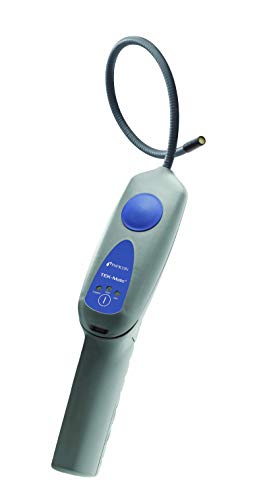
With a remarkable sensitivity of just 0.25 oz./year, the Inficon Refrigerant Leak Detector, Model 705-202-G1, stands out as a top choice for HVAC professionals seeking accuracy and reliability. This detector easily identifies all CFCs, HCFCs, HFCs, and HFOs, thanks to its proven heated diode sensor. You’ll appreciate its 100-hour sensor life and automatic background adjustment, minimizing false alarms. The device runs on two D-cell alkaline batteries and comes with a rugged carrying case for portability. Plus, you’ll have access to US technician support via email and phone, ensuring help is always just a message away.
Best For: HVAC professionals seeking a reliable and accurate refrigerant leak detection solution.
Pros:
- Proven heated diode sensor for precise leak detection.
- Automatic background adjustment minimizes false alarms.
- Rugged carrying case included for easy portability.
Cons:
- Limited sensor life of 100 hours before needing replacement.
- Operates on two D-cell alkaline batteries, which may require frequent changes.
- May not detect very small leaks below the 0.25 oz/year sensitivity threshold.
Fieldpiece DR82 Infrared Refrigerant Leak Detector

The Fieldpiece DR82 Infrared Refrigerant Leak Detector stands out as an excellent choice for HVAC professionals seeking precision and reliability in leak detection. You’ll appreciate its ultra-sensitive design, capable of identifying micro leaks as small as <0.03 oz/yr—20 times more sensitive than traditional methods. Compatible with all refrigerants, this versatile tool suits various HVACR systems. Its durable IP54 rating protects against moisture and oil, while a long-lasting 10-year sensor life guarantees consistent performance. The large backlit LCD screen shows leak size and intensity, and the flexible 17-inch probe helps you access tight spaces effortlessly. Enjoy over 10 hours of operation with the USB-C battery!
Best For: HVAC professionals seeking a highly sensitive and reliable tool for detecting refrigerant leaks.
Pros:
- Ultra-sensitive design detects micro leaks as small as <0.03 oz/yr, 20 times more sensitive than traditional methods.
- Compatible with all refrigerants, providing versatility for various HVACR systems.
- Durable IP54 rating ensures resistance to moisture and oil, along with a long-lasting 10-year sensor life.
Cons:
- The initial cost may be higher compared to traditional leak detection methods.
- Requires occasional maintenance and replacement of filter tips.
- The flexible probe may be challenging to maneuver in extremely tight spaces for some users.
Refrigerant & Combustible Gas Leak Detector HVAC (ALD-200)

For HVAC professionals seeking a reliable tool to detect refrigerant and combustible gas leaks, the ALD-200 stands out with its high sensitivity and user-friendly features. It’s compatible with various refrigerants like R134A and R410A, making it versatile. The device boasts a rechargeable 3000mAh battery and a 16-inch sensor probe, enhancing your reach. With three adjustable sensitivity levels, you can accurately pinpoint leaks, while the peak mode captures maximum leakage readings. The 2.8-inch TFT color screen guarantees you can monitor levels easily, even in low-light conditions. Plus, its durable construction assures it withstands the rigors of daily use.
Best For: HVAC professionals looking for a reliable and versatile tool to detect refrigerant and combustible gas leaks.
Pros:
- High sensitivity with adjustable levels for accurate leak detection.
- Durable construction designed for rugged use in demanding environments.
- User-friendly features, including a clear color display and a rechargeable battery.
Cons:
- May have a learning curve for new users unfamiliar with gas detection tools.
- Initial cost may be higher compared to basic leak detectors.
- Requires periodic calibration to maintain accuracy.
Factors to Consider When Choosing HVAC Refrigerant Leak Detectors
When choosing an HVAC refrigerant leak detector, you’ll want to contemplate several key factors. Think about the detection technology types, sensitivity, and accuracy, as these will impact your ability to identify leaks effectively. Don’t forget to evaluate refrigerant compatibility, user interface features, and battery life for ideal performance and convenience.
Detection Technology Types
Choosing the right detection technology type for HVAC refrigerant leak detectors is essential to ensuring effective leak identification and management. You typically have two main options: heated diode sensors and infrared sensors. Heated diode sensors respond quickly and detect various halogenated refrigerants but can trigger false alarms due to background gases. On the other hand, infrared sensors boast enhanced accuracy and anti-interference capabilities, allowing for quicker leak detection and longer sensor life. Many detectors also offer adjustable sensitivity levels, with some capable of detecting micro leaks as small as 0.03 oz/yr. Advanced options might include automatic background adjustment, further minimizing false alarms and improving accuracy under different environmental conditions, making your leak detection process more reliable.
Sensitivity and Accuracy
Understanding sensitivity and accuracy is crucial for selecting the right HVAC refrigerant leak detector. Sensitivity levels can vary considerably, with some models offering adjustable settings to detect leaks as small as 0.03 oz/yr. When evaluating accuracy, look for devices that provide ±5% FS accuracy to guarantee reliable readings of leak concentrations. Advanced technologies like infrared sensors typically outperform traditional heated diode sensors in both accuracy and response time. Additionally, consider detectors with peak mode functionality, which allows you to capture and record maximum leakage readings, helping you evaluate leak severity effectively. Finally, verify the detector is compatible with various refrigerant types to maximize its utility and effectiveness in different situations.
Refrigerant Compatibility Range
Selecting the right HVAC refrigerant leak detector hinges on its compatibility with a broad array of refrigerants. You’ll want a detector that works with CFCs, HFCs, HCFCs, HFOs, and natural refrigerants like hydrocarbons. Make certain it can identify specific refrigerant blends such as R404a, R410a, and R1234yf, which are commonly used in HVAC systems. Some detectors offer enhanced sensitivity for micro leaks, detecting as little as 0.03 oz/yr—crucial for maintaining system efficiency. Additionally, verify the detector meets industry standards for all halogenated gases for reliability in varied environments. Finally, look for advanced infrared sensors that provide greater accuracy and a broader refrigerant compatibility range compared to traditional heated diode sensors.
User Interface Features
When evaluating HVAC refrigerant leak detectors, the user interface plays an essential role in ensuring quick and effective leak assessments. A user-friendly interface typically features a large TFT or LCD display, giving you clear visibility of leak detection readings and sensitivity levels. Adjustable brightness settings enhance readability in various lighting conditions, making inspections easier. Many detectors come with audible alarms that increase in frequency as leak intensity rises, helping you quickly gauge severity. Some devices also offer dual display modes, showing real-time concentration levels (PPM) and trend graphs for better monitoring. Quick-access buttons let you mute alarms or adjust sensitivity settings, streamlining operations and enabling you to respond efficiently in different situations.
Battery Life and Portability
Battery life and portability are essential factors to evaluate in HVAC refrigerant leak detectors, as they directly impact your efficiency during inspections. Some models can run for up to 10 hours on a single charge, letting you work longer without interruptions. Many detectors use rechargeable lithium batteries, reducing waste and environmental impact. When selecting a detector, consider its weight; lightweight models, around 8 ounces, are easier to carry in tight spaces. Look for options with USB-C charging for fast, convenient power-ups on the go. Additionally, detectors with flexible probes can help you access hard-to-reach areas, enhancing both portability and usability in various environments. Choose wisely to maximize your inspection capabilities!