Choosing among fruit presses for small businesses means balancing batch capacity, pressing force, durability, cleanup, and available workspace. The right model can improve yield and consistency without requiring industrial-scale equipment.
This roundup compares 10 manual and hydraulic presses suited to small cideries, farm stands, wineries, cafés, and specialty food operations, from compact 6-liter units to 40-liter machines.
Best 10 Fruit Presses for Small Businesses Picks for 2026
High-Capacity Hydraulic Pick
10.6-Gallon Mosakar Hydraulic Fruit Press

- 40L capacity for larger batches
- 5-ton hydraulic pressing force
- 304 stainless juice-contact parts
Best For: Small businesses processing substantial harvests
Manual Efficiency Pick
SQUEEZE master 4.75-Gallon Press and Crusher

- 18L press with 7L crusher
- Extended handle reduces effort
- Food-grade stainless steel construction
Best For: Small-batch producers needing crushing and pressing
Balanced Batch Pick
3.69-Gallon Stainless Steel Fruit Wine Press
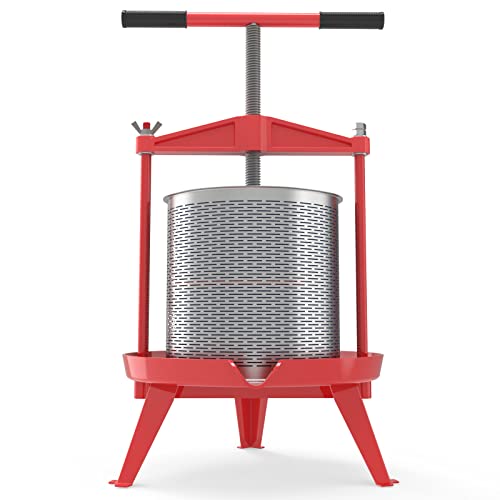
- 14L stainless-steel basket
- Leveraged T-handle pressing
- Detachable basket aids cleanup
Best For: Moderate-batch orchard and small winery use
Compact Workflow Pick
Manual Fruit Press and Crusher
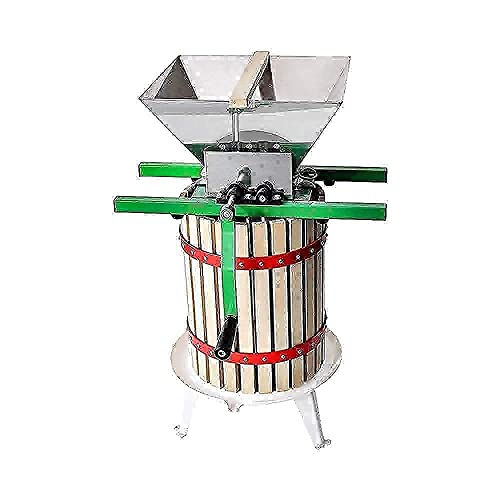
- 7L capacity for modest batches
- Built-in crushing and pressing
- Quiet, electricity-free operation
Best For: Small kitchens and portable low-volume production
Best for Easy Setup
9.5-Gallon Stainless Steel Press

- 9.5-gallon batch capacity
- Hydraulic 3-ton pressing system
- Reinforced, stable steel frame
Best For: Small beverage businesses needing larger manual batches
Compact Wooden Workhorse

- Compact 1.6-gallon capacity
- Beechwood basket with filter bags
- Handle-driven progressive pressing
Best For: Small shops and makers handling modest batches
Commercial-Size Stainless Pick

- 30-liter/7.93-gallon capacity
- 3-ton hydraulic pressure
- AISI 304 stainless juice-contact parts
Best For: Small wineries, farms, and cider operations needing high throughput
Best Budget-Friendly Manual Press

- Quiet, electricity-free manual operation
- Stainless-steel, rust-resistant construction
- Handles fruit, vegetables, cheese, and olive oil
Best For: Small-batch juice makers and farm stands
Best Heavy-Duty Batch Press
2.38-Gallon Stainless-Steel Press

- Cast-iron base and stainless-steel basket
- Swing-open beam speeds loading
- Fully assembled and designed for stability
Best For: Small cider and fruit-wine operations
Best Versatile 9-Liter Press

- 9-liter capacity for larger manual batches
- Includes two food-grade filter bags
- Removable basket simplifies cleaning
Best For: Juice shops, farms, restaurants, and wineries
High-Capacity Hydraulic Pick – 10.6-Gallon Mosakar Hydraulic Fruit Press
For small businesses needing higher-volume fruit presses, the Mosakar offers a 40-liter capacity and hydraulic assistance. Its 5-ton jack is suited to pressing fruit, herbs, nut milks, and honey, while stainless-steel juice-contact parts simplify cleanup and resist acidic juices.
Best For: Small orchards, harvest-season processing, and businesses that need substantial batches with reduced manual effort.
Pros:
- 10.6-gallon capacity supports larger pressing batches.
- Hydraulic jack provides up to 5 tons of pressure.
- AISI 304 stainless-steel pressing plate, basket, and tray resist juice acidity.
- Adjustable tray height and a 90-degree-turning beam improve loading and container compatibility.
Cons:
- At 85 pounds, it is less convenient to move frequently.
- Its larger footprint may require dedicated workspace.
This is the strongest capacity-focused option in the group. The hydraulic system and durable juice-contact components make it a practical choice when throughput and repeatable pressing matter more than portability.
Manual Efficiency Pick – SQUEEZE master 4.75-Gallon Press and Crusher
Among fruit presses for small businesses, this SQUEEZE master package stands out for combining an 18-liter press with a 7-liter crusher. Its manual design avoids dependence on a power supply, while the extended hand shank and geared crushing mechanism are intended to reduce effort when handling firm fruit and vegetables.
Best For: Small producers who want a manual press-and-crush setup for apples, pears, peaches, carrots, and similar produce.
Pros:
- Includes a 4.75-gallon press and 1.8-gallon crusher.
- Extended hand shank and phased pressing design aim to reduce manual effort.
- Food-grade stainless steel construction is rust resistant.
- Manual operation allows use wherever power is unavailable.
Cons:
- Hand washing is required for care.
- Manual operation can be slower for sustained commercial-volume work.
The integrated crusher makes this a versatile choice for businesses that need preparation and pressing in one workflow. Its 18-liter capacity is better suited to small batches than high-throughput production.
Balanced Batch Pick – 3.69-Gallon Stainless Steel Fruit Wine Press
This 14-liter fruit press offers a practical middle ground for small businesses that need more capacity than a compact home model without moving to a hydraulic frame. The heavy-duty T-handle and large Acme screw generate pressure manually, and the detachable stainless-steel basket supports easier cleanup.
Best For: Small wineries, orchards, and seasonal producers handling moderate batches of apples, grapes, herbs, nut milks, or honey.
Pros:
- 14-liter basket handles a useful moderate batch size.
- Heavy-duty T-handle and Acme screw provide leverage with less effort.
- Food-grade stainless-steel basket is rust and corrosion resistant.
- Detachable basket makes cleanup more convenient.
Cons:
- Manual operation requires hands-on pressing.
- Its capacity is smaller than the 40-liter hydraulic option.
This model is a sensible all-purpose choice when you want durable stainless construction and manageable batch capacity. It is particularly appealing for operations that value straightforward manual control and simpler cleanup.
Compact Workflow Pick – Manual Fruit Press and Crusher
Fruit Wine Press and Crusher,100% Nature Apple&Grape&Berries Crusher Manual Juice Maker for Kitchen
Check Price On AmazonFor small businesses prioritizing a compact manual workflow, this fruit press and crusher combines fruit preparation with pressing in a 7-liter format. Its 304-grade stainless-steel construction, quiet operation, and table-mount components make it suitable for apples, pears, grapes, oranges, and berries where batches remain relatively small.
Best For: Small kitchens, farm stands, and producers seeking a portable, low-noise option for modest quantities of fruit.
Pros:
- Combines crushing and pressing in one manual setup.
- 7-liter capacity suits smaller batches.
- 304-grade stainless steel and a rugged iron frame are designed for repeated use.
- No motor means quiet, electricity-free operation.
Cons:
- Smaller capacity limits throughput for larger orders.
- Manual pressing requires hands-on labor.
- Hand washing is required.
This is the most compact and portable-oriented choice in the lineup. It makes sense when quiet operation, simple manual use, and low-volume flexibility are more important than maximum batch capacity.
Best for Easy Setup – 9.5-Gallon Stainless Steel Press
For small businesses seeking fruit presses for small businesses, this 9.5-gallon stainless steel model emphasizes capacity, stability, and lower-effort hydraulic pressing. Its manual design suits juice, cider, wine, and vegetable-drink production where a sturdy, energy-saving press is useful.
Best For: Small restaurants, home-based beverage businesses, and producers who need a large batch capacity with hydraulic assistance.
Pros:
- Large 9.5-gallon capacity supports bigger batches.
- Hydraulic jack and reinforced pressing components are designed for high-pressure extraction.
- Food-grade stainless steel parts offer corrosion resistance and straightforward hand washing.
- H-shaped base and triangular supports help limit shaking and tipping.
Cons:
- Its 34.8-inch height and substantial steel construction may require dedicated floor space.
- Manual hydraulic operation still requires hands-on batch processing.
- Hand-wash care may add cleanup time in a busy production setting.
This is the most production-oriented option in the group, combining generous capacity with a stable frame and hydraulic leverage. It is a practical fit when batch size matters more than portability.
Compact Wooden Workhorse – 6L Beechwood Fruit Press
Among fruit presses for small businesses, this 1.6-gallon model is a compact manual option for lower-volume juice, cider, wine, and specialty pressing. Its beechwood basket, filter bags, and rotating handle make it approachable for shops or makers working in smaller batches.
Best For: Small juice shops, restaurants, farms, and makers who prioritize a compact footprint and versatile manual use.
Pros:
- Compact 1.6-gallon capacity suits smaller production runs.
- Solid beechwood basket and triangular base provide a stable pressing platform.
- Extended handle and spiral mechanism support straightforward manual operation.
- Includes two food-grade filter bags and supports fruit, pulp, cheese, and olive-oil pressing.
Cons:
- Its smaller capacity means more cycles for larger orders.
- Hard fruits must be crushed before pressing.
- Wood construction requires hand washing and may need more careful maintenance than stainless steel.
This press offers a manageable entry point for small-scale commercial use, especially where workspace is limited and batches are modest. Consider a larger hydraulic model if throughput is the priority.
Commercial-Size Stainless Pick – 30L Hydraulic Fruit Press
For fruit presses for small businesses that need substantial batch capacity, the Mosakar 30-liter hydraulic press is built around a solid frame and 3-ton pressure. Juice-contact components use AISI 304 stainless steel, making this a strong candidate for cider, wine, apple, and grape processing.
Best For: Small wineries, cider makers, farms, and juice operations that need high-volume manual pressing.
Pros:
- 7.93-gallon/30-liter capacity supports larger batches.
- 3 tons of pressure are designed to maximize juice extraction.
- AISI 304 stainless steel is used for the juice-contact basket, pressing plate, and collection pan.
- Powder-coated frame provides a durable protective covering and the structure is built for long-term use.
Cons:
- At 66 pounds, it is less convenient to move frequently.
- The large frame requires more workspace than compact presses.
- Hydraulic operation is manual rather than powered.
The Mosakar is geared toward throughput: its 30-liter capacity and stainless juice-contact parts make it well suited to repeat commercial batches. Its size and weight are best managed in a permanent or semi-permanent work area.
Best Budget-Friendly Manual Press – 1.6-Gallon Ball-Handle Press
For small businesses seeking fruit presses for small businesses without relying on electricity, this 1.6-gallon manual model offers a compact, versatile option for fresh juice, cider, wine, and other pressing tasks. Its ball-style handle is designed to provide leverage while keeping operation relatively quiet.
Best For: Small juice operations, farm stands, and makers processing modest batches of fruit, vegetables, cheese, or olive oil.
Pros:
- Manual, electricity-free operation with a reported whisper-like operating volume of about 35 dB.
- Stainless-steel construction with rust-resistant features.
- Versatile use for fruits, vegetables, cheese, olive oil, cider, and wine.
- Compact 1.6-gallon capacity for smaller batches.
Cons:
- Smaller capacity than the 2.38-gallon presses in this roundup.
- Hand-wash-only care may require additional cleanup time.
- At 31 inches tall, it needs dedicated vertical storage space.
This press is a practical fit when quiet manual operation and multipurpose use matter more than maximum batch size. Its smaller capacity may limit throughput for businesses processing fruit continuously.
Best Heavy-Duty Batch Press – 2.38-Gallon Stainless-Steel Press
For small businesses comparing fruit presses for small businesses, this 2.38-gallon model emphasizes durability and stability. Its cast-iron base and legs, stainless-steel basket, swing-open cross beam, and ready-to-use design are suited to repeated apple and grape pressing.
Best For: Small cider makers, home-brewing businesses, and producers who want a stable press for pre-shredded fruit.
Pros:
- Heavy-duty cast-iron base and legs paired with a stainless-steel basket.
- Swing-open cross beam simplifies loading and direct milling into the basket.
- Arrives fully assembled, with foot holes intended to improve stability.
- Works with apples, grapes, berries, tomatoes, and rhubarb.
Cons:
- At 35.4 pounds, it is relatively heavy to move.
- Hand-wash care and post-use lubrication add maintenance steps.
- Fruit should be pre-shredded for pressing.
This is a strong choice for buyers prioritizing sturdy construction and a larger batch size. Its weight and maintenance requirements are trade-offs for a more substantial manual setup.
Best Versatile 9-Liter Press – VEVOR 2.38-Gallon Fruit Press
This VEVOR model is a versatile option among fruit presses for small businesses, combining a 2.38-gallon capacity with a removable 304 stainless-steel basket and two included filter bags. Its triangular structure and T-handle are designed to support stable, manual juice extraction.
Best For: Fresh juice shops, restaurants, farms, and small producers needing a multipurpose press for fruit, wine, cheese, pulp, or olive oil.
Pros:
- Large 9-liter capacity for family gatherings, farms, wineries, and juice businesses.
- Removable stainless-steel basket supports quicker cleaning.
- Includes two food-grade filter bags for hygienic pressing.
- Triangular base and anti-slip T-handle support controlled manual operation.
Cons:
- Best results require pre-cutting or pre-crushing the fruit.
- Hand washing and lubrication of non-food-contact metal parts are required.
- The listed product details describe a natural-beechwood material while also specifying a stainless-steel basket, so buyers should verify construction details.
With its filter bags, removable basket, and broad range of uses, this press is well suited to businesses that process more than one type of product. Pre-crushing and routine maintenance are important for efficient operation and longevity.
How We Picked the Best Fruit Presses for Small Businesses
We focused on practical requirements for small commercial and semi-commercial production: usable basket capacity, pressing mechanism, construction, juice-contact materials, stability, operator effort, and likely cleaning demands. The selection includes compact presses for limited batches, larger units for seasonal processing, and hydraulic designs for businesses that need more consistent pressure with less manual strain.
Capacity ratings are useful, but they do not always equal finished juice output. Fruit preparation, pulp texture, pressing time, and drainage design all affect yield. Treat the listed gallon or liter size as a batch-planning reference rather than a guaranteed production volume.
Quick Comparison
- Best for larger batches: The 30L and 40L hydraulic Mosakar models offer more capacity and powered hydraulic assistance without requiring a fully automated line.
- Best for compact operations: The 6L and 9L presses take up less room and suit test batches, farm shops, cafés, and businesses with modest daily demand.
- Best for traditional pressing: Solid-wood basket models provide a familiar cider-press format and can suit producers who value a classic presentation.
- Best for stainless-steel durability: Stainless baskets and juice-contact components are generally easier to sanitize and better suited to frequent wet use.
Key Buying Factors for Fruit Presses for Small Businesses
Capacity and Workflow
Choose a size that matches your grinder, collection containers, storage tanks, and staffing. A large basket is helpful only if you can fill and unload it efficiently. Smaller presses may produce better overall throughput when batches are frequent and handling space is limited.
Manual or Hydraulic Pressure
Manual screw and T-handle presses are straightforward, affordable, and easy to maintain, but they require more physical effort. Hydraulic presses can reduce operator fatigue and provide more repeatable pressure, making them attractive for regular production or heavier fruit loads.
Materials and Sanitation
Look for stainless steel in the basket, tray, and other juice-contact areas, particularly if the press will be used often. Wooden baskets can work well but need careful washing, drying, and inspection to prevent lingering moisture or odors. Confirm that removable parts are accessible before purchasing.
Stability and Safety
A wide base, rigid frame, secure cross-beam, and dependable pressure mechanism matter when working with loaded fruit. Leave clearance around the handle or hydraulic assembly, and place the press on a level, washable surface capable of supporting its filled weight.
Who Should Buy Which Fruit Presses for Small Businesses?
Choose a compact 6L or 9L press if you operate a small café, farm stand, test kitchen, or boutique producer with limited storage and modest batch sizes. Choose a 18L or similarly mid-sized model for regular seasonal cider and wine production where portability and capacity need to be balanced.
Choose a 30L or 40L hydraulic press if your business processes substantial harvests, wants to reduce repetitive manual work, or needs more consistent pressure between batches. Whichever model you select, pair it with an appropriately sized crusher or grinder and confirm its cleaning and replacement-part requirements before committing.