Keeping food inventory accurate gets much easier when the scanner matches your workflow. The best options speed up counts, reduce manual entry, and help you stay organized across shelves, coolers, and storage rooms.
Below, we focus on practical choices for teams that need reliable scanning, flexible connectivity, and simple day-to-day inventory management.
Best 10 Food Storage Inventory App Scanner Picks for 2026
Best for 2D and Offline Logging
NADAMOO 2D Wireless Barcode Scanner

- Reads 1D and 2D codes from paper and screens.
- Bluetooth, 2.4G wireless, and USB connections.
- Stores up to 100,000 scans offline for later upload.
Best For: Small businesses and home inventory users who need wireless scanning with offline batch upload.
Best Offline Scanner
2D Wireless Barcode Scanner with LCD

- 2.4G wireless dongle for flexible inventory scanning
- Reads 1D and 2D barcodes on paper or screens
- 16M storage plus long battery life for offline counts
Best For: Inventory teams that need a simple offline barcode scanner for computer-based stock tracking.
Best for Multi-Mode Scanning
NETUM CS9000 Bluetooth QR Code Scanner

- Bluetooth, 2.4G wireless, and USB connectivity
- Honeywell engine reads 1D/2D codes plus OCR text
- Rugged body with long battery life for heavy use
Best For: Users who want one scanner to work across tablets, phones, and PCs for inventory tasks.
Best for Fast Barcode Capture
NetumScan USB QR Barcode Scanner

- Reads 1D/2D codes from labels or screens
- USB plug-and-play setup with no drivers
- Auto-scan modes speed up inventory entry
Best For: Home or small-business inventory tracking with fast, reliable USB scanning.
Best for Offline Batch Counting
JRHC 1D/2D Portable Inventory Scanner

- Stores up to 400,000 records for larger counts
- Reads both 1D and 2D barcodes, including screens
- Wireless plug-and-play setup with Windows PCs
Best For: Buyers who want a portable scanner for offline counting and later data upload.
Best for Simple Multi-Device Scanning
ScanAvenger Wireless 1D&2D Barcode Scanner
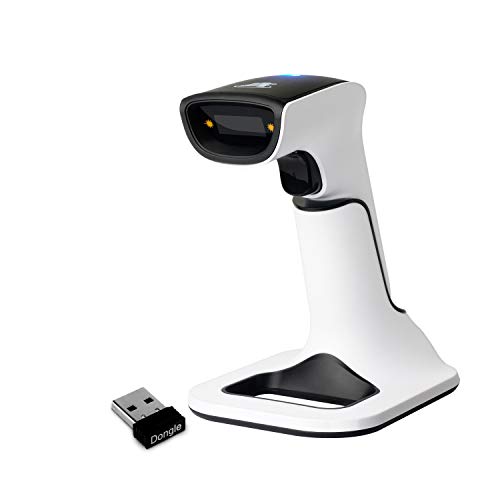
- Bluetooth, USB, and wireless stand support
- Reads both 1D and 2D inventory codes
- Rechargeable battery with charging base
Best For: Small teams or home users who need a flexible scanner for inventory apps and mixed devices.
Best for Offline Inventory Tracking
Wireless 1D/2D Barcode Scanner

- Stores up to 100,000 barcodes offline
- Reads 1D, 2D, and PDF417 codes
- 2.4GHz wireless or USB plug-and-play
Best For: Small warehouses, stock rooms, and food storage teams that want wireless scanning with offline data collection.
Best for Hands-Free Scanning
Bluetooth Barcode Scanner with Stand

- Supports Bluetooth, 2.4G, and USB connections
- Reads 1D, 2D, QR, and screen barcodes
- Includes stand, auto-scan mode, and long battery life
Best For: Small businesses, home inventory setups, and warehouse-style users who want hands-free scanning and broad device compatibility.
Best for 2D and Offline Logging – NADAMOO 2D Wireless Barcode Scanner
If you need a reliable food storage inventory app scanner for mixed barcodes, this NADAMOO model is a practical pick. It reads 1D and 2D codes from paper or screens, connects to phones, tablets, and PCs, and gives you the flexibility to scan in the kitchen, pantry, or back room without being tied to a cable.
Best For: Small businesses, home organizers, and inventory workflows that need wireless scanning plus offline storage for later upload.
Pros:
- Reads 1D, QR, PDF417, and Data Matrix codes from paper and screens.
- Three connection options: Bluetooth, 2.4G wireless, or wired USB.
- Offline storage mode holds up to 100,000 barcodes for batch upload later.
- Includes a charging dock for easy top-ups between inventory runs.
Cons:
- Not a dedicated software app, so you still need a compatible inventory system.
- More scanner than bargain tool if you only need occasional barcode scans.
For buyers who want flexibility more than app-specific extras, this scanner handles a food storage inventory app scanner workflow well thanks to its screen scanning, wireless range, and offline capture. It is especially useful when you need to log items quickly and sync them later.
Best Offline Scanner – 2D Wireless Barcode Scanner with LCD
If you need a food storage inventory app scanner that can keep working even when Wi‑Fi is unreliable, this 2D wireless barcode scanner is a practical pick. It combines live scanning, onboard storage, and a small color screen so you can check barcode data quickly while managing stock in a warehouse, pantry, or back room.
Best For: Buyers who want a plug-and-play handheld scanner for offline inventory counts, fast barcode capture, and simple computer uploads.
Pros:
- 2.4G wireless dongle offers flexible scanning without being tied to a cable.
- Reads both 1D and 2D codes, including barcodes on screens and paper labels.
- 16M storage and 2000mAh battery support long inventory sessions.
- LCD screen helps verify scanned barcode details on the device.
Cons:
- Not suitable for iPads, tablets, or smartphones.
- Offline exports may require a customer service tool.
For teams comparing a food storage inventory app scanner setup, this model stands out when the priority is dependable barcode capture and offline counting rather than app-based mobile syncing. It’s a solid fit if you want a straightforward scanner that works with a computer and handles large inventory lists efficiently.
Best for Multi-Mode Scanning – NETUM CS9000 Bluetooth QR Code Scanner
If you need a food storage inventory app scanner that can move between phones, tablets, and desktop setups, the NETUM CS9000 is a flexible pick. Its Bluetooth, 2.4G wireless, and USB options make it easy to plug into a pantry, warehouse, or kitchen inventory workflow without locking you into one device.
Best For: Teams or home users who want a durable, portable scanner for food storage tracking, stock counts, and app-based inventory management across multiple devices.
Pros:
- 3-in-1 connectivity: Bluetooth, 2.4G wireless, and wired USB
- Honeywell scan engine handles 1D/2D codes and OCR text
- Long 2400mAh battery supports extended inventory sessions
- Rugged build with drop resistance for busy work areas
Cons:
- More scanner than some simple home inventory users need
- Bulkier than compact pocket-sized barcode readers
- Advanced features may be overkill for basic label scanning
For a food storage inventory app scanner, the CS9000 stands out when you want reliable scanning across different devices and a tough design that can handle frequent use. It is especially practical if your inventory process includes QR codes, barcodes, or mixed scanning needs rather than a single app on one phone.
Best for Fast Barcode Capture – NetumScan USB QR Barcode Scanner
NetumScan USB 2D Barcode Scanner | Wired, QR Code Reader, For PC, For inventory, Retail POS
Check Price On AmazonIf you need a practical food storage inventory app scanner for quickly logging bins, pantry items, and supply labels, the NetumScan USB QR Barcode Scanner is a solid plug-and-play option. It reads 1D and 2D codes from paper or screens, so it works well for inventory workflows that rely on QR codes, SKU labels, or digital lists.
Best For: Home or small-business inventory tracking where fast, reliable USB scanning matters more than advanced software features.
Pros:
- Reads 1D and 2D codes, including QR, PDF417, and Data Matrix
- Plug-and-play USB setup with no drivers or battery to manage
- Auto-induction, trigger, and continuous scanning modes
- Handles damaged, smudged, or reflective barcodes better than basic scanners
Cons:
- Wired design limits mobility compared with wireless scanners
- Better suited to computer-based workflows than mobile-only apps
- Not a dedicated inventory app, so software pairing is up to you
For a food storage inventory app scanner setup, this model is strongest when you want dependable barcode input into spreadsheets, POS tools, or inventory software. It is a straightforward choice if your priority is scan speed and compatibility rather than app-specific extras.
Best for Offline Batch Counting – JRHC 1D/2D Portable Inventory Scanner
If you need a food storage inventory app scanner that can count items without constant typing, this JRHC handheld unit is built for batch work. It combines barcode reading, local data collection, and inventory counting, making it useful when you want to track pantry stock, storage rooms, or warehouse shelves and upload the results later.
Best For: Buyers who want a portable scanner for offline counting, long wireless range, and 1D/2D barcode support.
Pros:
- Stores up to 400,000 records across 180 libraries for large inventory jobs
- Reads 1D and 2D codes, including QR codes and screen barcodes
- 2.4G wireless receiver offers easy plug-and-play use with Windows PCs
- Built-in screen, buttons, and long battery life support mobile counting
Cons:
- Designed around PC upload workflows rather than app-first syncing
- May be more scanner than most small home food inventories need
- Works best in a Windows-based setup with the included USB receiver
For shoppers comparing a food storage inventory app scanner, this model stands out more for offline capture and later transfer than for direct mobile app integration. It is a practical pick if you value speed, storage capacity, and dependable barcode reading over app-centric features.
Best for Simple Multi-Device Scanning – ScanAvenger Wireless 1D&2D Barcode Scanner
If you need a food storage inventory app scanner that can move between a phone, tablet, laptop, and POS with minimal setup, this ScanAvenger model is a practical all-around pick. It supports both 1D and 2D codes, works over Bluetooth or USB, and is designed for quick inventory checks in loud or busy spaces.
Best For: Small teams or home-based sellers who want a flexible scanner for inventory apps, barcode labels, and mixed device setups.
Pros:
- Works with Mac, Windows, Android, and Apple mobile devices
- Reads 1D and 2D barcodes, including QR and Data Matrix
- Rechargeable battery and charging stand help reduce downtime
- No software install needed for straightforward setup
Cons:
- May not work with POS systems that need proprietary hardware integration
- Doesn’t support MaxiCode
- Wireless features may be more than you need for simple one-device use
For buyers comparing a food storage inventory app scanner, this one stands out for easy pairing and broad barcode compatibility rather than deep app-specific integrations. It’s a strong fit if you want a versatile scanner that can handle inventory labels across different devices without much setup friction.
Best for Offline Inventory Tracking – Wireless 1D/2D Barcode Scanner
If you need a practical food storage inventory app scanner for counting labels, bins, and packaged items, this wireless barcode scanner is built for fast capture and offline storage. It handles common 1D and 2D codes, works over 2.4GHz or USB, and is useful when you want a simple inventory workflow without extra software setup.
Best For: Small warehouses, stock rooms, and food storage teams that want wireless scanning with offline data collection.
Pros:
- Stores up to 100,000 barcodes offline for later transfer
- Reads a wide range of 1D, 2D, and PDF417 codes
- Plug-and-play 2.4GHz wireless or USB wired connection
- Useful for inventory, labeling, and basic spreadsheet-based tracking
Cons:
- Not compatible with Square
- May be more scanner than needed for very small home pantries
- Designed for barcode workflows, not app-specific integrations
For teams that care more about reliable scans and offline count storage than app-native features, this is a solid food storage inventory app scanner option. It is especially helpful when you need to log items quickly and export totals later.
Best for Hands-Free Scanning – Bluetooth Barcode Scanner with Stand
If you need a practical food storage inventory app scanner that can also handle retail-style labeling, this barcode scanner is a flexible pick. It supports Bluetooth, 2.4G wireless, and USB wired connections, plus auto-sensing and continuous modes for faster batch work.
Best For: Small businesses, home inventory setups, and warehouse-style users who want hands-free scanning and broad device compatibility.
Pros:
- Works with 1D, 2D, and QR codes, including labels and screens
- Adjustable stand and auto-sense mode make hands-free scanning easier
- Long battery life and multiple connection options add flexibility
- Customizable prefixes, suffixes, and timestamp settings
Cons:
- Not compatible with Square
- USB-C users may need an adapter for Mac setups
- More scanner than some simple home pantry users need
For anyone building a food storage inventory app scanner setup, this model stands out for its reliable decoding, hands-free stand, and easy multi-device pairing. It is a better fit if you want inventory efficiency and flexible scanning modes rather than a basic point-and-shoot reader.
Best for Offline Counting – Wireless 1D/2D Inventory Scanner
If you need a food storage inventory app scanner that can also handle warehouse-style counting, this handheld model is a practical fit. It reads 1D, 2D, and PDF417 codes, stores scans offline, and syncs through the USB receiver later, which is useful when you are tracking packaged ingredients, labels, and shelf stock in busy environments.
Best For: Teams that want a portable barcode scanner for offline inventory counts, including food storage, retail backrooms, and small warehouse setups.
Pros:
- Supports 1D, 2D, and PDF417 codes, including screen barcodes
- Built-in memory and inventory functions help with batch counting
- Wireless 2.4G receiver makes it easy to plug in and start scanning
- Long battery life and LCD screen improve portability for field use
Cons:
- Not compatible with Square
- Works as a PC-connected scanner rather than a true app-first mobile tool
- Best suited to barcode workflows, not manual pantry tracking
For buyers who want a food storage inventory app scanner that can quickly capture coded stock without constant recharging or cable management, this one is compelling. It is strongest for barcode-based inventory control, especially when you need offline storage and fast upload later rather than a full consumer app experience.
Best for Mobile Inventory Scanning – Bluetooth Barcode Scanner with Back Clip
If you need a practical food storage inventory app scanner that works with your phone, this Bluetooth barcode scanner is a flexible pick. The back-clip design lets you scan and view results on a smartphone at the same time, while the 1D/2D support covers common inventory labels, QR codes, and damaged barcodes.
Best For: Mobile inventory tracking, pantry or food storage audits, and anyone who wants a phone-friendly scanner for app-based item logging.
Pros:
- Bluetooth, 2.4G, and USB-C wired modes for flexible setup
- Back-clip design keeps the phone camera and charging port accessible
- Reads 1D and 2D codes, including QR, Data Matrix, and PDF417
- Long battery life with a 2000mAh rechargeable battery
Cons:
- Not compatible with Square system scanner workflows
- Back-clip fit is limited to certain phone sizes
- More specialized than a simple handheld scanner if you only need basic UPC scans
This model makes sense if your food storage inventory app scanner needs to pair directly with a phone and handle more than just standard barcodes. It’s especially useful for fast, on-the-go inventory entry where portability and multi-mode connectivity matter more than a desktop-style scanner.
How We Picked the Best Food Storage Inventory App Scanner
For a Food Storage Inventory App Scanner, the most useful models are the ones that balance scan speed, connection stability, and ease of use. We prioritized barcode readers that can handle common 1D and 2D labels, support inventory-friendly features like wireless operation or USB fallback, and work well in real storage environments where speed matters.
We also looked for broader compatibility, battery practicality, and screen or data-collection features that can reduce trips back to a computer. For food operations, that matters because inventory checks often happen away from a desk.
Quick Comparison
Think of these scanners in three groups: basic wired models for fixed stations, wireless handheld scanners for moving between storage areas, and portable data-collector styles with screens for larger inventory jobs. Wired scanners are usually the simplest and most affordable. Wireless models are better when you need freedom of movement. Data-collector scanners are best when you want to capture counts on the spot and upload later.
Key Buying Factors for a Food Storage Inventory App Scanner
Label Types and Scan Reliability
Make sure the scanner supports the codes you actually use, especially 1D barcodes and 2D QR codes. For mixed packaging, damaged labels, or small printed tags, a stronger image engine can make a noticeable difference.
Connectivity and Workflow
Choose USB if the scanner will stay at one workstation. Choose Bluetooth or 2.4G wireless if staff need to scan across coolers, shelves, or multiple storage zones. If your process involves tablets, phones, or laptops, confirm compatibility before buying.
Battery Life and Portability
If you count inventory in long shifts or across multiple rooms, battery life matters. Lightweight handheld designs are easier to carry, while models with built-in stands or clips can improve convenience for repeat scanning.
Data Collection Features
Some scanners simply send each code directly into an app or spreadsheet. Others store data internally, show it on a screen, or act more like a portable terminal. If your inventory process is hands-on and mobile, those extra features can save time.
Who Should Buy Which Food Storage Inventory App Scanner?
If you want the simplest setup, go with a wired scanner. If you move often between storage areas, choose a wireless model with stable pairing and good range. If you manage larger food inventories and want fewer trips between the shelf and the computer, a portable scanner with a display or collector-style functions is usually the smartest fit.
For most buyers, the best Food Storage Inventory App Scanner is the one that matches the way inventory is counted today, not the way it might be managed later. Focus on reliability first, then pick the features that reduce steps and keep daily stock checks moving.