Choosing the right flour moisture meter can help you catch excess moisture before it affects storage, milling quality, texture, or shelf life. The best models offer fast readings, simple operation, and enough accuracy for everyday production checks.
Below, we focus on practical options for flour, grain, and related powder testing so you can compare meter type, probe style, and intended use before you buy.
Best 10 Flour Moisture Meter Picks for 2026
Portable Grain & Flour Tester
TK100GF for Corn, Wheat, and More
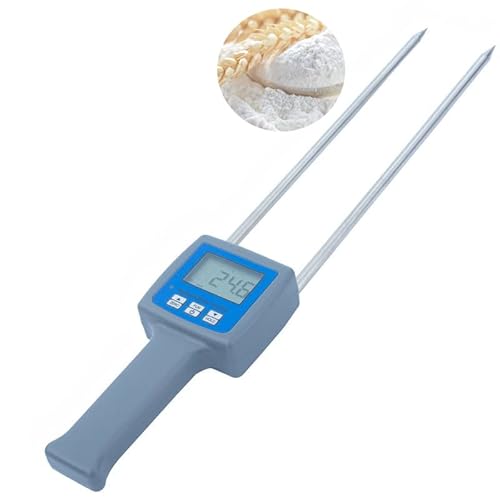
- Instant moisture readings
- Backlit LCD for easier viewing
- Supports 11 grain and flour types
Best For: Quick spot checks on common grain flours
Analog Moisture Meter with Probe
F-6/6-30/1235 Analog Hay Meter

- Easy-to-read analog display
- Includes 10-inch probe
- Internal calibration check
Best For: Users who prefer a simple analog meter format
High-Frequency Powder Tester
DM300L for Sand, Flour, and Powders

- Fast high-frequency measurement
- Backlit display with data hold
- Portable with auto shutoff
Best For: Checking flour and other powder materials quickly
Probe-Style Grain Moisture Meter

- Measures moisture and temperature
- Backlit LCD with data retention
- Supports several grain types
Best For: Portable grain testing with extra measurement functions
Combo Moisture Meter
General Tools MMH800 Pin/Pinless Moisture Meter w/Temp and Humidity

- Pin and pinless sensing
- Reads moisture, temp, and humidity
- Audible and visual moisture alerts
Best For: Home moisture checks on wood, walls, and floors
Grain Meter
Portable Digital LCD Grain Moisture Meter

- Voice-guided moisture alerts
- Backlit LCD for dark spaces
- Stores 1,000+ readings
Best For: Portable grain moisture testing with on-device data storage
Hay Meter
TK100H Portable Hay Moisture Meter
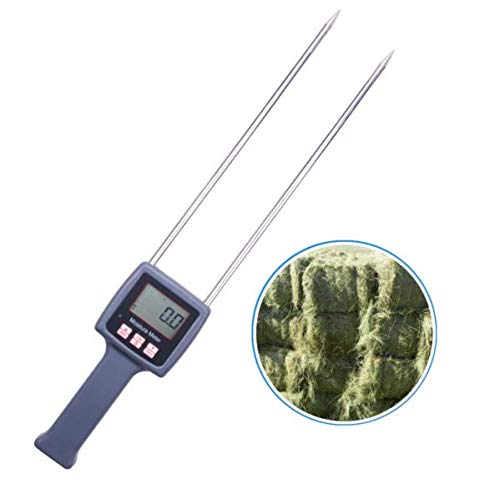
- Made for straw, bran, and forage grass
- Very lightweight at 3.52 ounces
- Compact, easy-to-carry design
Best For: Testing moisture in hay, straw, bran, and other fibers
Non-Invasive Surface Checking
General Tools Pinless Digital Moisture Meter

- Pinless design avoids surface damage
- Reads up to 3/4" deep
- Backlit LCD with audible alert
Best For: fast, non-marring surface moisture checks
Grain and Seed Moisture Readings
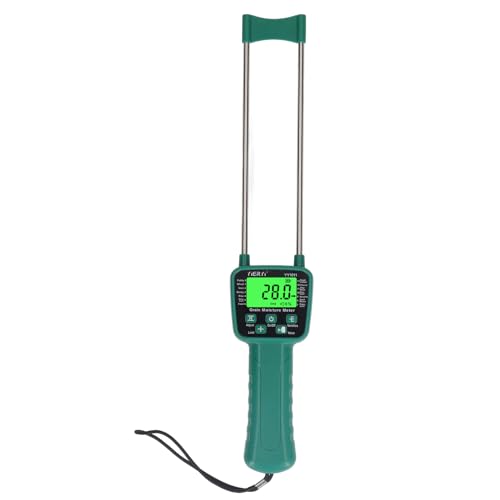
- Dual steel probes for depth readings
- Tests 14 crop types
- Voice broadcast with LCD backlight
Best For: grain, seed, and crop moisture testing
Pin-Type Leak and Mold Checks
General Tools Digital Moisture Meter
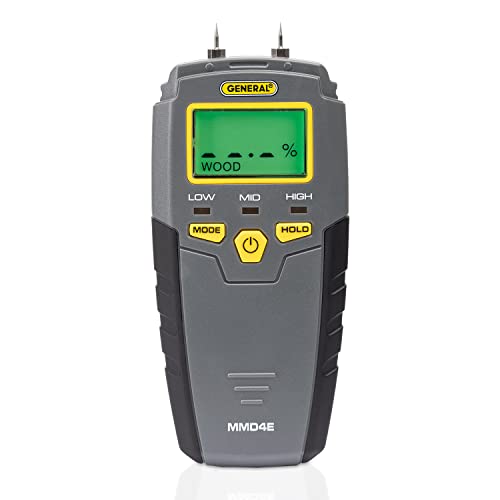
- Direct pin readings for surfaces
- Backlit LCD with moisture alerts
- Includes extra pins and battery
Best For: wood, drywall, concrete, and leak detection
Portable Grain & Flour Tester – TK100GF for Corn, Wheat, and More
If you need a flour moisture meter for quick checks in the shop or storage area, the TK100GF keeps things simple with instant readings and a compact, portable body. It supports moisture measuring for corn flour, wheat flour, peas flour, and other grain flours, making it a practical fit for routine spot testing.
Best For: Users who want a lightweight, easy-to-use flour moisture meter for common grain flours.
Pros:
- Instant readings for fast moisture checks
- Portable, compact design for easy handling
- Backlight helps reading in low-light conditions
- Supports 11 kinds of grains and flours
Cons:
- Requires 4 AAA batteries
- Plastic construction may not suit heavy-duty field use
This is a straightforward option if your priority is speed and simplicity over advanced features. The backlit LCD and wide flour compatibility make it a solid everyday tester for basic moisture monitoring.
Analog Moisture Meter with Probe – F-6/6-30/1235 Analog Hay Meter
F-6/6-30/1235 Analog Hay Moisture Meter Value Package/Includes Meter and 1235 10” prod.
Check Price On AmazonThis analog moisture meter is built around a simple, easy-to-read display for basic moisture checking. While it is designed for hay rather than flour, its straightforward tabletop setup and included 10-inch probe make it a useful reference tool for buyers who want a no-frills moisture meter format.
Best For: Buyers who want a simple analog moisture meter with an easy-to-read display.
Pros:
- Easy-to-read analog display
- Includes a 10-inch probe
- Internal calibration check
- Backed by a 1-year warranty
Cons:
- Designed for hay, not flour
- Requires a 9V alkaline battery
If your shopping list is specifically for a flour moisture meter, this is not the right match. It may still appeal to users who prefer an analog instrument with a probe and calibration check, but its use case is clearly centered on hay.
High-Frequency Powder Tester – DM300L for Sand, Flour, and Powders
If you need a flour moisture meter for powders as well as sand-like materials, the DM300L uses a high-frequency principle for fast measurement and high precision. It is portable, compact, and designed to give instant moisture readings with helpful features like a backlight, data hold, and low battery alert.
Best For: Users who want a fast, backlit moisture tester for flour and other powder materials.
Pros:
- High-frequency principle for quick measurement
- Instant readings with high precision
- Backlight and data hold functions
- Low battery alert plus auto power-off
Cons:
- Requires a 9V battery
- Plastic build may not feel as rugged as metal tools
This model stands out if you want a meter focused on fast measurement and extra on-device convenience. Its powder-testing positioning makes it a strong option for users comparing flour moisture meter choices beyond standard grain-only designs.
Probe-Style Grain Moisture Meter – MD7822 with Backlit LCD
This grain moisture meter is aimed at fast, practical measurements for wheat, rice, corn, paddy, and maize. With a probe-style design, backlit LCD, and temperature functions, it suits buyers who want a more feature-rich flour moisture meter alternative for grain handling and storage checks.
Best For: Users who need a portable grain tester with moisture and temperature functions.
Pros:
- Measures moisture and temperature
- Supports variety selection and moisture standards
- Backlit LCD improves visibility
- Data retention, low-battery prompt, and auto shutoff
Cons:
- Probe-style design may be less convenient for some flour-only use cases
- Requires a 9V battery
For buyers comparing flour moisture meter options, this model is strongest when grain versatility matters. The extra functions and clear display make it a solid choice for users who want more than a basic moisture readout.
Combo Moisture Meter – General Tools MMH800 Pin/Pinless Moisture Meter w/Temp and Humidity
If you want a flour moisture meter-style tool for broader moisture checks around the home, the General Tools MMH800 is built as a practical combo meter. It can read moisture in floors, plastered walls, and wood, while also showing ambient temperature and relative humidity, making it useful when you need more than a single-point reading.
Best For: Checking moisture in wood, walls, and floors with both pin and pinless modes plus temp and humidity readings.
Pros:
- Pin-type and pinless sensors for quick scanning and more exact spot readings
- Shows moisture percentage, ambient temperature, and relative humidity
- Audible and visual alerts for low, medium, and high moisture levels
- Useful for identifying suspicious water stains and early dampness issues
Cons:
- Designed for general moisture detection rather than grain- or flour-specific testing
- Runs on a 9V battery and corded-electric is listed in the details
- Larger combo tool may be more than you need for simple spot checks
This is a versatile pick if you need a moisture meter that covers multiple surfaces and also tracks environmental conditions. For users comparing tools by flexibility, the dual-sensor design is the main advantage.
Grain Meter – Portable Digital LCD Grain Moisture Meter
For buyers seeking a flour moisture meter for grain-style testing, this portable digital grain moisture meter is aimed at wheat, corn, rice, bean, peanut, and soybean checks. It emphasizes fast field use with a backlit LCD, voice alerts, and storage for readings, which can be helpful when you need to monitor moisture levels away from a lab.
Best For: Portable grain moisture testing with voice alerts, backlit readings, and stored measurements.
Pros:
- Claimed ±0.1% accuracy with carbon steel nickel-plated needles
- Voice alerts call out moisture levels in real time
- Backlit LCD with red alarm flashes for low-light use
- Stores 1,000+ readings with timestamps
Cons:
- Product notes focus on grain testing, not direct flour measurement
- Accuracy and durability claims are broad and should be compared carefully
- No detailed calibration or battery information is provided in the notes
This meter stands out for portability and data handling, especially if you want quick checks in the field or barn. Its strongest appeal is the combination of alert features and reading storage rather than a minimalist design.
Hay Meter – TK100H Portable Hay Moisture Meter
If you need a flour moisture meter alternative for dry agricultural materials, the TK100H is a portable hay moisture meter built for testing cereal straw, bran, forage grass, and similar fibers. It’s a compact option when you want a simple meter focused on moisture measurement in plant-based materials rather than a multi-function device.
Best For: Measuring moisture in hay, straw, bran, forage grass, and other fiber materials.
Pros:
- Purpose-built for cereal straw, bran, forage grass, and related materials
- Very light at 3.52 ounces for easy handling
- Compact package size makes it easy to store and carry
Cons:
- Notes provide very limited feature detail beyond the material types it tests
- No display, accuracy, or alert information is supplied
- Not described as a general-purpose moisture meter
The TK100H is the most straightforward option here if your priority is a dedicated meter for hay and similar fibers. It offers less feature detail than the other two products, but that may suit buyers who want a simple, task-specific tool.
Non-Invasive Surface Checking – General Tools Pinless Digital Moisture Meter
General Tools Digital Moisture Meter MMD7NP - Humidity Sensor- Pinless and Non-Invasive
Check Price On AmazonIf you need a flour moisture meter for checking dampness on surfaces around a prep area, this pinless model offers a quick, non-invasive way to spot problem spots without leaving marks. It reads up to 3/4″ deep and uses a backlit LCD, LED bar graph, hold button, and audible alert to make checks straightforward.
Best For: Users who want a pinless moisture checker for fast, non-marring surface readings.
Pros:
- Pinless design won’t scratch or damage surfaces.
- Reads up to 3/4″ deep for quick moisture checks.
- Backlit LCD, 3-color LED bar graph, and audible alert improve usability.
- Includes out-of-range alarm and low-battery warning.
Cons:
- Designed for softwood, hardwood, wallboard, drywall, and masonry rather than grain or flour.
- Uses relative readings on some materials, so it is not a dedicated food tester.
This is a practical choice when you want a general-purpose moisture tool for surfaces, but buyers looking for a true flour moisture meter should note that its measurement focus is on building materials.
Grain and Seed Moisture Readings – Digital Probe Grain Tester
If you are shopping for a flour moisture meter, this portable probe tester is better suited to grain and seed moisture checks than to general home materials. It uses dual steel probes for high-precision readings, plus an LCD backlight and voice broadcast to make measurements easier to see and hear in different conditions.
Best For: Grain, seed, and crop moisture testing where clear readings and voice output are helpful.
Pros:
- Dual steel probes are designed to measure moisture distribution at different depths.
- Supports 14 crop types, including wheat, corn, rice, and soybeans.
- LCD backlight improves visibility in dark or bright environments.
- Voice broadcast provides real-time values in English or Chinese.
Cons:
- Battery not included.
- Built for grains and seeds, so it is not explicitly marketed as a flour-only tester.
For buyers comparing tools in the flour moisture meter category, this model stands out for its grain-focused design and easy-to-read output, but it is best matched to crops and stored seed rather than a dedicated flour workflow.
Pin-Type Leak and Mold Checks – General Tools Digital Moisture Meter
For shoppers comparing options in the flour moisture meter category, this pin-type moisture meter is really aimed at wood, drywall, concrete, and leak detection. It uses stainless steel pins for direct readings and adds a backlit LCD with low, medium, and high moisture alerts to speed up spot checks.
Best For: Detecting moisture in wood and building materials with direct pin readings.
Pros:
- Pin-type design gives direct contact readings.
- Backlit LCD shows large digits for easy viewing.
- Low, medium, and high alert tones help interpret results quickly.
- Includes extra pins, protective cap, and 9V battery.
Cons:
- Not designed for flour or other food materials.
- Requires pin insertion, which may not suit delicate surfaces.
This is a solid utility meter for home moisture troubleshooting, but it is not the right fit if you need a dedicated flour moisture meter for food production or grain handling.
How We Picked the Best Flour Moisture Meter
We prioritized meters that are relevant to flour and grain workflows, with an emphasis on measurement speed, ease of use, display clarity, and suitability for dry bulk materials. We also looked for models that serve common buyer needs, from portable spot-checking to broader moisture monitoring in storage and processing.
Because not every meter is designed specifically for flour, we favored devices that can reasonably support flour-adjacent applications such as grain, cereal, bran, powder, and feed testing. That makes it easier to match the tool to your actual material and testing environment.
Quick Comparison
Broadly, these products fall into three groups: grain-focused digital meters, pin or pinless general-purpose moisture meters, and specialized meters for hay, soil, or powders. For a Flour Moisture Meter, grain-oriented digital models are usually the closest fit, while pinless meters can be useful for non-invasive surface checks and general facility monitoring.
Key Buying Factors for a Flour Moisture Meter
Material Compatibility
Check whether the meter is designed for flour, grain, powder, or related agricultural products. A meter optimized for wheat, corn, rice, or bran is typically more relevant than a general construction moisture meter.
Measurement Method
Probe-based meters often offer direct contact readings and can work well for bulk samples. Pinless meters are better when you want non-invasive checks, but they may be less specific for loose flour. Choose the method that matches how you sample your material.
Accuracy and Repeatability
For quality control, consistency matters as much as precision. Look for models that deliver stable readings across repeated samples and offer a clear process for calibration or material selection.
Portability and Display
A compact body, readable LCD, and simple controls make it easier to test multiple batches quickly. In busy production settings, fast setup can matter more than extra features you may never use.
Use Environment
Some meters are built for farm, warehouse, or industrial settings, while others are better for home or light commercial use. Consider temperature, dust, and how often the device will be handled.
Who Should Buy Which Flour Moisture Meter?
If you need the closest match to flour testing, start with a grain moisture meter or a digital probe model that explicitly supports wheat, corn, rice, bran, or similar materials. If you want a broader tool for facility checks, a pinless or general-purpose moisture meter may be the better value. For buyers focused on storage and incoming quality checks, choose a model that is fast, portable, and easy to repeat batch after batch.
In short, the best Flour Moisture Meter is the one that matches your material, sampling method, and workflow—not just the one with the most features.