Small-batch fermentation is easier when your container matches the amount of food you actually plan to make. The best fermentation crocks for small batches provide enough room for vegetables, dependable brine coverage, and a simple way to manage oxygen without taking over your kitchen.
This roundup includes traditional ceramic crocks, compact stoneware pots, glass jars with airlocks, and beginner-friendly kits. Use the guide below to compare capacity, sealing styles, included weights, maintenance, and the best fit for your fermentation routine.
Best 10 Fermentation Crocks for Small Batches Picks for 2026
Best Ceramic Crock
TOMO 3L Waterlock Fermentation Crock

- 3L stoneware crock for roughly 2–3 cabbages
- Includes two weights and wooden tamper
- Wide waterlock and glazed interior
Best For: Traditional ceramic fermentation in moderately sized home batches
Best Two-Pack
Upgrade 1-Gallon Glass Fermentation Jars

- Two clear, wide-mouth one-gallon jars
- Airlocks, handles, bases, and sealing plugs included
- Converts to airtight storage after fermenting
Best For: Multiple or varied fermentation and brewing batches
Best Tiny Batch Crock
Ohio Stoneware 1-Pint Pickling Crock

- Very compact one-pint stoneware vessel
- Suitable for tiny ferments and pickles
- Also works for storage and display
Best For: Solo cooks making very small experimental batches
Best Compact Jar
0.6-Gallon Glass Airlock Fermentation Kit

- 2.3L size for roughly two pounds of sauerkraut
- Includes jar, airlock, grommets, and gasket
- Wide mouth and clear lead-free glass
Best For: Beginners and small households with limited kitchen space
Best All-Around Crock
1-Gallon Glazed Stoneware Fermenter

- 1-gallon size for moderate home batches
- Water-seal lid helps limit oxygen exposure
- Includes weights, lid, and tamper
Best For: Home fermenters wanting a dedicated ceramic crock for sauerkraut, kimchi, and pickles
Best for First-Timers
24-Ounce Mason Jar Fermentation Kit
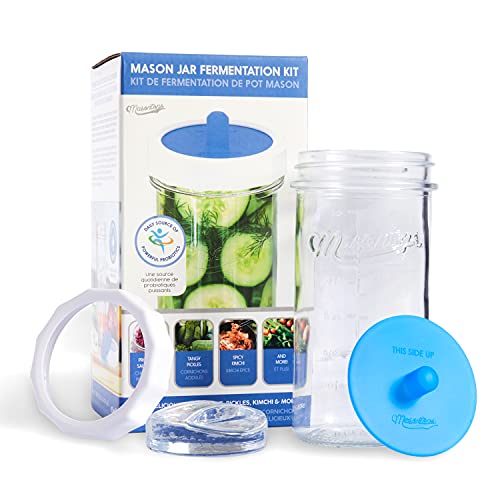
- Compact 24-ounce batch size
- Includes jar, airlock, band, and glass weight
- Instructions are included
Best For: Beginners making small batches of sauerkraut, kimchi, pickles, or hot sauce
Best for Larger Small Batches
7-Liter Porcelain Water-Seal Crock

- 7-liter capacity yields up to 12 jars
- High-fired porcelain construction
- Includes weights, tamper, and care guide
Best For: Regular fermenters preparing family-size batches of sauerkraut, kimchi, and pickles
Large-Batch Ceramic Pickling Crock

- Large 2.6-gallon/10-liter capacity
- Includes weights, pounder, and masher
- Smooth ceramic body is easy to clean
Best For: Families making larger home fermentation batches
Compact Water-Sealed Pickling Crock

- Compact half-gallon capacity
- Includes lid, weights, and tamper
- Water-sealed cover helps manage fermentation gases
Best For: Beginners and small households fermenting vegetables
Restaurant-Grade Stoneware Crock

- Compact 2-liter/0.5-gallon capacity
- Includes stone weights and water-sealed lid
- Works for vegetables and kombucha
Best For: Small-batch fermenters wanting a versatile glazed crock
Best Ceramic Crock – TOMO 3L Waterlock Fermentation Crock
For shoppers comparing fermentation crocks for small batches, the TOMO 3L is a traditional stoneware option with a waterlock design, two weights, and a wooden tamper. Its one-gallon capacity is sized for roughly two to three cabbages or about five mason jars of sauerkraut.
Best For: Home fermenters who want a reusable ceramic crock for sauerkraut, pickles, kimchi, or a full 3L kombucha batch.
Pros:
- Includes two fermentation weights and a wooden tamper.
- Wide waterlock helps release gases while keeping air out.
- Fully glazed, non-porous interior is designed to resist odors and simplify cleaning.
- Ceramic walls block UV light and provide a durable stoneware vessel.
Cons:
- At 7.09 pounds, it is heavier than a glass jar.
- The 3L size may produce more food than solo fermenters need.
- Requires waterlock care and countertop space.
The TOMO is a strong choice when you prefer the stability and traditional feel of ceramic over a lightweight jar. Its included accessories and waterlock make it a ready-to-use setup for moderately sized home batches.
Best Two-Pack – Upgrade 1-Gallon Glass Fermentation Jars
This two-pack is a practical alternative to ceramic fermentation crocks for small batches when you want clear, wide-mouth containers. Each one-gallon glass jar includes an airlock lid, stainless steel handle, and non-slip silicone base for fermenting and later storage.
Best For: Fermenters who want two sizable vessels for sauerkraut, kimchi, kombucha, sourdough starter, or brewing projects.
Pros:
- Two one-gallon jars support simultaneous batches.
- Wide mouths, measurement marks, and clear glass make filling and monitoring easier.
- Automatic airlocks release CO2 while limiting oxygen and contaminants.
- Removable airlocks and included sealing plugs let the jars convert to storage containers.
Cons:
- One-gallon capacity may be larger than needed for one- or two-person households.
- Airlocks require hand washing even though the jars are dishwasher safe.
- Glass is heavier and more breakable than some plastic alternatives.
If you want flexibility rather than a single dedicated crock, this kit stands out for its two-container format and storage conversion. The handles and silicone bases also address common handling and countertop concerns with full glass jars.
Best Tiny Batch Crock – Ohio Stoneware 1-Pint Pickling Crock
Among fermentation crocks for small batches, this Ohio Stoneware model is the most compact choice. Its one-pint stoneware capacity suits a small ferment or pickle project, while its blue finish also lets it function as an attractive pantry container or kitchen storage crock.
Best For: Solo cooks and beginners testing very small portions of fermented or pickled foods.
Pros:
- One-pint capacity helps limit leftovers and ingredient waste.
- Compact 2.75-inch height and 3.5-inch diameter fit small spaces.
- Stoneware is designed not to retain food flavors.
- Microwave-, oven-, and dishwasher-safe according to the supplied notes.
Cons:
- No lid is included.
- Its one-pint capacity is too small for larger harvests.
- The notes do not list fermentation weights or an airlock.
This is best viewed as a tiny utility crock rather than a complete sealed fermentation system. Choose it for small experiments, serving, or storage, but plan on supplying any additional fermentation-covering equipment your recipe requires.
Best Compact Jar – 0.6-Gallon Glass Airlock Fermentation Kit
This 0.6-gallon jar is tailored to fermentation crocks for small batches, offering enough room for roughly two pounds of sauerkraut or one small cabbage without the footprint of a full gallon vessel. The kit includes a wide-mouth jar, three-piece water-seal airlock, two silicone grommets, and a silicone gasket.
Best For: Beginners, apartment dwellers, and one- or two-person households wanting a manageable first batch.
Pros:
- Compact 2.3-liter capacity suits smaller recipes and refrigerator storage.
- Wide mouth makes packing vegetables, adding weights, and cleaning easier.
- Water-seal airlock lets CO2 escape while helping block oxygen and airborne particles.
- Lead-free glass provides clear visibility of brine and fermentation progress.
Cons:
- Only one jar is included.
- The kit does not list fermentation weights as included.
- Hand washing is recommended, and the jar must be protected from thermal shock.
The 0.6-gallon format is a particularly approachable choice when a gallon jar feels excessive. Its included airlock components reduce compatibility guesswork, while the compact footprint makes it suitable for smaller kitchens and refrigerator shelves.
Best All-Around Crock – 1-Gallon Glazed Stoneware Fermenter
If you want fermentation crocks for small batches with the traditional water-seal design, this 3.8-liter glazed stoneware crock is a versatile option. It is sized for roughly two to five cabbages and includes the core accessories needed for sauerkraut, kimchi, pickles, vegetables, or kombucha.
Best For: Home fermenters who want a dedicated, opaque ceramic crock for moderate-size batches.
Pros:
- 1-gallon capacity can yield about four mason jars of sauerkraut.
- Water-seal lid allows gases to escape while helping keep outside air out.
- Includes ceramic weights, lid, and pickle tamper.
- Lead- and cadmium-free glazed ceramic is non-porous and designed for easier cleaning.
Cons:
- At 7.39 pounds, it is less convenient to move once filled.
- Its capacity may be more than needed for very small, single-jar experiments.
This is a practical middle ground for shoppers comparing fermentation crocks for small batches: more substantial and purpose-built than a jar kit, while smaller than a family-size crock. Its included tamper and weights make it easier to start without sourcing accessories separately.
Best for First-Timers – 24-Ounce Mason Jar Fermentation Kit
For the smallest fermentation crocks for small batches, this Masontops starter set takes a simpler mason-jar approach. The 24-ounce jar, airlock lid, screw band, and glass fermentation weight provide a compact setup for testing sauerkraut, kimchi, pickles, or hot sauce.
Best For: Beginners and small households who want to try fermentation in single-jar quantities.
Pros:
- Compact 24-ounce capacity suits small experimental batches.
- Includes a mason jar, airlock lid, plastic screw band, and glass weight.
- Airlock vents gas without requiring routine jar burping.
- Step-by-step instructions with pictures are included.
Cons:
- Much smaller than a traditional 1-gallon or larger fermentation crock.
- Designed for regular-mouth mason jars, which limits compatibility with other jar sizes.
This kit is the easiest low-commitment entry in the group. It does not offer the heavy ceramic construction or larger batch capacity of a crock, but its compact format and included components make it especially approachable for first attempts and limited counter space.
Best for Larger Small Batches – 7-Liter Porcelain Water-Seal Crock
If your idea of fermentation crocks for small batches includes preparing several jars at once, this 7-liter porcelain crock offers substantially more room than a starter jar. Its water moat, ceramic weights, wooden tamper, and guide support repeat batches of sauerkraut, kimchi, and other lacto-fermented vegetables.
Best For: Families or regular fermenters who want a durable, larger-capacity crock without moving to commercial-scale equipment.
Pros:
- 7-liter capacity can hold about five to seven heads of cabbage and yield up to 12 jars.
- High-fired porcelain construction is described as dense, durable, and resistant to cracking.
- Water seal lets CO₂ escape while helping keep oxygen and contaminants out.
- Includes two ceramic weights, a wooden tamper, and a printed care guide.
Cons:
- Its larger size may be excessive for occasional or single-jar fermenters.
- Hand-wash-only care requires more cleanup than a smaller jar setup.
- Filled, it is intended to remain in a dedicated spot rather than be moved often.
This is the capacity pick for shoppers who have outgrown tiny batches but still want a countertop home-fermentation vessel. The opaque white porcelain, included tools, and water-seal design emphasize repeatable, hands-off use, though its size and hand-wash care make it less suited to casual experimentation.
Large-Batch Ceramic Pickling Crock – 2.6-Gallon Fermentation Crock
For shoppers comparing fermentation crocks for small batches, the Tioncy 2.6-gallon crock is a roomy option with the accessories needed to pack vegetables and keep them submerged. Its larger capacity is better suited to households fermenting substantial quantities at once.
Best For: Families and batch fermenters who want a ceramic crock with included weights, a pounder, and masher.
Pros:
- Generous 2.6-gallon/10-liter capacity.
- Includes a lid, two pressure stones, pounder, and masher.
- Smooth ceramic construction is designed for straightforward cleaning and stable placement.
- Natural ceramic material helps provide temperature stability and resistance to wear.
Cons:
- At 19.41 pounds, it is relatively heavy to move when empty.
- Its large footprint may take more cabinet or counter space than a half-gallon crock.
This is a well-equipped choice when “small batch” means home-scale production for a family rather than a single jar. Choose it if capacity and included packing tools matter more than compact storage.
Compact Water-Sealed Pickling Crock – 1/2-Gallon Fermentation Jar
The Seeutek 1/2-gallon crock is a practical fit for shoppers seeking fermentation crocks for small batches. Its compact ceramic jar includes a water-sealed lid, weighting stones, and a tamper for making sauerkraut, kimchi, pickles, and other fermented vegetables.
Best For: Beginners and smaller households who want a compact crock for seasonal vegetable ferments.
Pros:
- Half-gallon capacity suits modest fermentation projects.
- Includes a lid, weighting stones, and pickle tamper.
- Water-sealed cover is designed to let fermentation gas escape while limiting outside air.
- Lead- and cadmium-free glazed ceramic surface is easy to wash.
Cons:
- Its 0.5-gallon capacity is less suitable for large family-sized batches.
- The supplied notes do not specify the exact dimensions of the crock itself.
With a manageable size and a complete accessory set, this crock offers a straightforward entry point for small-batch vegetable fermentation. It is especially appealing if you want a traditional ceramic vessel without committing to a multi-gallon model.
Restaurant-Grade Stoneware Crock – 2-Liter Fermentation Jar
For fermentation crocks for small batches, this 2-liter glazed stoneware crock offers a compact vessel for sauerkraut, kimchi, pickles, vegetables, or kombucha. It combines a half-gallon capacity with stone weights and a water-sealed lid for controlled home fermentation.
Best For: Home fermenters who want a durable, compact crock that can handle both vegetables and kombucha.
Pros:
- 2-liter/0.5-gallon size is convenient for smaller batches.
- Includes stone weights and a clay lid with a water-seal design.
- Thick, food-grade glazed ceramic is described as non-porous and resistant to absorbing odors or tastes.
- Suitable for sauerkraut, kimchi, pickles, vegetables, and kombucha.
Cons:
- Its half-gallon capacity will not match the output of a 10-liter crock.
- The supplied details do not mention a tamper or pounder.
This model is a versatile small-batch pick when you value a compact footprint and want one crock for several fermentation styles. Its water-sealed lid and included weights make it especially suited to hands-off vegetable fermentation.
How We Picked the Best Fermentation Crocks for Small Batches
We focused on usable capacity, construction, fermentation control, included accessories, and likely countertop practicality. The selection covers compact half-gallon and pint-size vessels as well as larger one- to two-gallon crocks for households that ferment more frequently. We also considered whether each option includes weights, an airlock, a water-seal lid, or other equipment that reduces the need for separate purchases.
Because fermentation preferences vary, the list includes both opaque ceramic crocks and transparent glass jars. Ceramic helps protect contents from light and offers a traditional setup, while glass makes it easy to monitor bubbles, brine level, and mold concerns.
Quick Comparison
| Type | Typical capacity | Best for | What to check |
|---|---|---|---|
| Small glass jar | About 0.6 gallon or less | First batches and limited counter space | Airlock design, lid fit, and included weights |
| Half-gallon stoneware | About 2 liters | Regular household batches | Interior glaze, weight size, and cleaning access |
| One-gallon crock or jar | About 3 to 3.8 liters | Sauerkraut, pickles, or kimchi for several servings | Footprint, lifting weight, and seal style |
| Large crock | 1.8 gallons or more | Frequent fermenters and larger households | Storage space, stability, and batch volume |
Key Buying Factors for Fermentation Crocks for Small Batches
Capacity and Usable Fill Volume
Choose a vessel based on the finished batch, not its advertised maximum capacity. Vegetables need headspace, and weights must keep the food beneath the brine. A half-gallon container is often a practical starting point, while a one-gallon crock suits larger weekly batches. Avoid buying a large crock if you will usually fill only a small portion of it.
Airlocks, Water Seals, and Lids
Airlocks allow fermentation gases to escape while limiting outside air. Traditional water-seal crocks use a moat and fitted lid for a similar purpose. Basic jars may use specialized fermentation lids instead. Check whether the sealing components are included and whether replacement parts are easy to find.
Weights and Food-Safe Materials
Weights help prevent floating vegetables from contacting oxygen. Look for glass, ceramic, or other clearly food-safe weights that fit the opening. Glazed stoneware should have a smooth, intact interior without chips or cracks. For glass, inspect the jar and lid before use and avoid sudden temperature changes.
Cleaning and Everyday Handling
Wide openings are easier to pack and clean. Ceramic crocks can be heavy when full, whereas glass jars make contents visible but may be more vulnerable to impact. Confirm the manufacturer’s cleaning guidance, especially for airlock parts and glazed surfaces.
Who Should Buy Which Fermentation Crocks for Small Batches?
- New fermenters: Choose a small glass kit with an airlock, weights, and clear instructions. It offers manageable batch sizes and visible progress.
- Traditional crock users: Select a compact stoneware or ceramic crock with a fitted lid and weights for a classic sauerkraut, pickle, or kimchi setup.
- Frequent fermenters: A one-gallon crock or jar provides more working capacity without the bulk of commercial-size equipment.
- Families and serious batch makers: Consider a 1.8-gallon or larger water-seal crock, provided you have stable storage and enough produce to fill it properly.
For most households, the best choice balances capacity with how often you ferment. Start smaller if you are experimenting, and prioritize included weights and reliable oxygen control over decorative features.