The best countertop water filters for home use make cleaner-tasting water easier to access without requiring under-sink plumbing or a full installation. The right model depends on your water concerns, available counter space, filtration goals, and daily demand.
We compared ten countertop systems across filtration technology, capacity, convenience, certifications, maintenance, and overall usability to help you choose a practical fit for your kitchen.
Best 10 Countertop Water Filters for Home Use Picks for 2026
Best Gravity-Fed Pick
Purewell 3-Stage Ultra-Filtration System

- 0.01-micron UF membrane with carbon and silver-ion filtration
- Non-electric 2.25-gallon stainless-steel design
- NSF/ANSI 42 and 372 certifications noted
Best For: Large-capacity, electricity-free home filtration
Best Smart Dispenser
Ninja HydraSense Intelligent Filtration System

- One-touch dispensing with customizable fill volumes
- Tracks filter status and replacement timing
- IAPMO R&T verified to NSF/ANSI 42, 53, and 401
Best For: Fast, monitored filtration with minimal setup
Best Countertop RO Option
Waterdrop C2SL Reverse Osmosis System

- Seven-stage RO filtration reduces TDS and multiple contaminants
- Mineral filter adds calcium, magnesium, potassium, and sodium
- Automatic 40-ounce glass pitcher refill with no installation
Best For: One- or two-person homes seeking compact RO filtration
Best Emergency-Ready Filter
GLACIER FRESH PC04 Gravity System
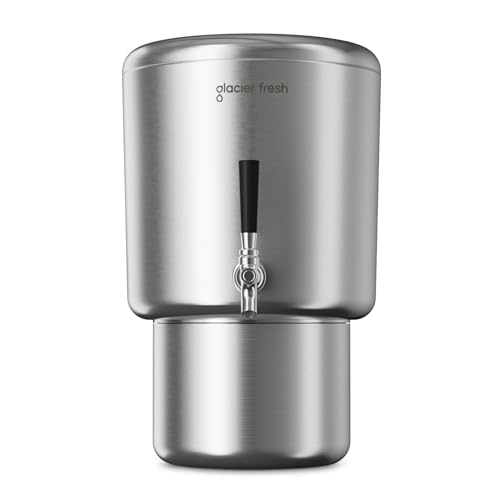
- Non-electric gravity-fed operation for outages and travel
- 2.25-gallon stainless-steel capacity for up to four people
- Elarisey technology targets heavy metals, PFOA, and PFOS
Best For: Families and emergency-preparedness use
Best Overall RO Value
Bluevua RO100ROPOT Countertop RO Filter

- Five-stage RO filtration with remineralization
- Glass carafe and no plumbing required
- Filter-life and water-quality monitor
Best For: Homes wanting strong RO filtration without under-sink installation
Best Hot-and-Cold Dispenser
Waterdrop CT01 Countertop Filter

- Six-stage mineral-retaining filtration
- Instant hot and cold dispensing
- Five presets with no plumbing required
Best For: Families wanting convenient filtered water for drinks
Best UV-Enhanced RO System
Bluevua RO100ROPOT-UV Countertop Filter
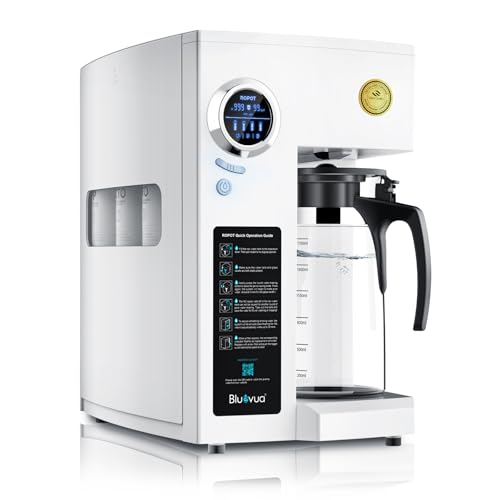
- Six-stage RO filtration with UV and remineralization
- Built-in TDS meter and filter monitor
- Glass carafe with no plumbing installation
Best For: Users wanting enhanced RO filtration and TDS tracking
Best Plug-and-Play Pick

- No plumbing or installation required
- Activated carbon targets multiple listed contaminants
- Preset dispensing for 12, 20, or 32 ounces
Best For: Renters and households wanting straightforward countertop filtration
Best Compact RO Pick
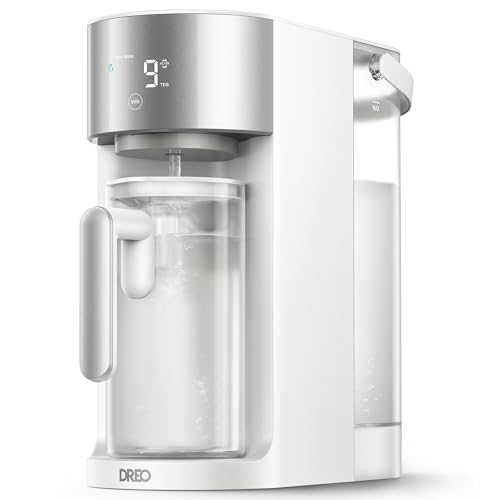
- Seven-in-one reverse osmosis filtration
- TDS monitoring and filter-life reminders
- Auto-fill pitcher and self-cleaning system
Best For: One- or two-person homes wanting monitored RO filtration
Best Higher-Capacity RO Pick

- Five-liter capacity with two auto-fill pitchers
- RO filtration targets 99.9% of possible contaminants
- TDS and filter-life monitoring with self-cleaning
Best For: Homes needing more countertop RO water capacity
Best Gravity-Fed Pick – Purewell 3-Stage Ultra-Filtration System
The Purewell 3-Stage system is a practical choice among countertop water filters for home use when you want a non-electric setup with stainless-steel construction. Its gravity-fed design uses a 0.01-micron hollow-fiber UF membrane, silver-ion membrane, and activated carbon block to reduce chlorine, sediment, rust, organic matter, and some heavy metals.
Best For: Homes seeking a large-capacity, electricity-free filter for daily drinking water, with a 2.25-gallon design that can also be used outdoors.
Pros:
- NSF/ANSI 42 and 372 certifications are noted for the system and materials.
- Gravity-fed operation requires no electricity or plumbing.
- Includes two filters, a stainless-steel spigot, and a non-slip stand.
- Each filter is rated for up to 3,000 gallons, with replacement recommended every six months.
Cons:
- It does not lower TDS.
- The upper chamber should not be filled when the lower chamber is full, or leaking may occur.
- Filter life can vary with water quality and usage.
Choose the Purewell if you value capacity, durable stainless steel, and no-power operation. It is less suitable if TDS reduction is a primary goal.
Best Smart Dispenser – Ninja HydraSense Intelligent Filtration System
The Ninja HydraSense is designed for shoppers comparing countertop water filters for home use that prioritize speed and convenience. It plugs in without plumbing, dispenses water with one touch, and uses an interactive display to track usage and filter status.
Best For: Households that want fast dispensing, personalized fill volumes, and reminders for filter replacement.
Pros:
- Claims reduction of up to 99% of more than 80 contaminants, including microplastics, PFAS, pharmaceuticals, and carcinogens.
- One-touch dispensing is rated six times faster than a standard Brita pitcher filter.
- The 96-ounce reservoir reduces refill frequency and can be chilled with ice or in the refrigerator.
- IAPMO R&T independently verifies NSF/ANSI 42, 53, and 401 standards.
Cons:
- It requires an electrical outlet.
- Its 3-liter reservoir is smaller than large gravity-fed countertop systems.
- The unit depends on replacement filters approximately every 120 gallons or six months.
HydraSense stands out for automated tracking and quick, measured dispensing. Consider it when convenience matters more than a non-electric design.
Best Countertop RO Option – Waterdrop C2SL Reverse Osmosis System
The Waterdrop C2SL is a strong option among countertop water filters for home use when reducing TDS and a broad range of contaminants is important. Its seven-stage reverse-osmosis system requires no plumbing, adds minerals back for taste, and automatically fills a detachable glass pitcher.
Best For: One- or two-person households wanting compact RO filtration, mineral-enhanced water, and a refrigerator-ready pitcher.
Pros:
- Its 0.0001-micron RO membrane is tested to reduce PFOA, PFOS, microplastics, lead, chlorine, and fluoride.
- The mineral filter adds calcium, magnesium, potassium, and sodium.
- No installation is required; the 108-ounce tank feeds a detachable 40-ounce glass pitcher.
- A 3:1 pure-to-drain ratio helps limit wastewater, while filter life is rated up to 528 gallons or 12 months.
Cons:
- It requires a power connection.
- The system is designed for one to two people rather than a large household.
- Actual filter life depends on water quality and usage.
The C2SL is the most fitting choice here for users specifically seeking countertop RO and TDS reduction. Its smart display, voice alerts, and mineral stage add convenience to routine use.
Best Emergency-Ready Filter – GLACIER FRESH PC04 Gravity System
The GLACIER FRESH PC04 suits shoppers looking for countertop water filters for home use that can also work during outages or outdoor trips. Its 2.25-gallon stainless-steel body uses gravity-fed Elarisey electrosorption technology and needs no electricity, plumbing, or tools.
Best For: Families, RV users, campers, and emergency-preparedness plans needing a high-capacity, non-electric dispenser.
Pros:
- Gravity-fed operation remains usable during power outages and other emergencies.
- The 2.25-gallon capacity is intended to serve up to four people.
- Elarisey electrosorption technology is described as reducing heavy metals, PFOA, PFOS, pathogens, and other impurities.
- The inlet design minimizes leftover water, and the stainless-steel housing is suited to frequent use.
Cons:
- Each cartridge is rated for up to 200 gallons and is recommended for replacement every three months.
- The unit must be flushed with two gallons before first use.
- Performance may vary with water quality.
PC04 is a practical pick when resilience and capacity are priorities. Its shorter stated cartridge interval means ongoing maintenance should be part of the buying decision.
Best Overall RO Value – Bluevua RO100ROPOT Countertop RO Filter
If you want countertop water filters for home use that substantially reduce dissolved solids, the Bluevua RO100ROPOT is a strong fit. Its five-stage reverse osmosis system adds remineralization, uses a glass carafe, and requires no plumbing installation.
Best For: Households seeking bottled-water-style filtration without an under-sink installation.
Pros:
- Five-stage RO filtration includes a remineralization filter.
- High-borosilicate glass carafe helps avoid a traditional plastic water container.
- Filter-life and water-quality monitoring simplify maintenance.
- Automatic standby mode and a stated 2:1 pure-to-drain ratio support efficiency.
Cons:
- Requires a power source and has a relatively slow maximum flow rate of 0.26 liters per minute.
- Reverse osmosis produces drain water during filtration.
This is a practical pick when contaminant and TDS reduction matter more than instant dispensing. The carafe, monitoring display, and no-installation design make it convenient for everyday kitchen use.
Best Hot-and-Cold Dispenser – Waterdrop CT01 Countertop Filter
Among countertop water filters for home use, the Waterdrop CT01 stands out for combining filtration with instant hot and cold dispensing. Its six-stage activated-carbon system retains beneficial minerals, uses no wastewater, and offers preset drink temperatures and volumes.
Best For: Busy households that want filtered water for drinking, coffee, tea, or formula from one countertop appliance.
Pros:
- Six-stage filtration helps reduce chlorine, rust, and other impurities while retaining minerals.
- Five one-touch presets provide hot, coffee, tea, formula, and cold settings.
- No plumbing or drilling is needed; fill the tank and plug it in.
- Child safety lock and a 1.32-gallon tank add everyday convenience.
Cons:
- It is not an RO system and does not significantly lower TDS.
- Filters are rated for up to six months, shorter than the replacement interval of some RO systems.
The CT01 is less suited to shoppers specifically targeting TDS reduction, but it is more versatile for serving different drinks. Choose it when instant temperature control and zero-waste filtration are priorities.
Best UV-Enhanced RO System – Bluevua RO100ROPOT-UV Countertop Filter
For countertop water filters for home use with an added UV stage, the Bluevua RO100ROPOT-UV offers six-stage reverse osmosis filtration in a portable format. It combines a 0.0001-micron RO membrane, UV light, remineralization, a glass carafe, and a built-in TDS meter.
Best For: Users who want enhanced RO filtration and at-a-glance TDS tracking without modifying their plumbing.
Pros:
- Six-stage filtration includes UV light, reverse osmosis, and remineralization.
- Designed to reduce TDS and a range of listed contaminants, including lead, fluoride, and chlorine.
- Borosilicate glass carafe and portable countertop design require no installation.
- Built-in TDS meter and filter-life monitor support maintenance tracking.
Cons:
- Needs electricity and has a maximum flow rate of 0.26 liters per minute.
- Its 1,700-milliliter carafe capacity may require frequent refilling for larger households.
- As an RO system, it uses drain water during filtration.
This model is the more feature-rich choice for shoppers who value UV treatment and TDS visibility. Its small carafe and countertop footprint favor personal or moderate daily use rather than high-volume dispensing.
Best Plug-and-Play Pick – HomeWater Countertop Filter
The HOMEWATER system is a practical option for countertop water filters for home use when you want simple, no-installation filtration. Its one-gallon tank, activated carbon filter, and preset dispensing buttons make it convenient for kitchens, apartments, offices, and dorms.
Best For: Households and renters wanting easy countertop filtration without plumbing work.
Pros:
- Plug-and-play design with a removable one-gallon tank.
- Activated carbon filtration targets chlorine, lead, PFAS, VOCs, microplastics, and other listed contaminants.
- 12-, 20-, and 32-ounce preset buttons plus manual dispensing.
- Modular tank placement, adjustable drip tray, filter reminder, and customizable lighting.
Cons:
- Its carbon-based system does not offer the same filtration method as reverse osmosis.
- The one-gallon capacity may require frequent refilling for larger households.
- The filter cycle is listed at four months.
Choose this model if convenience and flexible countertop placement matter most. It is compact and feature-rich, though shoppers seeking a larger reservoir or RO filtration may prefer another option.
Best Compact RO Pick – DREO RO Water Filter 112
The DREO RO Water Filter 112 is a strong choice among countertop water filters for home use if you prioritize reverse osmosis and contaminant reduction. Its compact footprint, real-time TDS monitoring, auto-fill pitcher, and self-cleaning function are designed for convenient daily use by one or two people.
Best For: One- or two-person households seeking compact countertop RO filtration with monitoring features.
Pros:
- Seven-in-one RO system with a 0.0001 μm membrane.
- Laboratory claims include reductions of 99% of lead, chromium, chlorine, PFOS, and PFOA, plus 97% of fluoride.
- Real-time raw- and pure-water TDS readings with filter-change reminders.
- Auto-fill pitcher, self-cleaning system, and listed 3:1 pure-to-drain ratio.
Cons:
- Its 3-liter tank is aimed at smaller daily-use needs.
- Reverse osmosis produces drain water, even with the stated 3:1 ratio.
- The system weighs 9.5 pounds, making it less portable than simpler countertop dispensers.
This model balances advanced RO filtration with a relatively narrow countertop footprint. Its monitoring and maintenance features add convenience, while the smaller capacity makes it less suited to high-volume households.
Best Higher-Capacity RO Pick – DREO RO Filter 113
The DREO RO Filtration System 113 suits shoppers comparing countertop water filters for home use and needing more capacity than a compact pitcher-style unit. It combines seven-stage RO filtration with two auto-fill pitchers, a five-liter capacity, TDS and filter-life monitoring, and a self-cleaning design.
Best For: Households that want countertop RO filtration with extra water capacity and two pitchers.
Pros:
- RO system is described as filtering 99.9% of possible contaminants, including PFOA, PFOS, chlorine, and fluoride.
- Tested by SGS to meet NSF/ANSI 58 standards, according to the supplied notes.
- Five-liter capacity and two auto-fill pitchers support higher daily usage.
- Includes TDS monitoring, filter-life tracking, touch controls, and self-cleaning functionality.
Cons:
- Its 15.7-inch length requires more counter space than the smaller DREO model.
- At 10.8 pounds, it is relatively heavy for a countertop appliance.
- The supplied details list a six-month filter life but do not specify a gallon rating.
The RO Filter 113 is the better fit of these DREO options when capacity and multiple pitchers matter. Measure your counter before buying, since its larger footprint and heavier build trade portability for convenience.
How We Picked the Best Countertop Water Filters for Home Use
We evaluated these countertop systems by looking at the features that matter most in everyday use: filtration method, stated contaminant-reduction claims, capacity, dispensing speed, footprint, controls, maintenance, and whether the unit needs a water-line connection. We also considered convenience features such as filter-life indicators, automatic filling, hot or cold dispensing, mineral remineralization, and pitcher compatibility.
Because water quality varies by location, treat manufacturer claims and certifications as product-specific rather than universal guarantees. If you are concerned about a particular contaminant, check the performance data sheet and compare it with your local water report.
Quick Comparison
- Gravity-fed filters: Simple, electricity-free options suited to basic everyday filtration and emergency backup.
- Reverse osmosis systems: A stronger choice when broad dissolved-solids reduction is a priority, though they can be slower and may produce wastewater.
- Electric dispensers: Best for households that want push-button dispensing, monitoring, or hot-and-cold water.
- Portable countertop units: Useful for renters, offices, bedrooms, and kitchens where permanent installation is impractical.
Key Buying Factors for Countertop Water Filters
Filtration Technology and Certification
Carbon filtration can improve taste and reduce selected chemicals, while ultrafiltration targets particles and some microorganisms without removing all dissolved minerals. Reverse osmosis generally provides more extensive reduction of dissolved contaminants. Look for relevant NSF/ANSI certifications or independently documented performance instead of relying only on broad marketing language.
Capacity and Refill Frequency
Estimate how much drinking and cooking water your household uses each day. Small reservoirs save space but require frequent refills; larger tanks are more convenient but take up more counter area. Consider whether the source tank, clean-water tank, and waste tank are easy to lift and wash.
Space, Power, and Installation
Measure the available height and depth, including room to open lids and remove tanks. Gravity units usually need no outlet, whereas electric RO and dispensing systems require nearby power. Confirm whether the appliance draws water from a refillable tank or requires a faucet connection.
Maintenance and Operating Cost
Check replacement-filter intervals, filter prices, cleaning instructions, and the availability of genuine replacements. RO systems may use more water than they deliver, so review the stated pure-to-drain ratio if efficiency matters. A filter that is easy to monitor and clean is more likely to be maintained correctly.
Who Should Buy Which Countertop Water Filters for Home Use?
Choose a gravity-fed model if you want a straightforward, electricity-free setup for basic filtration, limited infrastructure, or backup use.
Choose a countertop reverse osmosis system if dissolved-solids reduction is your main goal and you are comfortable with electricity, tank refills, filter changes, and possible wastewater.
Choose a hot-and-cold dispenser if convenience matters most and you want filtered water ready for drinking, tea, cooking, or infant-formula preparation. Verify temperature controls and safety features before buying.
Choose a compact portable unit if you rent, move frequently, or need filtered water in a small kitchen or secondary living space. Before ordering, confirm reservoir size, noise level, clearance, and replacement-filter availability.