Choosing the right bag sealer can make high-volume packaging faster, more consistent, and less wasteful. The best option depends on your bag material, sealing speed, seal width, and whether you need vacuum removal.
This roundup compares 10 machines suited to production runs ranging from food prep and inventory packaging to workshop, retail, and small-business use.
Best 10 Bag Sealing Machines for Large Batches Picks for 2026
Best Continuous Sealer

- Automatic conveyor supports continuous production
- Adjustable speed and digital temperature control
- Optional printing for dates, logos, and remarks
Best For: High-volume lines needing continuous sealing and printing
Best for Ground Meat Bags

- Seals and cuts tape in one smooth motion
- Included roll handles about 1,200 bags
- Compact manual design for freezer meat bags
Best For: Ground meat, wild game, and home processing
Best Manual Impulse Sealer
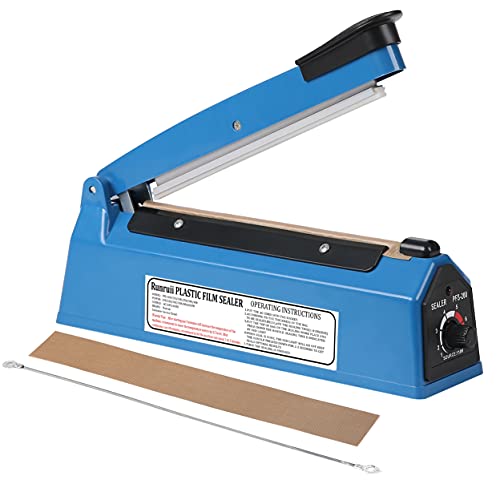
- 12-inch sealing width for PE and PP bags
- Eight temperature settings and no warm-up time
- Manual design rated for more than 10,000 bags
Best For: Retail, produce, household, and light industrial sealing
Best Vacuum Sealer for Food Batches
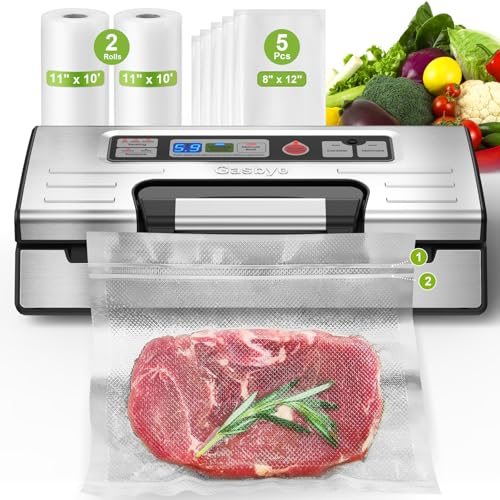
- 95kPa suction with pulse mode control
- Double heat seal supports dry, moist, and sous vide foods
- Built-in cutter and storage reduce bag-prep waste
Best For: Freezer storage, meal prep, and sous vide portions
Precision Heavy-Duty Pick

- 18-inch sealing length with 3mm precision seals
- Eight adjustable temperature settings
- Seal-and-cut design with replacement elements
Best For: Small businesses and light-commercial packaging
Compact Everyday Pick
METRONIC 8-Inch Impulse Sealer

- No warm-up and 3–5-second sealing cycle
- Adjustable heat for different bag materials
- Durable iron body with copper coil
Best For: Home kitchens and small businesses
High-Throughput Pick

- Automatic sealing at up to 16 m/min
- Digital temperature and 6–12mm seal control
- Embossing and alphanumeric printing functions
Best For: Commercial and high-volume packaging
Compact Batch Starter

- 8-inch sealing width for PE and PP bags
- Eight adjustable temperature settings
- Lightweight tabletop design with built-in fuse
Best For: Small to moderate batches using narrower plastic bags
Wide-Duty Value Pick

- 16-inch sealing length for wider bags
- Durable iron housing and 3 mm seal
- Eight timer levels plus cutting-wire replacements
Best For: Wide-bag batch packaging in retail and small production settings
Accessory-Rich Upgrade

- 16-inch seal with eight adjustable timer levels
- Eight replacement parts and 16-foot Teflon strip
- Extended 5.2-foot power cord
Best For: Frequent batch packing with Mylar, foil, and poly bags
Best Continuous Sealer – VEVOR FR900K Band Sealer
For bag sealing machines for large batches, the VEVOR FR900K is the most production-oriented option here. Its automatic conveyor, adjustable speed, temperature control, and continuous sealing design suit assembly-line work across several bag materials.
Best For: High-volume operations that need continuous sealing and optional date, logo, or remark printing.
Pros:
- Adjustable sealing speed up to 16 m/min with a 6–15 mm sealing width.
- Automatic conveyor and cooling/heating blocks support steadier operation.
- Embossing and type wheels can print dates, remarks, introductions, or logos while sealing.
- All-metal construction and a DC copper motor are designed for demanding use.
Cons:
- Larger and more specialized than a handheld impulse sealer.
- Its 750-watt, 110-volt setup may be more than small occasional jobs require.
This is the strongest match for businesses that prioritize throughput, repeatable settings, and integrated marking. It handles plastic, aluminum foil, compound, and paper bags within the stated thickness range, making it versatile for food, agricultural, industrial, and pharmacy applications.
Best for Ground Meat Bags – LEM Poly Bag Tape Sealer
For bag sealing machines for large batches of ground meat, the LEM Poly Bag Tape Sealer offers a fast manual twist-and-seal workflow. It wraps tape around the bag, seals it tightly, and cuts the tape in one smooth motion.
Best For: Home processors, hunters, and small meat-processing operations sealing freezer poly bags.
Pros:
- Included tape roll can seal approximately 1,200 poly meat bags.
- Compact design measures 8.58 by 2.91 by 5.91 inches.
- Designed specifically for ground pork, beef, wild game, and other meat destined for freezing.
- Includes a one-year warranty and lifetime customer support.
Cons:
- Manual operation requires handling each bag individually.
- Its tape-based system is specialized for poly meat bags rather than general-purpose continuous sealing.
The LEM is a practical choice when your batch work centers on freezer-bound meat bags instead of a broad range of packaging materials. The included 72-yard roll helps reduce interruptions during a long processing session.
Best Manual Impulse Sealer – 12-Inch Impulse Heat Sealer
This 12-inch impulse sealer is a straightforward option for bag sealing machines for large batches when you want an affordable, manual electric workflow. It requires no warm-up time and offers eight temperature settings for different PE and PP bags.
Best For: Household, retail, produce, grocery, and light industrial bag sealing with repeatable manual operation.
Pros:
- 12-inch sealing length accommodates a range of plastic bags.
- No warm-up time is required before sealing.
- Eight temperature settings help match different bag materials.
- Built-in fuse and reinforced construction support regular use.
Cons:
- Manual operation requires holding the handle for about 2–3.5 seconds per seal.
- It cannot cut bags, so excess material must be trimmed separately.
- It is less automated than a continuous band sealer for true production-line batches.
With a stated capacity of more than 10,000 bags, this sealer can handle substantial workloads when an operator is available. It is best viewed as a simple heat-sealing tool rather than a fully automated packaging machine.
Best Vacuum Sealer for Food Batches – Gasbye 95kPa Vacuum Sealer
For food-focused bag sealing machines for large batches, the Gasbye 95kPa vacuum sealer combines automatic vacuuming with double heat sealing. Its pulse mode, built-in cutter, and roll storage make it useful for preparing repeated portions of dry or moist foods.
Best For: Home food storage, freezer preparation, and sous vide portions that benefit from vacuum removal.
Pros:
- 95kPa suction and one-touch Auto Vac & Seal simplify routine packaging.
- Double heat seals are designed for dry and moist foods and sous vide use.
- Pulse mode offers gentler control for delicate foods and liquids.
- Built-in bag storage and cutter help size bags with less waste.
Cons:
- It is intended for vacuum food bags, not general-purpose open-ended packaging such as paper or standard shipping bags.
- Vacuum containers are compatible but sold separately.
- Moist or delicate foods may require more careful use of pulse mode.
The Gasbye is a versatile batch-prep choice for kitchens rather than an assembly-line band sealer. Its starter kit includes pre-cut bags, bag rolls, replacement foam gaskets, and an external air hose, while replaceable components can help extend the machine’s service life.
Precision Heavy-Duty Pick – 18-Inch 3mm Impulse Sealer
For shoppers comparing bag sealing machines for large batches, this 18-inch manual impulse sealer offers a sturdy, flexible option for packing snacks, coffee, tea, baked goods, and other products. Its 3mm seal, adjustable temperature, and 3–5-second operating cycle support efficient small-business and light-commercial workflows.
Best For: Small bakeries, coffee shops, fulfillment tables, and handmade-product sellers that want a heavy-duty manual sealer with seal-and-cut capability.
Pros:
- 18-inch sealing length with a finer 3mm seal that saves bag material.
- Eight temperature settings accommodate PE, PP, and other plastic bags.
- Seal-and-cut functionality, metal construction, fuse protection, and three replacement heating elements.
Cons:
- Manual operation requires pressing the handle for each seal.
- Designed for small-batch and light-commercial use rather than fully automated production.
This is a practical choice when you need a wider seal than a compact tabletop model but still want manual control. The 3mm seal and included replacement elements add value for recurring packaging work.
Compact Everyday Pick – METRONIC 8-Inch Impulse Sealer
When evaluating bag sealing machines for large batches on a smaller work surface, the METRONIC 8-inch impulse sealer keeps the process straightforward. It needs no warm-up, uses a 3–5-second pressing cycle, and provides adjustable heat for different bag materials and thicknesses.
Best For: Home kitchens and small businesses sealing cookies, coffee, baked foods, bath bombs, and similar items.
Pros:
- Adjustable temperature dial helps match heat to the bag material.
- No preheating required; the manual sealing cycle takes about 3–5 seconds.
- Iron construction and a pure copper coil are designed for durability and reduced heat and work loss.
Cons:
- The 8-inch sealing width is less suitable for wider bags.
- Manual operation may be slower than a continuous band sealer for sustained production.
- Incorrect high-temperature settings can melt the bag opening.
The METRONIC is a sensible entry-level option for routine sealing where compact size and simple controls matter more than automation. Start at a lower temperature and test the material before increasing the setting.
High-Throughput Pick – VEVOR Continuous Band Sealer
For bag sealing machines for large batches, the VEVOR continuous band sealer is the most production-oriented option in this group. Its automatic feed, 600W motor, digital temperature control, adjustable 6–12mm seal width, and speeds up to 16 m/min are suited to repetitive packaging work.
Best For: Commercial or high-volume packaging operations handling compatible plastic bags and films from 0.02 to 0.8mm thick.
Pros:
- Automatic continuous sealing reaches speeds up to 0–16 m/min.
- Digital temperature control and adjustable 6–12mm sealing width support varied packaging needs.
- Supports embossing and alphanumeric printing, with replacement belts, a fuse, and other accessories included.
Cons:
- At 21.7 pounds, it is less portable than a small manual impulse sealer.
- Its larger footprint and 600W power draw may be excessive for occasional home use.
- Compatibility is limited to bags and films within the stated thickness range.
This model stands out when throughput and consistent automatic feeding are the priority. Its carbon-steel construction and included maintenance accessories make it better suited to an established packing station than casual use.
Compact Batch Starter – 8-Inch Manual Impulse Sealer
For smaller runs, this 8-inch tabletop unit is a practical entry point among bag sealing machines for large batches. It requires no warm-up, offers adjustable heat settings, and is designed for PE and PP bags used in retail, produce, grocery, and household packaging.
Best For: Small to moderate batch sealing where compact size and simple manual operation matter.
Pros:
- 8-inch sealing width with eight adjustable temperature settings.
- Instant-use impulse operation does not continuously heat the element.
- Lightweight 1.1 kg design with a built-in fuse.
- Supplied notes indicate it can seal more than 10,000 bags.
Cons:
- The 8-inch width is less suitable for wider bags than the 16-inch models.
- Manual pressing and a 2–3.5-second hold add operator effort during high-volume work.
- The notes identify the operation as manual rather than automated.
This is the most compact option in the group and makes sense when bag widths are modest. For genuinely large bags or faster throughput, a 16-inch model is likely more practical.
Wide-Duty Value Pick – 16-Inch Metal Impulse Sealer
This 16-inch metal impulse sealer is a stronger fit for bag sealing machines for large batches when you need a wider working area and a durable housing. Its adjustable timer supports different bag materials, while included flat and round replacement wires add flexibility for sealing and trimming.
Best For: Retail, grocery, kitchen, and small production workflows handling wide PE, PP, Mylar, foil, or similar heat-sealable bags.
Pros:
- 16-inch maximum seal length with a 3 mm seal width.
- Iron housing is designed to be more durable than a typical plastic shell.
- Eight timer levels accommodate different thicknesses and materials.
- Includes four replacement parts, including two cutting wires.
Cons:
- Manual handle operation still requires repeated operator input.
- The listed maximum seal thickness is 0.8 mm, which may limit heavier materials.
- At 4 pounds, it is less lightweight than the compact 8-inch option.
With its wider seal length and iron construction, this model offers a useful balance for batch work. The included cutting wires are especially helpful when trimming excess bag material is part of the packing process.
Accessory-Rich Upgrade – 16-Inch Mylar Bag Sealer
For frequent packaging, this upgraded 16-inch unit stands out among bag sealing machines for large batches with its iron body, extended 5.2-foot cord, and generous replacement supply. The eight timer levels and 3 mm seal are suited to plastic, poly, cookie, foil, and Mylar bags.
Best For: Batch packers who want a wide manual sealer with extra replacement parts and a longer cord.
Pros:
- 16-inch maximum seal length and 3 mm sealing width.
- Eight adjustable timer levels for varying bag materials and thicknesses.
- Includes eight replacement parts and a 16-foot heat-resistant Teflon cloth strip.
- 5.2-foot power cord can reduce the need for an extension cord.
Cons:
- It remains a manual sealer, so throughput depends on the operator.
- The listed maximum heat-seal thickness is 12 mils.
- Its 4.3-pound iron construction is not the lightest option.
This is the strongest choice here for buyers prioritizing included maintenance supplies and convenient placement. It shares the 16-inch manual format of the other wide model but adds more spare parts and a longer cord.
How We Picked the Best Bag Sealing Machines for Large Batches
We focused on machines that address the demands of repeated packaging: reliable heat control, practical seal widths, useful operating speeds, durable construction, and replacement-part availability. The list includes continuous band sealers for ongoing production, manual impulse sealers for flexible batch work, tape sealers for poly bags, and a vacuum model for food storage.
We also considered the range of materials each machine can handle, including PE, PP, plastic film, Mylar, foil-lined bags, and moisture-resistant food packaging. Because “large batches” can mean different things, both entry-level manual machines and higher-throughput continuous models are represented.
Quick Comparison
| Machine type | Best for | Main advantage | Watch for |
|---|---|---|---|
| Continuous band sealer | Production lines and repeated runs | Consistent hands-free sealing | Needs more workspace and setup |
| Impulse sealer | Mixed bag sizes and materials | Simple, adjustable, and affordable | Requires manual positioning |
| Tape sealer | Poly bags and retail packaging | Fast closure without heat | Limited material compatibility |
| Vacuum sealer | Food storage and freshness | Removes air before sealing | Not ideal for every production workflow |
Key Buying Factors
Throughput and Workflow
For hundreds or thousands of bags, a continuous band sealer is usually more efficient than a handheld or manually positioned impulse model. For varied jobs, an impulse sealer may be easier to control because each bag can be aligned individually.
Bag Material and Seal Width
Confirm that the machine supports your film type and thickness. PE and PP bags are common, while Mylar and foil bags may require higher heat or a stronger sealing element. Wider seals can provide better closure strength for heavier contents.
Temperature and Operating Controls
Adjustable temperature is important when switching between thin film and thicker laminates. Digital controls can simplify repeatable settings during long runs, while basic dial controls keep manual machines inexpensive and straightforward.
Maintenance and Safety
Check whether heating elements, PTFE tape, blades, belts, and other wear parts are replaceable. A stable base, insulated handles, and sensible heat-up and cool-down procedures also matter when operators work continuously.
Who Should Buy Which Bag Sealing Machines for Large Batches?
Choose a Continuous Band Sealer
Choose a VEVOR continuous model when speed, repeatability, and a steady stream of similarly sized bags matter most. These are the strongest choices for small production lines, fulfillment operations, and commercial kitchens.
Choose an Impulse Sealer
Pick an 8-, 12-, or 16-inch impulse model when you need versatility, a compact footprint, or occasional high-volume work. Select the sealing length based on your widest bag, not your average bag.
Choose a Tape or Vacuum Sealer
The LEM tape sealer makes sense for compatible poly bags and quick retail-style closures. Choose the Gasbye vacuum sealer when air removal and food preservation are more important than maximum continuous throughput.