The best fruit presses make it easier to turn apples, grapes, citrus, berries, and other produce into fresh juice, cider, or wine. The right model depends on your batch size, available workspace, and how much manual effort you want to use.
Our roundup includes compact hand presses for occasional kitchen use, traditional wooden basket designs for home harvests, and larger stainless steel or hydraulic presses for demanding batches.
Best 10 Fruit Presses Picks for 2026
Traditional Orchard Press
4.75-Gallon Beechwood Fruit Press

- 4.75-gallon capacity for larger batches
- Solid beechwood basket with breakaway design
- Manual operation with pour spout and stable stand
Best For: Home cider, juice, and wine making
High-Capacity Hydraulic Press
40-Liter Stainless Steel Fruit Press

- 40-liter capacity for substantial batches
- Five-ton hydraulic pressure for strong extraction
- Adjustable tray and stainless steel juice-contact parts
Best For: Harvest-season and high-volume pressing
Countertop Citrus Press
Commercial-Grade Cast Iron Juicer
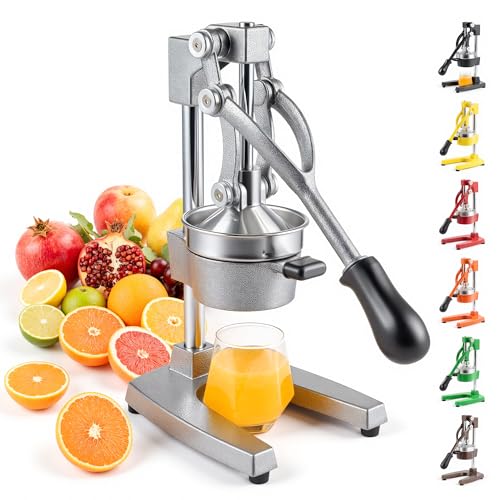
- 15-pound cast iron construction for stability
- 304 stainless steel juice-contact components
- Removable strainer and funnel ease cleanup
Best For: Frequent home, bar, and cocktail juicing
Best Large-Batch Press
3.2-Gallon Beech Wood Fruit and Wine Press

- 3.2-gallon capacity for larger batches
- Solid beech wood basket
- Built-in spout and stable stand
Best For: Home cider making and seasonal fruit pressing
Best Wooden Press

- Stable triangular base and natural beechwood basket
- Eight support blocks aid thorough extraction
- Includes two food-grade filter bags
Best For: Home users making smaller batches of juice, cider, or fruit wine
Best for Large Batches
14L Stainless Steel Fruit Press

- 3.69-gallon capacity suits substantial batches
- Removable 304 stainless steel basket is easier to clean
- Swing-open crossbeam simplifies loading
Best For: Families, farms, wineries, and other high-volume users
Best Mid-Size Option
9L Stainless Steel Fruit Press

- 2.38-gallon capacity for moderate batches
- Removable stainless steel basket aids cleanup
- Stable frame with swing-open crossbeam
Best For: Home users and small operations needing a versatile middle capacity
Traditional Orchard Press – 4.75-Gallon Beechwood Fruit Press
For larger batches of apples, grapes, pears, or berries, this fruit press combines a solid beechwood basket with a heavy-duty manual stand. Its 4.75-gallon capacity and built-in pour spout make it a practical option for seasonal juice and homemade wine making.
Best For: Home orchard harvests, family batches, and small-scale cider or wine making.
Pros:
- Beechwood basket is designed for moisture resistance and repeated use.
- Manual pressing helps produce juice with reduced foaming and drier pulp.
- Built-in pour spout and optional screw-hole mounting support easier, steadier collection.
- Breakaway basket design helps remove pressed pulp between batches.
Cons:
- Hand wash only, so cleanup requires extra care.
- Its larger footprint may be excessive for occasional small batches.
- Fruit needs to be crushed before loading.
This is a sturdy, traditional fruit press for users who value capacity and quiet manual operation. It is better suited to prepared fruit and seasonal processing than quick, single-serving juicing.
Compact Citrus Squeezer – 0.6-Liter Aluminum Hand Press
This compact fruit press is designed for quick citrus juicing without electricity. Its long ergonomic handle provides leverage, while the 0.6-liter bowl holds enough juice for a small batch before pouring.
Best For: Everyday lemon, lime, orange, grapefruit, and pomegranate juicing in compact kitchens or home bars.
Pros:
- Long 9.3-inch handle makes pressing softer fruit easier.
- Deep 20-ounce bowl collects juice before serving or transferring.
- Portable size lies flat in a drawer and suits small workspaces.
- Can be used for drinks, marinades, marmalade, lemon water, and canning.
Cons:
- Hand wash only; the supplied instructions recommend rinsing and towel-drying after use.
- Its 0.6-liter capacity is intended for smaller quantities.
- Best suited to citrus and softer fruits rather than large orchard batches.
Choose this hand press when convenience and storage matter more than high-volume processing. It offers a straightforward way to prepare fresh citrus juice in seconds, with minimal setup and no motor.
High-Capacity Hydraulic Press – 40-Liter Stainless Steel Fruit Press
For harvest-season processing, this hydraulic fruit press provides a 40-liter capacity and up to five tons of pressure. Stainless steel juice-contact parts, an adjustable juice tray, and a rotatable beam make it suited to substantial batches of fruit, herbs, nut milks, or honey.
Best For: Orchards, harvests, parties, and high-volume home or small-scale juice production.
Pros:
- Large 10.6-gallon capacity handles sizable batches at one time.
- Five-ton hydraulic jack supplies strong pressing force.
- AISI 304 stainless steel basket, pressing plate, and juice tray resist acidic juice.
- Adjustable tray height and a 90-degree-turning beam improve loading and container fit.
Cons:
- At 85 pounds, it is difficult to move frequently.
- Its 20-by-17.3-by-31.6-inch dimensions require dedicated space.
- The high capacity may be unnecessary for occasional small batches.
This is the most production-oriented option in the group. Its hydraulic power and stainless steel contact surfaces favor users who regularly process large quantities and can accommodate a heavy, full-size machine.
Countertop Citrus Press – Commercial-Grade Cast Iron Juicer
This heavy-duty fruit press brings commercial-style leverage to countertop citrus juicing. Its reinforced cast iron frame, long ergonomic handle, suctioning base, and removable stainless steel strainer are designed for frequent use with citrus and other soft or pulpy fruits.
Best For: Home kitchens, cocktail stations, and frequent juicing of oranges, lemons, limes, grapefruit, and pomegranates.
Pros:
- Cast iron construction provides a stable, durable 15-pound base.
- Food-grade 304 stainless steel parts contact the juice.
- Long handle and countertop suction support easier pressing.
- Removable strainer and funnel simplify pulp handling and cleanup.
Cons:
- Its 6-kilogram weight makes it less portable than lightweight hand squeezers.
- The 0.6-liter capacity is better for serving-sized batches than orchard processing.
- Countertop suction works best on a suitable smooth surface.
For users who want a sturdy countertop citrus press rather than a large fruit-processing machine, this CO-Z model offers strong leverage and a durable build. The removable components are useful for maintaining a cleaner workflow during repeated sessions.
Best Large-Batch Press – 3.2-Gallon Beech Wood Fruit and Wine Press
EJWOX 3.2 Gallon Fruit and Wine Press, Manual Cider Press with Solid Beech Wood Basket
Check Price On AmazonFor larger batches of apples, grapes, or berries, this 3.2-gallon fruit press offers a sturdy manual design with a solid beech wood basket. Its press plate, built-in spout, and stable stand are suited to seasonal juicing and small-scale homemade wine making.
Best For: Home cider makers, fruit growers, and small seasonal batches.
Pros:
- Large 3.2-gallon capacity for pressing multiple loads.
- Solid red beech basket is designed for moisture and wear resistance.
- Manual operation is quiet and requires no motor.
- Built-in spout and optional foot mounting holes support cleaner, steadier use.
Cons:
- Its larger footprint may require dedicated storage space.
- Hand washing is required.
- Fruit must be crushed before loading into the basket.
This is the most capable option here for batch-oriented fruit pressing. Choose it when capacity, stability, and traditional wooden construction matter more than portability.
Best Stainless Steel Citrus Press – Heavy-Duty Stainless Steel Lemon Squeezer
This stainless steel citrus press is a compact manual choice for lemons, limes, oranges, and grapefruits. Its mirror-satin finish, 6.7-ounce capacity, and included 50 filter bags make it practical for small indoor or outdoor juice servings.
Best For: Citrus drinks, kitchen prep, and portable manual juicing.
Pros:
- Stainless steel construction with a mirror-satin finish.
- Compact 10-inch-by-4.3-inch-by-3-inch design.
- Manual operation requires no power source.
- Includes 50 filter bags for separating pulp or seeds.
Cons:
- Its 6.7-ounce capacity is better suited to individual servings than large batches.
- The supplied details specify washing and drying after use, rather than dishwasher cleaning.
- It is designed primarily for citrus rather than general fruit pressing.
Among these fruit presses, this model is the straightforward pick for citrus-focused tasks. Its stainless steel build and included filter bags add convenience, while the smaller capacity keeps it oriented toward occasional servings.
Best Portable Hand Press – Aluminum Citrus and Pomegranate Juicer
This handheld aluminum fruit press is built for quick citrus and pomegranate juicing without electricity. Long handles provide leverage, while the deep bowl accommodates orange halves and the compact body rinses quickly for convenient everyday use.
Best For: Fresh single-serving citrus and pomegranate juice at home or on the go.
Pros:
- Long handles are designed to reduce the effort required for pressing.
- Works with oranges, lemons, limes, grapefruits, and pomegranates.
- Durable uncoated aluminum alloy construction.
- Portable design rinses quickly under running water.
Cons:
- Hand wash and towel drying are required; dishwasher use may darken the finish.
- Its handheld format is intended for smaller quantities rather than batch pressing.
- Aluminum construction may be less suited to shoppers specifically seeking stainless steel.
This is a practical middle ground for shoppers who want more leverage than a small squeezer but do not need a large basket press. Its broad citrus compatibility and portable format make it useful for everyday drinks.
Best Wooden Press – 6L Beechwood Fruit Wine Press
Among fruit presses for home juice and small-batch cider, this 6L VEVOR model offers a stable wooden basket and straightforward manual operation. Its compact capacity suits everyday kitchen use, family gatherings, and smaller batches of apples, grapes, and other prepared fruit.
Best For: Home users who want a traditional beechwood press for juice, cider, fruit wine, pulp, or similar small-batch projects.
Pros:
- Natural beechwood basket with a triangular base for stable operation.
- Eight supporting blocks and a thick pressing block help improve extraction.
- Extended handle and spiral mechanism make manual pressing more manageable.
- Includes two food-grade filter bags for hygienic use.
Cons:
- Hard fruits need to be crushed before pressing.
- Hand-wash care and an uncoated finish require attention after use.
- The 1.6-gallon capacity is smaller than the larger stainless-steel alternatives.
This is a practical choice when a traditional wood basket and moderate capacity matter more than maximum throughput. Pair it with pre-cut or crushed fruit for more efficient pressing.
Best for Large Batches – 14L Stainless Steel Fruit Press
For shoppers comparing fruit presses for parties, farms, or frequent production, this 14L VEVOR model emphasizes capacity and cleanability. Its removable 304 stainless steel basket, swing-open crossbeam, and stable triangular base make loading and cleanup more convenient.
Best For: Larger household, farm, restaurant, winery, and fresh-juice-shop batches where a 3.69-gallon capacity is useful.
Pros:
- Large 14L capacity handles substantial batches of prepared fruit.
- Removable 304 stainless steel basket supports quicker cleaning.
- Cast iron crossbeam swings open for easier loading.
- T-handle, large pressing plate, and triangular base support controlled pressing.
Cons:
- Fruits should be pre-crushed for the best results.
- At 34 pounds and nearly 38 inches tall, it requires considerable storage space.
- Non-food-contact metal parts need food-grade lubricant to help prevent corrosion.
This is the strongest fit in the group for high-volume pressing, especially when stainless-steel cleanup and batch size are priorities. Plan for adequate floor space and prepare hard fruit before loading.
Best Mid-Size Option – 9L Stainless Steel Fruit Press
This 9L VEVOR press sits between compact home models and larger production presses, making it a flexible option among fruit presses. It combines a 2.38-gallon capacity with a removable 304 stainless steel basket, manual T-handle, and stable triangular structure.
Best For: Home users and small operations that need more capacity than a compact press without moving up to the largest model.
Pros:
- 2.38-gallon capacity balances batch size and manageable use.
- Removable 304 stainless steel basket simplifies cleaning.
- Cast iron crossbeam swings open for convenient loading.
- Includes two food-grade filter bags and a T-shaped anti-slip handle.
Cons:
- Pre-crushing fruit is recommended for the best extraction.
- Its 31.1-pound weight still makes it a substantial piece of equipment.
- Non-food-contact metal components require lubrication to help prevent corrosion.
Choose this model when you want a middle-ground capacity for apple, grape, or orange pressing. It offers useful stainless-steel cleanup advantages while remaining smaller than the 14L version.
How We Picked These Fruit Presses
We selected these Fruit Presses based on capacity, construction, pressing method, ease of use, cleaning requirements, and the types of produce each design can handle. The lineup spans small citrus and hand-squeeze tools through multi-gallon basket presses, so you can compare equipment for everything from a few glasses of juice to seasonal cider making.
Material quality also matters. Stainless steel contact surfaces are useful for frequent pressing and straightforward cleanup, while beech wood baskets offer a traditional approach with strong batch capacity. Hydraulic models can reduce hand effort, but they usually require more storage space and a larger budget.
Quick Comparison
- Best for small servings: Compact manual hand presses and citrus juicers are easy to store and suited to lemons, limes, oranges, and occasional fruit pressing.
- Best for home cider: Presses in the 3- to 5-gallon range provide a practical balance of capacity, control, and workspace requirements.
- Best for larger harvests: Nine- to 10.6-gallon models reduce the number of batches when processing apples, grapes, or other seasonal fruit.
- Best for lower manual effort: A hydraulic press can deliver substantial pressure with less repetitive cranking than a standard screw press.
Key Buying Factors for Fruit Presses
Capacity and Batch Size
Choose capacity according to your typical harvest, not your occasional maximum. Small presses are faster to load and clean for everyday use, while larger baskets make sense when you regularly process several crates of fruit. Remember that whole fruit often needs crushing or chopping before pressing.
Materials and Construction
Look for sturdy frames, stable feet, durable pressing plates, and food-safe surfaces. Wooden baskets are traditional and effective, but they need thorough washing and drying. Stainless steel baskets generally offer simpler maintenance and are a strong choice for frequent use.
Pressure and Operation
Hand-operated screw presses are simple and do not need power, but they require steady physical effort. Hydraulic designs can produce higher pressure with less cranking. For citrus, a lever-style juicer may be more convenient than a basket press and can separate pulp with a removable strainer.
Cleaning and Storage
Removable parts, accessible baskets, and smooth food-contact surfaces make cleanup easier. Check the assembled dimensions and weight before buying, especially if the press must be stored between harvests. Dry wooden components completely to help prevent odors and deterioration.
Who Should Buy Which Fruit Presses?
Choose a compact hand press if you mainly prepare citrus juice or small portions and want a low-cost, space-saving tool. Choose a 3.2- to 4.75-gallon wooden press for household cider making, berry juice, or modest grape batches. Choose a 6- to 9-gallon press when you want more capacity without moving into the largest equipment. Choose a 10.6-gallon hydraulic model for frequent pressing, larger harvests, or reduced hand effort.
Before ordering, confirm the press’s usable capacity, food-contact materials, included accessories, and cleaning instructions. Matching those details to your fruit, batch size, and available workspace will help you get better results with less waste and hassle.